
Diversity, Equity, and Inclusion (DEI) initiatives have become vital components of the modern workplace, driven by the recognition that diverse and inclusive organizations are more innovative, productive, and better equipped to navigate the complexities of the global business landscape.
However, implementing DEI initiatives poses challenges, including resistance from employees and leadership. Despite this resistance, it’s essential to recognize that DEI matters to job seekers and consumers. According to Glassdoor, 76% of people consider a diverse workforce when evaluating companies and job opportunities, emphasizing the importance of DEI for talent attraction and reputation.
Understanding Resistance to DEI Initiatives
Overcoming resistance to change is a crucial aspect of successfully implementing Diversity, Equity, and Inclusion (DEI) initiatives within an organization. Resistance within the context of Diversity, Equity, and Inclusion (DEI) initiatives refers to the opposition, hesitation, or reluctance displayed by individuals or groups within an organization when faced with efforts to promote diversity and inclusion. This resistance can take various forms, ranging from passive disengagement to active pushback, and may manifest in different aspects of the workplace, such as hiring practices, company culture, or policy changes.
What Causes Resistance to DEI Initiatives?
Resistance to DEI initiatives at work often stems from a range of underlying factors. These may include:
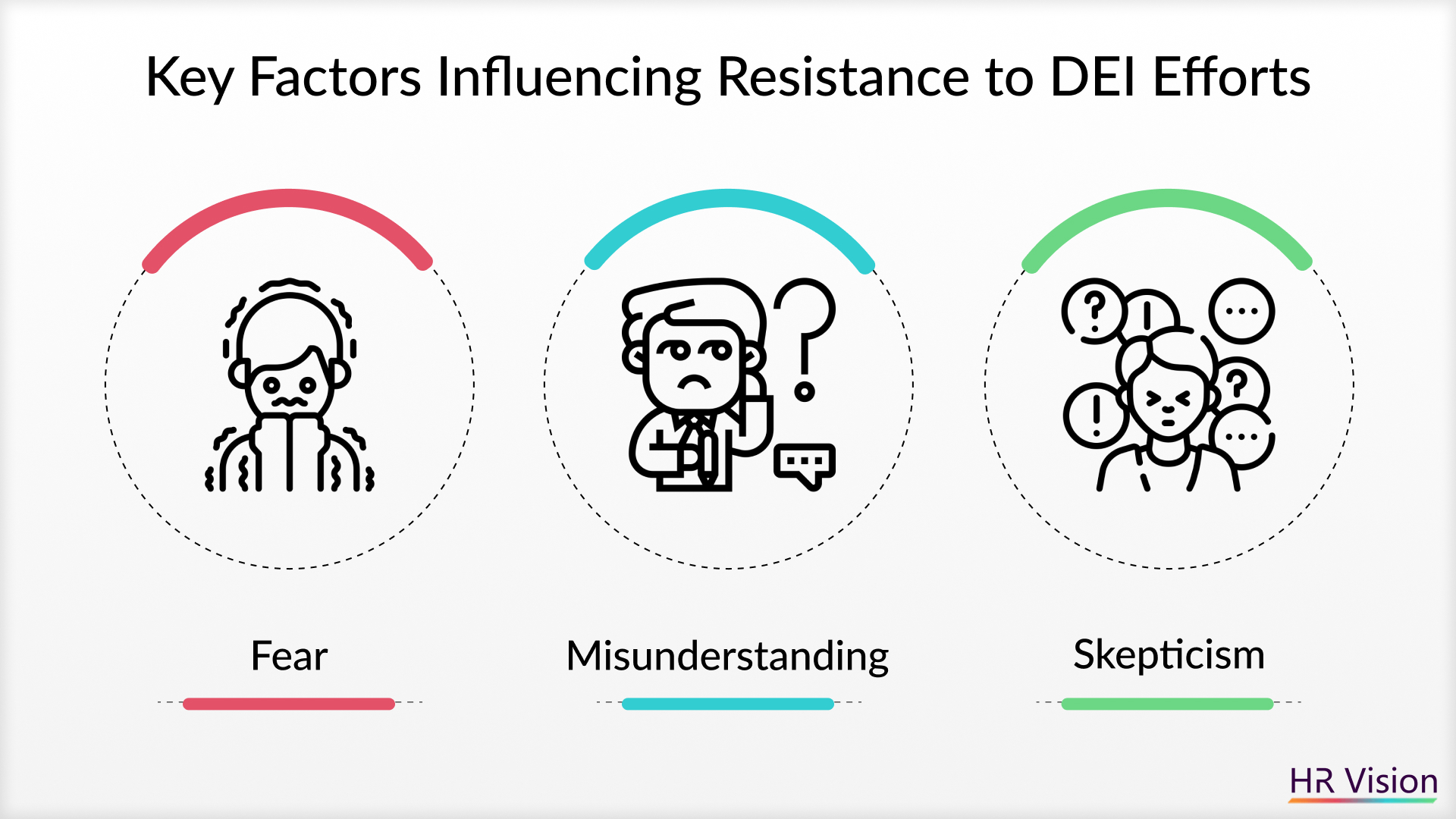
- Fear: Some employees may fear that DEI initiatives will result in favoritism or unfair treatment. They may worry that their own opportunities or privileges will be diminished as a result of increased diversity.
- Misunderstanding: Lack of clarity and misconceptions about the goals and benefits of DEI initiatives can lead to resistance. Some employees may not fully grasp the purpose and potential advantages of fostering diversity and inclusion.
- Skepticism: In some cases, skepticism arises from past unsuccessful DEI efforts or the perception that these initiatives are merely a superficial “checkbox” exercise. Employees may doubt the sincerity of the organization’s commitment to meaningful change.
Five Strategies to Overcome Resistance
#1 Education and Awareness
One of the primary strategies for overcoming resistance to DEI initiatives at work involves providing comprehensive education and raising awareness about the fundamental concepts and benefits of diversity, equity, and inclusion. Organizations can conduct regular training sessions, workshops, and seminars to educate employees at all levels about the importance of embracing diversity and fostering an inclusive environment. These educational initiatives should encompass a wide range of topics, including unconscious bias, cultural competence, and the business case for diversity. By imparting knowledge and fostering a deeper understanding of DEI principles, organizations can help employees recognize the value of a diverse workforce and the positive impact it can have on both individual and organizational success.
Moreover, organizations should share real examples of DEI initiatives, along with statistics and case studies that highlight the significant impact on both individual and organizational success. Demonstrating how diversity leads to enhanced creativity, innovation, and better decision-making can help individuals grasp the tangible benefits of DEI. Additionally, it’s important to communicate the moral and ethical underpinnings of these initiatives, emphasizing the principles of fairness, equal opportunity, and social justice. Through education and awareness, organizations can change the narrative surrounding DEI and foster a culture where employees understand that these initiatives are not about preferential treatment but about creating a level playing field and promoting excellence for everyone, regardless of their background.
#2 Inclusive Communication
Inclusive communication involves more than just disseminating information; it’s about creating a culture of open, transparent, and respectful dialogue within the organization.
To create a culture of inclusive communication, organizations can implement various practices. Regular town hall meetings, surveys, and feedback mechanisms can serve as platforms for employees to express their thoughts on DEI initiatives. Furthermore, providing diversity and inclusion training that focuses on effective communication can empower employees with the skills to engage constructively in these discussions. By acknowledging that questions and concerns are not only welcome but essential to growth, organizations can address the fears and skepticism that often underlie resistance to DEI initiatives, ultimately fostering a more inclusive and harmonious workplace.
#3 Leadership Support
Leaders serve as the guiding force that shapes an organization’s culture, values, and priorities. To overcome resistance to DEI initiatives at work, it is essential to have leadership that not only endorses these efforts but actively champions them. Leaders should be vocal advocates for diversity and inclusion, both in words and actions. This begins with setting an example and demonstrating a commitment to DEI principles.
Leadership support extends beyond mere endorsement; it’s about creating a culture of inclusion. Leaders need to foster an environment where every employee feels valued, empowered, and confident that their unique perspectives are welcomed. They should promote diversity at all levels of the organization, from the boardroom to entry-level positions, ensuring representation across the hierarchy. By showcasing a diverse leadership team, organizations send a powerful message that they are not just paying lip service to DEI but are genuinely committed to creating a workplace where all individuals have equal opportunities to succeed. This leadership commitment can go a long way in dismantling resistance and inspiring employees to actively participate in DEI initiatives, contributing to a more inclusive and equitable workplace.
#4 Employee Involvement
It’s essential to engage employees as active participants in the DEI process, rather than just passive recipients of these initiatives. Encouraging employees to take ownership of the organization’s DEI efforts can be highly effective in breaking down resistance. By doing so, organizations convey that the success of DEI initiatives is a collective responsibility, and every individual has a role to play.
To inspire employees, organizations can share examples of successful employee-driven DEI initiatives. These real-world stories showcase how the efforts of motivated employees can bring about positive change within the organization. It might include examples of employee resource groups, grassroots campaigns, or inclusivity projects that led to tangible improvements in the workplace. These success stories not only serve as a source of inspiration but also illustrate that DEI initiatives are not just top-down mandates but can be driven from the bottom up, creating a sense of ownership and empowerment among employees.
#5 Building Trust and Confidence
Resistance often stems from skepticism and doubts about the organization’s commitment to change. To address this, organizations must proactively work on building trust and instilling confidence in their DEI efforts. This begins with clear and consistent communication that outlines the organization’s long-term commitment to DEI and the specific steps being taken to achieve it. Providing transparency about progress, challenges, and the metrics being used to assess DEI efforts helps employees see that these initiatives are not just superficial gestures but part of a well-thought-out plan.
Leaders play a pivotal role in building trust and confidence. They should lead by example and demonstrate their dedication to DEI through their actions and decisions. This includes making tangible changes in policies and practices that promote equity and inclusion, as well as holding themselves and others accountable.
It is crucial for organizations to proactively overcome resistance to DEI initiatives at work. DEI initiatives examples can include implementing inclusive hiring practices, offering diversity training programs, creating employee resource groups, and establishing mentorship programs. The strategies discussed, including education and awareness, inclusive communication, leadership support, employee involvement, and building trust and confidence, provide a roadmap to navigate these challenges. Organizations should recognize that resistance is a natural part of change but can be overcome with the right approach.
Ready to stay ahead in the ever-changing world of HR? Join us at HR Vision, where top HR leaders gather to explore the future of work, HR trends, and the power of HR analytics and technology.