Robotic Process Automation (RPA) is revolutionizing the way businesses operate, and the Human Resources (HR) department is no exception. This technology involves the use of software robots to automate repetitive, rule-based tasks, freeing up human employees to focus on more strategic and value-added activities.
According to Deloitte, 53% of global business services (GBS) have already embarked on their RPA journey, with this figure projected to soar to 72% within the next two years.
HR departments often grapple with a deluge of administrative tasks, from onboarding new hires to managing payroll and benefits. These manual processes are time-consuming, error-prone, and can hinder HR’s ability to focus on strategic initiatives that directly impact the organization’s success. RPA offers a compelling solution by automating these repetitive and rule-based tasks, freeing up HR professionals to concentrate on higher-value activities.
Understanding RPA in HR
Robotic Process Automation, or RPA, is a technology that utilizes software robots to emulate human actions in interacting with digital systems and applications. These software robots can execute tasks such as data entry, calculations, and responses to emails, following predefined business rules. Unlike traditional automation, which often requires system modifications, RPA operates on the user interface level, making it adaptable to various systems and processes.
A common misconception about RPA is that it will replace human workers. On the contrary, RPA is designed to augment human capabilities by handling mundane and repetitive tasks. By automating these processes, HR professionals can focus on strategic initiatives, problem-solving, and building relationships with employees. Another misconception is that RPA is only suitable for large enterprises. In reality, RPA can be implemented by organizations of all sizes, as the technology has become increasingly accessible and cost-effective.
Key Benefits of RPA Adoption
RPA brings a multitude of advantages to HR departments. By automating repetitive and rule-based tasks, organizations can significantly boost efficiency and productivity. RPA’s ability to process large volumes of data with precision leads to reduced costs and error rates, safeguarding against costly mistakes. Moreover, improved data accuracy and consistency are essential for maintaining compliance with regulations and internal policies.
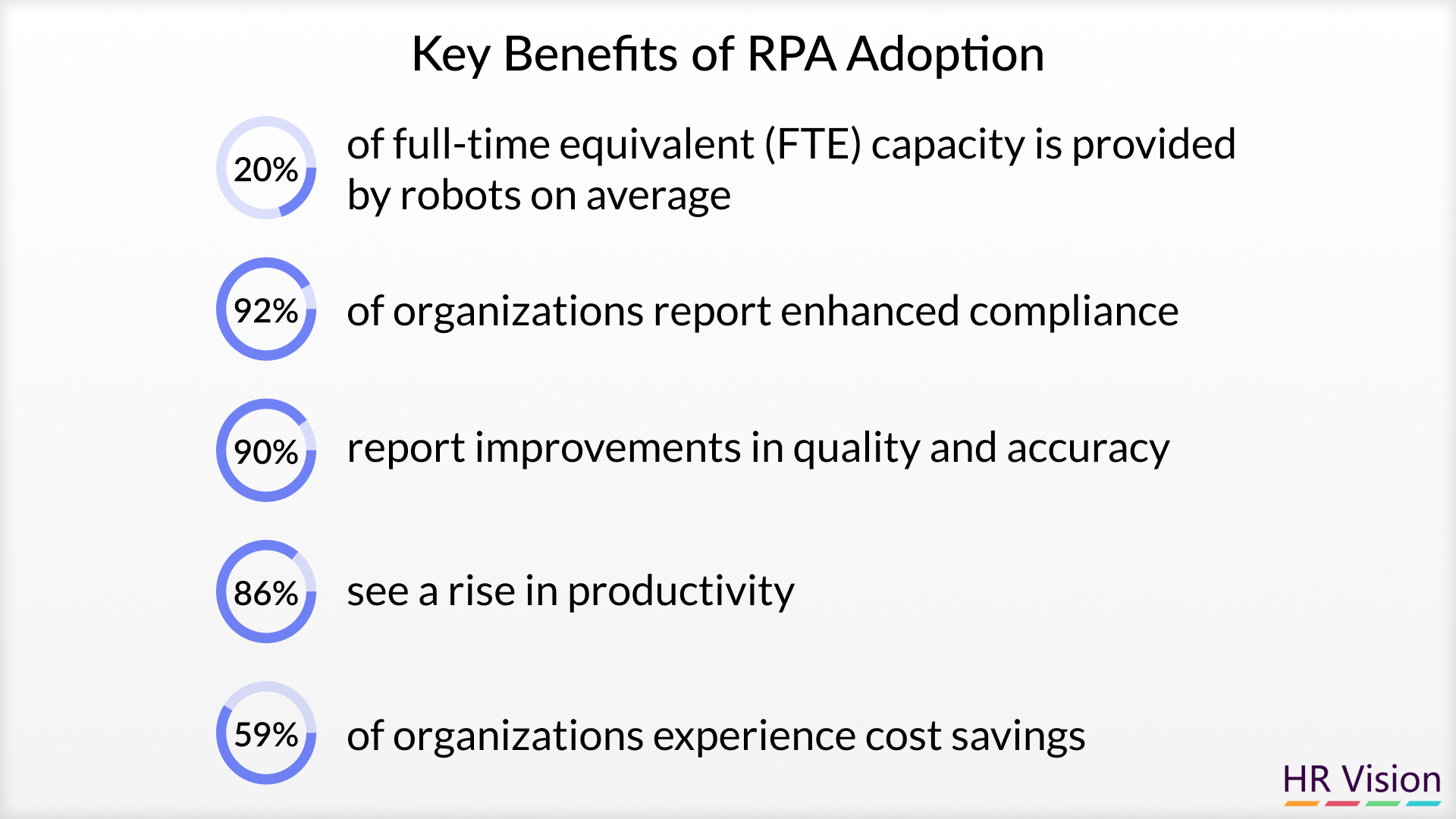
With RPA handling routine tasks, HR professionals can dedicate more time to strategic initiatives that drive business growth. This shift in focus empowers HR to become a strategic partner, contributing to talent acquisition, development, and retention. Ultimately, RPA can enhance the employee experience by accelerating processes like onboarding, payroll, and benefits administration, leading to increased satisfaction and loyalty.
Key HR Processes That Can Benefit from RPA
Recruitment and Onboarding
The recruitment and onboarding process is often a bottleneck for HR departments, characterized by high volumes of repetitive tasks. RPA can significantly streamline these operations. For example, software robots can efficiently screen and parse resumes, extracting key information and matching candidates to suitable job openings. Automated job postings and candidate communication, including email notifications and scheduling, can save considerable time and effort. Additionally, RPA can expedite the onboarding process by automating paperwork, data entry, and system updates, ensuring a smooth transition for new hires.
Payroll and Benefits
Payroll processing is a complex and time-consuming function within HR. RPA can significantly enhance efficiency in this area. Time and attendance tracking can be handled with precision, leading to accurate calculations of hours worked and overtime, which reduces manual errors and improves payroll accuracy. Benefits enrollment and changes become more streamlined, ensuring timely updates and lessening administrative burdens. Additionally, payroll calculations, data transfer, and reconciliation are handled more efficiently, minimizing the risk of errors and speeding up the payroll cycle.
Employee Data Management
Effective employee data management is crucial for HR operations. RPA can significantly enhance this process, automating data entry and updates from various sources to ensure accuracy and consistency. With data validation and cleansing routines, errors can be identified and corrected, maintaining data integrity. Additionally, RPA can generate various reports, such as employee headcount, turnover rates, and demographics, offering valuable insights for HR decision-making.
Performance Management
RPA can significantly contribute to streamlining performance management processes. Goal setting and tracking can be efficiently managed, ensuring employees stay aligned with organizational objectives while offering real-time visibility into progress. The collection and analysis of performance review data can be handled seamlessly, generating comprehensive reports and identifying trends. This allows HR to focus more on providing meaningful feedback and coaching, rather than getting bogged down by administrative tasks.
Why Do Companies Invest in RPA?
The decision to invest in RPA is driven by a number of compelling factors. A significant portion of businesses, at 34%, recognize RPA’s ability to adapt to evolving technological landscapes. This flexibility allows organizations to integrate RPA into existing systems and processes, maximizing ROI and minimizing disruption.
Improving and quickly deploying customer service is another primary motivator, accounting for 33% of investment decisions. RPA can enhance customer experiences by automating routine inquiries, reducing response times, and freeing up human agents to handle more complex issues.
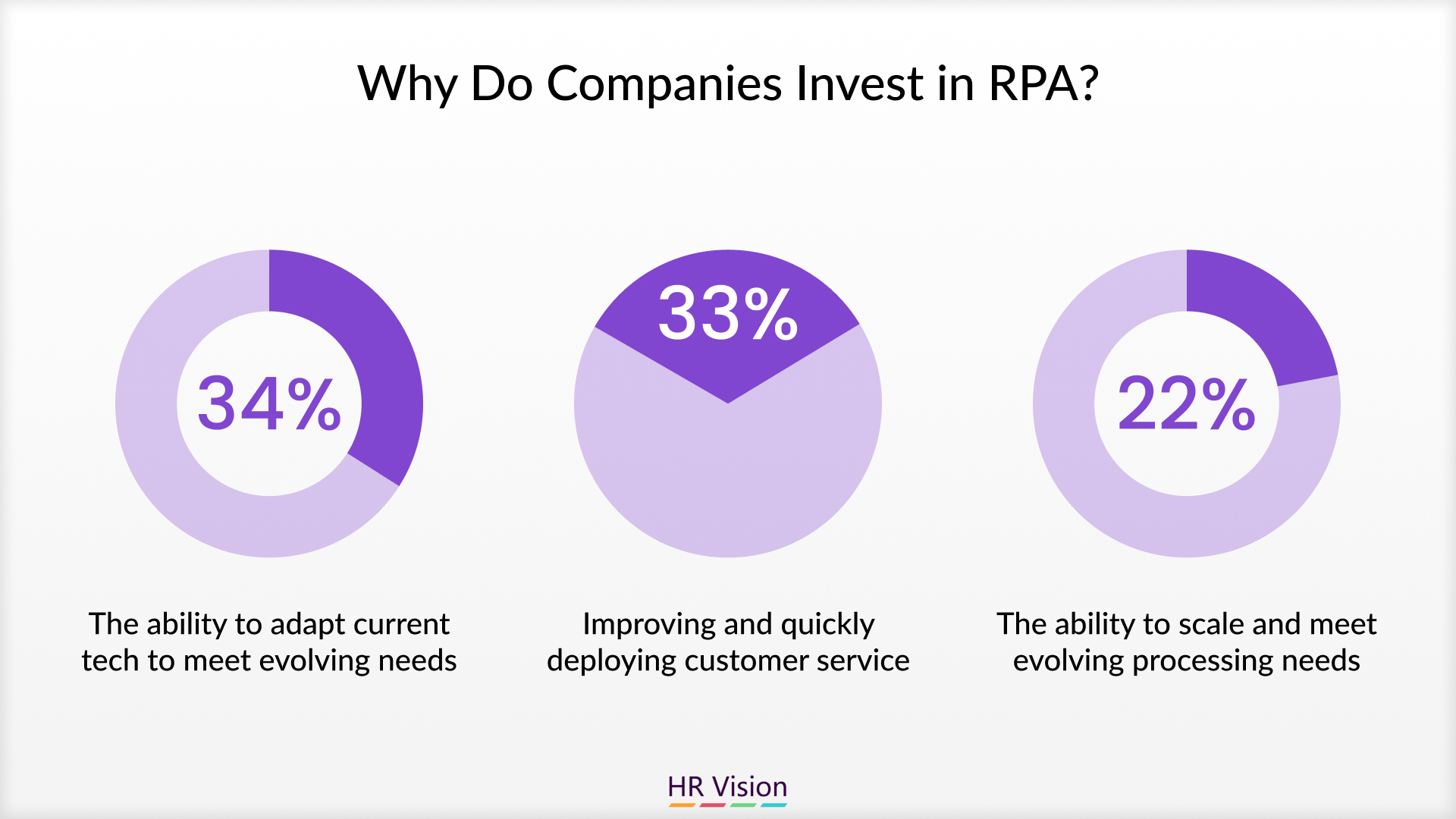
The ability to scale operations to meet changing processing needs is critical for many organizations. With 22% of companies citing this as a key driver, RPA’s scalability becomes evident. As business volumes fluctuate, RPA can easily adapt to handle increased workloads, ensuring operational efficiency and responsiveness.
Conclusion
Robotic Process Automation (RPA) presents a transformative opportunity for HR departments to elevate efficiency, accuracy, and strategic focus. RPA takes over mundane tasks, freeing up valuable human resources to focus on strategic initiatives that drive business growth. This shift leads to increased productivity, fewer errors, better data management, and improved employee experiences, ultimately providing a compelling return on investment. Through increased productivity, reduced errors, improved data management, and enhanced employee experiences, RPA delivers a compelling return on investment.
Want to learn more about how RPA can revolutionize your HR department? Join us at the HR Vision, where industry leaders will share their insights on the latest HR trends and technologies.