Pay transparency, once a relatively obscure concept, is rapidly gaining traction within the HR community. As organizations grapple with issues such as employee satisfaction, diversity and inclusion, and talent retention, the idea of openly disclosing salary information is becoming increasingly appealing. Recent studies indicate that a mere 12% of companies have taken proactive steps to develop and implement a pay transparency strategy. This suggests that there is a significant untapped potential for organizations to leverage pay transparency as a strategic tool to enhance their HR practices.
What Is Pay Transparency?
Pay transparency refers to the practice of openly disclosing salary information within an organization or industry. This can include sharing salaries with individual employees, providing aggregate salary data, or making compensation information publicly available.
Historically, pay transparency has been a contentious issue. In many cultures, discussing salaries was considered taboo, and individuals were often discouraged from sharing their compensation information with colleagues. However, in recent years, there has been a growing movement towards greater openness and transparency in pay practices.
The primary goal of pay transparency is to create a more equitable and fair workplace. Providing employees with information about their compensation relative to their peers helps organizations address pay disparities and promote a sense of fairness. Additionally, pay transparency improves employee morale, increases trust in leadership, and enhances organizational reputation.
The Benefits of Pay Transparency
The pay transparency approach can offer significant advantages that not only benefit employees but also enhance the overall success of the organization. Here are some key benefits:
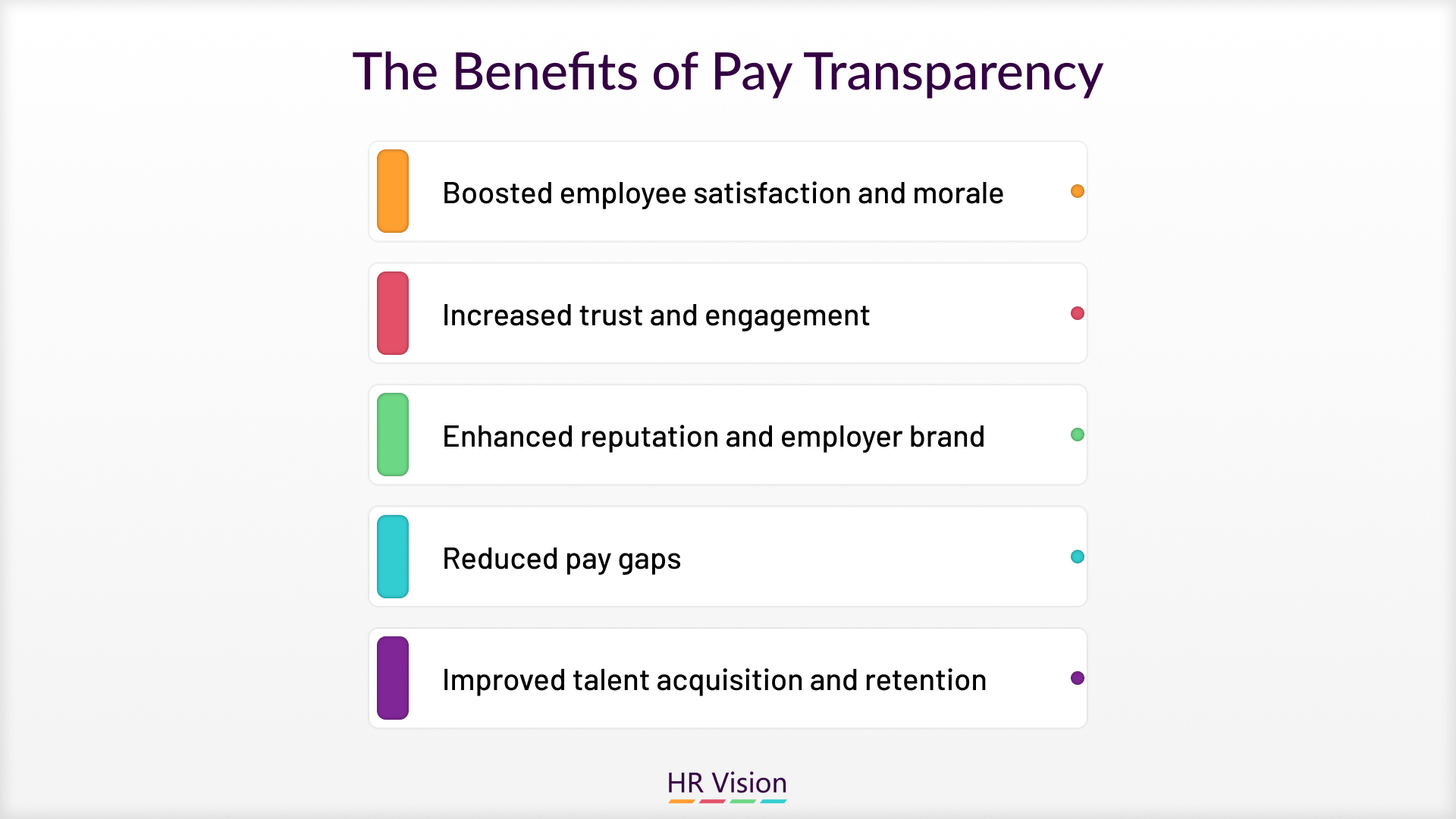
- • Improved Employee Satisfaction and Morale: When employees are aware that their pay is fair and consistent with their peers, it reduces uncertainty and promotes a sense of fairness. This transparency can lead to higher job satisfaction, as employees feel valued and fairly compensated for their work. It also helps in reducing feelings of resentment or inequality, which can negatively impact morale.
- • Increased Employee Trust and Engagement: Openness about pay fosters a culture of trust within the organization. Employees are more likely to engage fully with their work and the company when they believe that the compensation system is transparent and equitable. This trust translates into increased commitment and productivity, as employees are more motivated to contribute to an organization that values transparency and fairness.
- • Enhanced Organizational Reputation and Employer Branding: Organizations that are transparent about their pay practices can improve their reputation as employers. This can attract top talent and enhance the organization’s brand value.
- • Improved Talent Acquisition and Retention: In a competitive job market, pay transparency can be a decisive factor for attracting and retaining top talent. Candidates are more likely to choose and stay with companies that are upfront about their compensation structures. Moreover, transparency can reduce turnover by ensuring that employees are less likely to leave due to perceived pay inequities or a lack of clarity regarding their compensation.
- • Reduced Gender and Racial Pay Gaps: Pay transparency can help identify and address pay disparities based on gender and race. Making salary information public holds organizations accountable for ensuring fair compensation for all employees.
The Challenges of Pay Transparency
While pay transparency offers several potential benefits, it is not without its challenges. One potential drawback is that it could lead to increased employee dissatisfaction or resentment. If employees discover that they are earning less than their peers, they may feel undervalued or unfairly treated. This could negatively impact employee morale and productivity.
Another challenge is the difficulty in establishing fair and equitable pay structures. When salary information is publicly available, it can be more difficult to justify pay differences between employees. This can make it challenging for organizations to reward high-performing employees or to account for differences in experience, education, or job responsibilities.
Concerns about data privacy and security are also a factor. When organizations disclose salary information, they must take steps to protect that data from unauthorized access. This can be challenging, especially as the volume of data increases and technology evolves.
Finally, pay transparency can have unintended consequences, such as increased competition among employees. If employees are aware of each other’s salaries, they may feel pressure to negotiate for higher pay or to seek out new job opportunities. This can create a more competitive and less collaborative work environment.
Best Practices for Implementing Pay Transparency
Implementing pay transparency requires careful planning and execution. Here are some best practices to consider:
- Conduct a thorough assessment of organizational readiness
Before implementing pay transparency, organizations should assess their readiness to handle the potential challenges and benefits. This includes evaluating the current pay structure, employee attitudes towards transparency, and the organization’s capacity to handle potential conflicts.
- Develop a clear communication strategy
Effective communication is essential for successful pay transparency initiatives. Organizations should develop a clear communication plan that outlines how salary information will be disclosed, who will have access to the information, and how any questions or concerns will be addressed.
- Establish fair and equitable pay practices
To ensure that pay transparency is perceived as fair and equitable, organizations should review and revise their pay practices as needed. This may involve adjusting pay ranges, eliminating pay gaps based on gender or race, and ensuring that compensation is aligned with job responsibilities and performance.
- Provide opportunities for employee feedback and input
Employees should be involved in the pay transparency process. Organizations can gather employee feedback through surveys, focus groups, or one-on-one meetings. This can help to identify any concerns or questions and ensure that the pay transparency initiative is aligned with employee needs and expectations.
- Continuously monitor and evaluate the effectiveness
Pay transparency is an ongoing process. Organizations should regularly monitor and evaluate the effectiveness of their initiatives to identify any challenges or areas for improvement. This can help to ensure that pay transparency is a positive force for change within the organization.
Conclusion
Pay transparency presents a complex issue, offering both potential benefits and challenges. It can boost employee satisfaction, trust, and engagement, but may also lead to increased competition and concerns about data privacy.
As organizations increasingly focus on diversity, equity, and inclusion, pay transparency is likely to gain importance as an HR trend. Implementing pay transparency initiatives allows organizations to demonstrate their commitment to fairness, equity, and openness.
Ready to stay ahead in the ever-changing world of HR? Join us at HR Vision, where top HR leaders gather to explore the future of work, HR trends, and the power of HR analytics and technology.