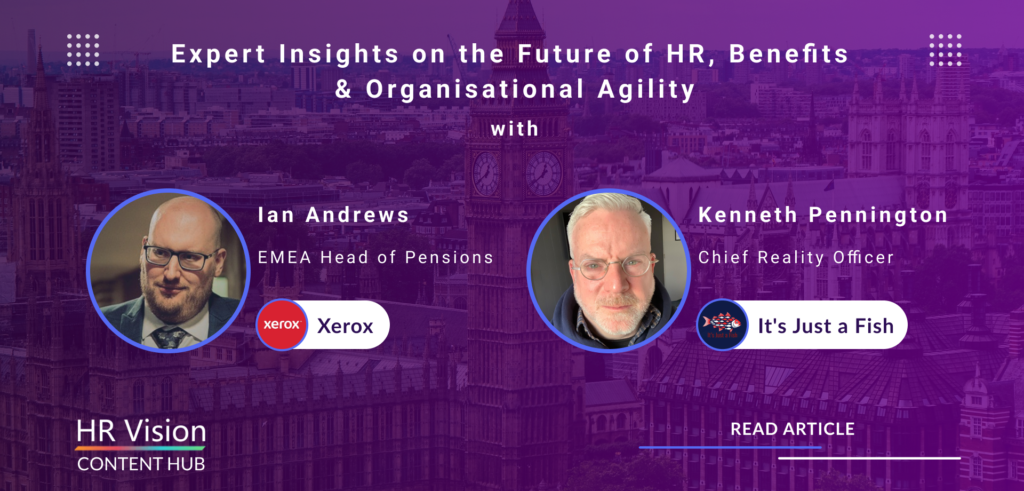
with Ian Andrews and Kenneth Pennington
Ian Andrews on HR, Benefits, and Wellbeing
Ian is an experienced HR leader specialising in Employee Benefits, Wellbeing, and Retirement Savings, with expertise across 130+ countries. A people-focused and creative problem solver, he’s known for maintaining a positive, collaborative, and supportive atmosphere even in complex circumstances. Colleagues often highlight his ability to build trust, align diverse stakeholders, and design benefits strategies that genuinely resonate with employees.
- Managing a £3.5bn DB scheme at Xerox, what’s the top challenge in creating sustainable retirement programs?
The top challenge is always trying to align conflicting priorities and stakeholders – getting Sponsors, Trustees, and a plethora of advisors to agree on things is never easy. At Xerox, we are fortunate to have invested a lot of time over the past few years in making sure these key relationships are strong and developing a ‘trust-based’ model by acknowledging a common goal when working together – ultimately, we are all working to ensure our members are paid their benefits.
- How do you balance global pension consistency with local compliance across 130+ countries?
This is incredibly tricky but not impossible. You need to be clear on what you mean by ‘global consistency’ as there are various different rules in different countries across all aspects of pensions, not just contribution rates. What you can do is set global consistency principles – we aim to be a market leader, we believe plans should be contributory, we believe in offering employees flexibility to suit their individual needs, etc.
- How can HR modernize benefits without overspending?
By having the right people leading the function. It sounds obvious, but over the past few years, the number of true benefits specialists in leadership roles has reduced, often because of costs driving decisions, and the net result is benefit plans tend to see costs go up more than they need to. A good strategic specialist can help an HR leadership team value their benefits as a key engagement tool rather than merely a cost or admin process. Once you change the way you think about benefits, it is amazing what can actually be achieved!!!
- What makes a wellbeing strategy truly effective for employees, not just a checkbox?
Similar to the previous question, make sure it’s led by someone who knows what they’re doing! Someone who understands the wellbeing vendor market, who is aware of and follows the market trends, who has built a widened, diverse professional network within the wellbeing industry, who can step back and provide strategic oversight and direction, and most crucially, someone who understands YOUR people and their needs. Don’t allow it to be a ‘hobby job’ or ‘extra curricular’ otherwise, it will end up as a well-intentioned but poorly received boxcheck.
- What emerging benefits trends should companies prepare for in the next few years?
Watch out for AI. We are all aware of it as the growing trend throughout businesses and benefits is no different. However, buyer beware. There is no guarantee that shiny new technology will reduce your costs, improve your engagement, or have any other positive benefit if you don’t have the right PEOPLE setting the strategy and making the decisions. AI will have a place but as a tool, not a solution to all unknown problems.
- What’s the most underrated factor affecting employee experience today?
The strategic benefits specialist. Like I mentioned earlier, if you are an HR or business leader and want to make the most of your benefits as an engagement tool, you need the right senior leader in the team. Benefits are the only HR function that affects employees every day (including before they join and after they leave the organisation), it is the only one to engage directly with their families, and is the only one to operate on a true emotional engagement. Employees will always care more about their child’s healthcare than the latest mandatory training video you want them to watch. Proper strategic benefits engagement can build trust with employees, make them feel valued, and show that the organisation cares about their loved ones. I’ve never seen a Talent Acquisition leader manage that 😉
Kenneth Pennington on HR Transformation and Leadership Development
Kenneth specialises in people strategies, leadership coaching, and idea facilitation, helping organisations drive engagement and meaningful transformation. With experience across Fortune 500 companies, top-tier consultancies, and emerging industries, he focuses on positive disruption, managerial courage, and adaptability. His work spans media, pharmaceuticals, and technology, where he excels at facilitating strategy workshops and coaching leaders to inspire lasting cultural change and innovative solutions.
- With 12+ years in HR transformation, what’s the biggest barrier organizations face in becoming more agile?
In my experience, the biggest barrier organisations face in becoming more agile is resistance to change (a lack of change). This resistance often stems from deeply ingrained cultural norms and a lack of understanding or trust in new processes. Overcoming this requires a strategic approach to change management, including clear communication, leadership buy-in, and continuous engagement with employees at all levels. If you want agile organisations, create a fly wheel—keep change and momentum as top agenda. If you hear, “It has always been done the way,” investigate, look for efficiencies and change champions.
- What makes your “It’s Just a Fish” methodology unique in driving HR transformation?
The “It’s Just a Fish” methodology is unique because it simplifies complex HR transformation processes into manageable, relatable steps. By breaking down large-scale changes into smaller, more digestible actions it helps teams to stay focused and motivated. This approach also emphasises the importance of storytelling and clear communication, ensuring that everyone understands the vision and their role in achieving it. If a transactional change is part of a larger, more long-term change initiative, just make the change—why wait?
- At SITA, you boosted engagement by 20% and cut turnover by 15%. What were the key drivers of that success?
The key drivers of success at SITA were the strategic alignment of leadership development and talent processes. By focusing on data-driven succession planning and enhancing career development opportunities, we were able to increase employee engagement and reduce turnover. Additionally, initiatives to improve onboarding, career growth pathways, and wellbeing programs played a significant role in creating a holistic employee experience.
- What common mistakes do companies make when building leadership pipelines?
One common mistake companies make when building leadership pipelines is failing to align leadership development with the overall business strategy. There are too many must haves versus needed, wanted, and focuses. This can result in a disconnect between the skills and capabilities of future leaders and the needs of the organization. Another mistake is neglecting to provide ongoing support and development opportunities for emerging leaders, which can hinder their growth and readiness for higher-level roles.
- Which talent management metrics should HR focus on first to show business impact?
HR should focus on metrics that directly correlate with business outcomes, such as employee engagement, turnover rates, and productivity levels. These metrics provide a clear picture of the health of the organization and the effectiveness of HR initiatives. Additionally, tracking the success of leadership development programs and succession planning efforts can demonstrate the long-term impact of talent management on business performance. Who has been successful in their role, who have been successful in their promoted role, and how did our flagged “stretch” resources do in their new/development role.
- What’s your best advice for HR teams trying to win executive buy-in for big change projects?
My best advice for HR teams is to present a compelling business case that clearly outlines the benefits and potential ROI of the proposed changes. I tend to follow Kidlin’s Law, “thoroughly documenting the problem is 50% of solving the problem.” This includes providing data and evidence to support the need for change, as well as highlighting success stories and best practices from other organisations. It’s also crucial to engage executives early in the process and involve them in the planning and decision-making stages to ensure their support and commitment. If your seat is strong enough at the table, you are the best executive sponsor.
Ready to stay ahead in the ever-changing world of HR? Join us at HR Vision, where top HR leaders gather to explore the future of work, HR trends, and the power of HR analytics and technology.