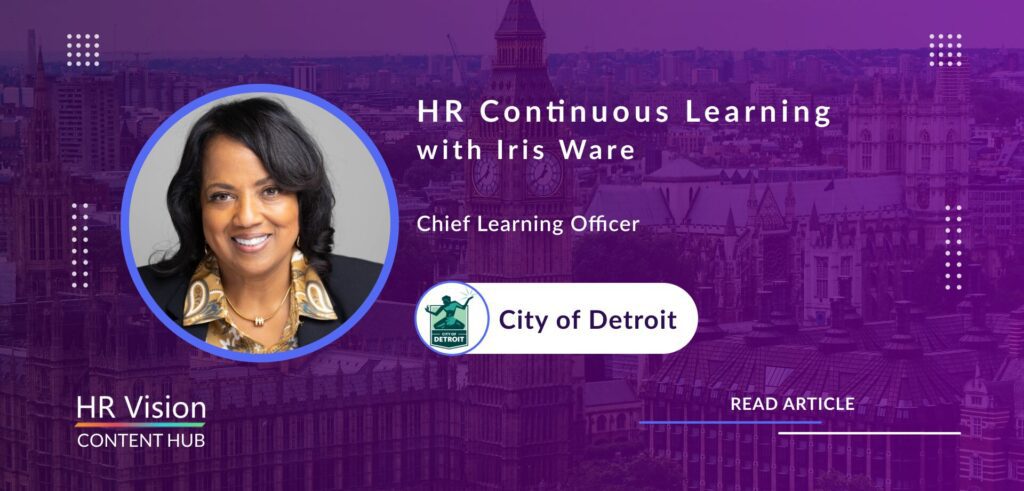
1. As a Human Capital Strategist, how do you foresee the evolving role of HR in the next decade, and what advice would you give to stay ahead?
I see HR becoming more systemic and closely aligned with operational excellence in the future. HR’s role as a support function is fading and will continue to fade as the integration of AI and digital interfaces expands in scope and functionality. HR must move closer to strategic business outcomes and help drive the talent decisions that will impact, expand, and provide the organization’s financial livity.
2. With your expertise in fostering collaboration, what strategies have proven effective in building a collaborative culture within diverse teams?
I anchor collaboration, specifically building a collaborative culture within diverse teams on three principles.
- Giving up the need to be right/the expert;
- Releasing control/leading from within the team instead of being the Boss
- Seeking to understand the perspectives of others by stating and asking: “I am sorry, I don’t understand. Can you help me understand . . .? ”
These three strategies have helped me to build trust, mutual respect, and inclusivity, and ensure that all team members are heard AND understood. For me, they are cornerstones for collaboration within diverse teams.
3. How do Lean, Design Thinking, and other certifications contribute to your innovative HR approach?
The world is constantly changing. The work we do, how we do it, and where we do it is constant. HR professionals must continue to build capacity and capability beyond functional and operational HR knowledge and practices. About my certifications, LEAN, a Six Sigma concept helps me to eliminate waste and deliver value. Design Thinking helps me drive innovation by rapidly defining and designing user and impact-focused solutions. Change Management, Organizational Development, and SAFe improve my ability to respond to organizational and environment changes. Human Capital Strategist and Performance Improvement Technologist certifications help to provide insights and strategic methodologies to accurately allocate and utilize the organization’s most important resource, people.
4. With experience in public, private, and non-profit sectors, what unique HR challenges do you see in each, and how can strategies be adapted?
The unique HR challenges of public, private, and non-profit/not-for-profit entities rest in three areas. First, the rules, regulations, and governing bodies. Secondly, the differing cultures derived from the rules, regulations, and governing bodies of each. Finally, the socioeconomic responsibility and impact of each type of organization. HR plays a key role in administering the unique policies, processes, and procedures, which establishes the tone and culture, which then drives internal and external impact. HR strategies may differ for each but must be anchored in humanistic approaches to regulatory guidance, providing measurable value and impact for the organization.
5. Specializing in Organizational Turn-Around and Transformation—what factors contribute to success, and how can HR play a pivotal role?
Understanding the goals, objectives, deliverables, expected outcomes, results and impact is the key to HR’s OTAT success. HR can play a pivotal role by engaging in, partnering with, and helping leaders deliver on non-HR-related goals, objectives, and deliverables. Organizational Turn-Around and Transformation are very challenging and maybe intimidating for HR professionals who view themselves as “support”. HR must redefine itself and move from support to an active player, contributor, and leader in the process. You have to know more than “HR”. When we become HR+ professionals, i.e. HR + strategy development and execution, HR + LEAN, and HR + innovation drivers, we can then play a pivotal role in organizational turn-around and transformation efforts.
6. How has your academic background shaped your human capital strategy, and what advice do you have for continuous education in HR?
My academic background is anchored in curiosity and the need to make things better. Human Capital Strategy is all about making things better. When properly executed there positive micro/individual, macro/organizational, and mega/societal impacts. My advice to HR for continuous education, explore, ask why, and then find the answer for yourself. Don’t look for the answer that confirms HR practices and knowledge base. Look for non-HR answers and create connections to HR. I am personally and professionally committed to continuous education in HR. All of my team members are required to complete a training, and certification, or attend a conference each year. Continuous learning is a measured goal for my team’s annual performance evaluation process.
7. What principles are essential for successful change initiatives, and how can HR leaders communicate and manage change effectively?
John P. Kotter’s book, “Leading Change” is my go-to resource for change initiatives. While the book outlines an 8 stage process, over the years I have learned and in practice, I’ve used a single stage to successfully initiate and drive change. The key to driving change is communication and simplicity. Communication must be clear and frequent to dispel negativity and rumors. The change must be clearly and incrementally defined and transparent to eliminate opportunities for confusion.
8. Integrating executive coaching—how do you approach it, and what advice do you have for organizations implementing coaching programs for leadership?
Executive coaching is and should be voluntary and available to all leaders.
It is said,
When the student is ready, the teacher will appear.
I’ve learned that the same is true with coaching on any level. In situations where the executive or leader is not open to coaching other development programs may be used, i.e. Situational Leadership, SkillGym, a Hogan Assessment and/or Core Strengths assessment. These programs provide professional sight and seem to increase professional awareness. In the absence of openness to executive coaching, the opportunity to build awareness and trust exists, and that’s a good thing.
9. Recently, Great Britain has introduced a pilot project of a 4-day working week. What’s your opinion about it? What advantages and disadvantages do you see both for employers and employees? Would you take part in the experiment, and why?
Employment is a relationship between the employer and the employee. Like any other relationship, over time the needs of each party may change. If there is no detrimental effect on for employer, the employer and employee should establish guidelines to embrace the change. Over the last few years, we have learned to work differently. There should be some consideration of the cost/benefit analysis for both parties before making the change. In the US in 1926, Henry Ford instituted the 8-hour day/5-day work week. The way, where, and what we do for work has changed significantly since then. Maybe after almost 100 years, it’s time for a change. After all, are we paying for time, i.e. the physical possession of a person or talent, productivity, and results? I would definitely take part in the experiment. Why, because I am always open to exploring and learning something new.
Ready to stay ahead in the ever-changing world of HR? Join us at HR Vision, where top HR leaders gather to explore the future of work, HR trends, and the power of HR analytics and technology.