Today’s business world is full of uncertainties, from global changes to pandemics, technology shifts, and demographic transformations. In this context, having a strong strategy for workforce risk management is more important than ever, particularly for ensuring a sustainable growth rate.
What is Workforce Risk Management?
Workforce Risk Management refers to the strategic process of identifying, analyzing, and mitigating risks associated with the workforce to ensure the effective and efficient achievement of organizational objectives. It covers understanding and dealing with challenges in talent acquisition, workforce engagement, talent retention, regulatory compliance, and other factors affecting the human aspect of an organization. A crucial aspect of workforce risk management involves developing a comprehensive risk management plan tailored to the organization’s specific needs and challenges. This plan outlines proactive measures to identify, assess, prioritize, and address potential risks related to the workforce throughout various operational areas.
Current Landscape in HR and Business
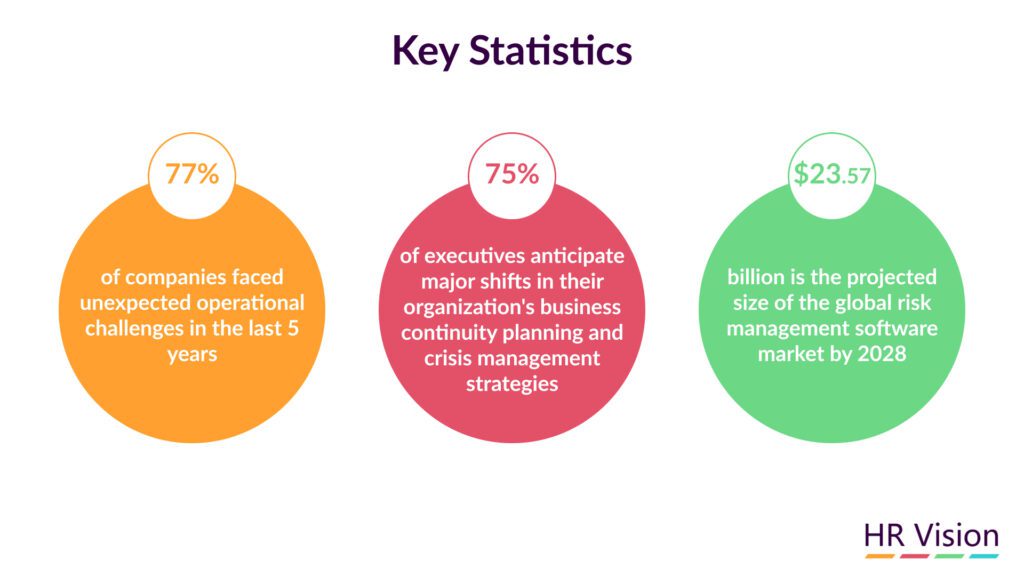
The PwC Global Risk Survey reveals that a significant 77% of companies faced unexpected operational issues in the past five years due to unidentified risks. This highlights the widespread presence of risks in operations, emphasizing the crucial need for robust risk management strategies. Surprisingly, around 61% of organizations have enterprise risk management (ERM) programs that are less than five years old, indicating that many companies are still in the early stages of implementing risk management initiatives.
The survey also indicates that 29% of businesses foresee major risk events affecting their organizations within the next two years. This proactive approach emphasizes the importance organizations place on identifying and addressing potential risks before they become significant challenges. In response to the growing risk landscape, 36% of organizations plan to increase their investment in risk management and compliance over the next two years. This commitment reflects a recognition of the strategic importance of effectively managing risks to ensure sustainable growth and organizational resilience.
These statistics highlight the need for organizations to prioritize workforce risk management as a fundamental part of their operational strategies. In a time marked by volatility, uncertainty, complexity, and ambiguity (VUCA), organizations must actively identify, assess, and mitigate risks to safeguard their operations, protect their reputation, and seize growth opportunities.
Common Workforce Risks
In understanding workforce dynamics, it’s crucial to identify common risks for effective management. These risks cover various aspects such as talent acquisition, engagement, retention, regulatory compliance, and the evolving nature of work.
Talent acquisition risks involve challenges in attracting and onboarding skilled individuals. Workforce engagement risks relate to maintaining motivation and job satisfaction among employees. Talent retention risks focus on keeping key personnel and reducing turnover rates to preserve institutional knowledge. Cybersecurity risks encompass threats related to the protection of sensitive data and systems, necessitating measures to guard against cyberattacks and ensure the security of digital assets.
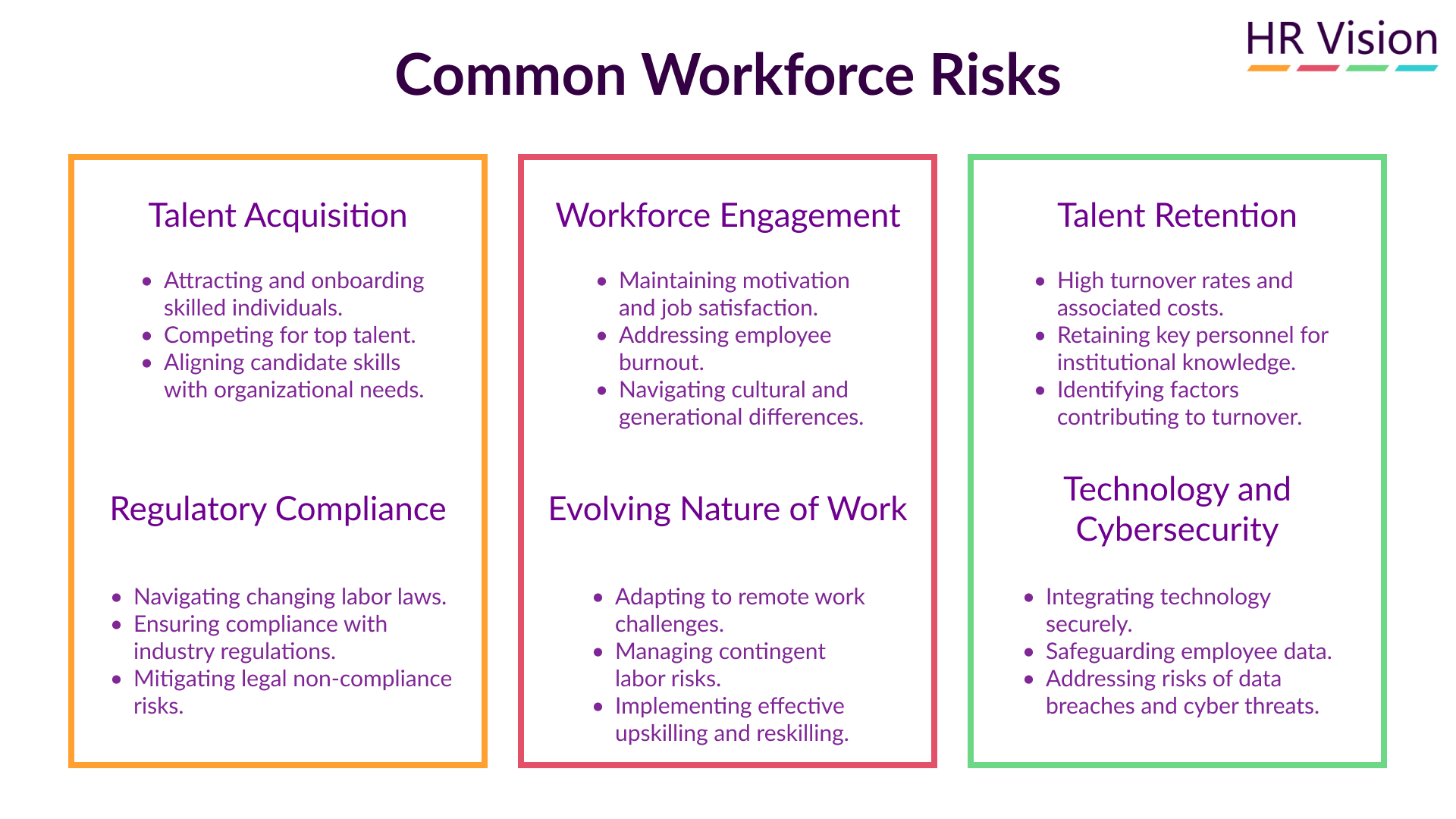
Regulatory compliance risks entail adhering to labor laws and industry regulations, requiring organizations to navigate legal complexities to avoid penalties and reputational harm. The evolving nature of work introduces risks like remote work, contingent labor, and the need for upskilling and reskilling to adapt to a changing business environment.
Workforce risk solutions aim to mitigate these challenges by employing strategic measures, utilizing advanced analytics, and implementing proactive policies to enhance overall workforce resilience. These solutions play a vital role in safeguarding organizations against potential disruptions, ensuring a dynamic and adaptable workforce in the face of ever-changing business environments.
Strategies for Effective Workforce Risk Management
1. Proactive Talent Management
Effectively managing workforce risks starts with proactive talent management. Organizations need to anticipate and tackle talent-related risks through a strategic approach to recruitment, onboarding, and retention. This includes identifying key skills, planning for succession, and creating a talent pipeline that aligns with the organization’s long-term goals. Staying informed about market trends, understanding evolving workforce needs, and adjusting strategies to attract and retain top talent are vital aspects of this approach.
2. Continuous Learning and Development
In a time of fast-changing technology and job roles, continuous learning is crucial for effective workforce risk management. Organizations should invest in ongoing training, upskilling, and reskilling programs to ensure employees have the necessary skills for a dynamic work environment. Fostering a culture of continuous learning not only boosts employee abilities but also minimizes risks linked to skill obsolescence and workforce gaps. A skilled and adaptable workforce is better prepared to handle industry changes, technological disruptions, and market uncertainties, promoting sustainable growth and competitiveness.
3. Employee Well-being Programs
Taking care of employee well-being is a key part of managing workforce risks, covering both physical and mental health. Organizations that prioritize this aspect through wellness programs and mental health initiatives foster a resilient and engaged workforce. Addressing factors such as stress, burnout, and workplace dissatisfaction helps mitigate risks associated with absenteeism, turnover, and reduced productivity. Proactive well-being programs also contribute to a positive organizational culture, enhancing employee morale, and fostering a sense of commitment and loyalty.
4. Compliance and Regulatory Compliance
Ensuring compliance with labor laws, industry regulations, and ethical standards constitutes a fundamental pillar of workforce risk management. Organizations must stay abreast of evolving compliance requirements, conduct regular audits, and implement robust processes to mitigate legal and regulatory risks. Proactive measures, such as providing compliance training, establishing clear policies and procedures, and fostering a culture of ethical conduct, are essential. Prioritizing compliance and regulatory adherence helps organizations avoid legal repercussions, reputational damage, and potential disruption of business operations while promoting a sustainable growth rate.
5. Technology and Cybersecurity
As organizations embrace digital transformation, the significance of technology and cybersecurity in workforce risk management cannot be overstated. With the increasing reliance on technology for remote work, collaboration, and data management, organizations must invest in robust cybersecurity measures to protect sensitive information and mitigate risks associated with data breaches, cyber threats, and technological vulnerabilities. Implementing secure IT infrastructure, conducting regular cybersecurity training for employees, and staying vigilant to emerging threats are crucial steps. Integrating technology and cybersecurity into workforce risk management strategies ensures the resilience and security of digital operations while fostering a culture of cyber-awareness among employees.
Using Technology for Workforce Risk Management
In the world of workforce risk management, technology plays a vital role in boosting organizational capabilities through HR analytics and predictive modeling. Analyzing key metrics like employee performance, turnover rates, and engagement levels helps organizations make informed decisions to proactively tackle challenges. Predictive modeling takes it a step further, allowing organizations to anticipate and address risks before they become a problem. HR analytics, based on historical data and trends, empowers organizations to implement strategic interventions that create a resilient and adaptable workforce.
The integration of Human Resources Information Systems (HRIS) is a game-changer in workforce risk management, streamlining HR processes and improving communication and collaboration within the organization. HRIS acts as a central platform that consolidates HR-related data, automates routine tasks, and facilitates efficient data management. By digitizing and automating processes like employee onboarding, attendance tracking, and performance evaluations, HRIS allows HR professionals to focus on strategic initiatives and risk management. Moreover, HRIS enhances communication and collaboration by providing a central hub for information, enabling real-time updates, and fostering smooth interactions between HR and employees.
Conclusion
Emphasizing the importance of workforce risk management, it’s clear that organizations should prioritize strategic initiatives aligned with long-term goals. The combination of talent strategies, ongoing learning, well-being programs, compliance adherence, and technology forms a comprehensive framework for risk management and unlocking the workforce’s full potential. A robust risk management plan should also incorporate regular assessments and simulations to identify potential threats and vulnerabilities, allowing organizations to proactively address and mitigate risks.
Looking forward, HR and workforce management are set to evolve further. Key trends include increased use of HR analytics, integration of Human Resources Information Systems (HRIS), and the intertwining of technology in HR processes. Organizations embracing these trends will be better prepared to manage risks, adapt to industry shifts, and cultivate innovative and resilient workplaces. The future of HR lies in seamlessly integrating technology, data-driven decision-making, and a human-centric approach to talent and well-being.
Are you ready to revolutionize your workforce risk management strategy for sustainable growth? Join us at HR Vision, where top HR leaders gather to explore the latest trends, best practices, and innovative approaches in navigating the evolving landscape of work.