Candidate experience is how job seekers feel about your company during the hiring process. It includes everything—from reading your job ad and applying, to interviews and communication, all the way to getting hired (or not).
And it really matters. 66% of candidates say a good experience helped them decide to accept a job offer. When the process is smooth, respectful, and clear, candidates feel valued—and that makes them more likely to join your team. A bad experience, on the other hand, can turn great candidates away and hurt your company’s reputation.
Why Candidate Experience Shapes Your Employer Brand
Candidate experience isn’t just a “nice-to-have”—it is critical how people view your company and whether top talent chooses to work with you. When organizations invest in improving the candidate experience, they don’t just boost goodwill—they see real results. Companies that focus heavily on candidate experience report a 70% improvement in the quality of hire, helping them avoid costly hiring mistakes and saving hundreds of thousands of dollars in the long run.
On the flip side, poor communication can push candidates away. 80% of job seekers say they would not apply to other roles at a company if they weren’t informed of their application outcome. That means one ignored applicant today could be dozens of missed opportunities tomorrow.
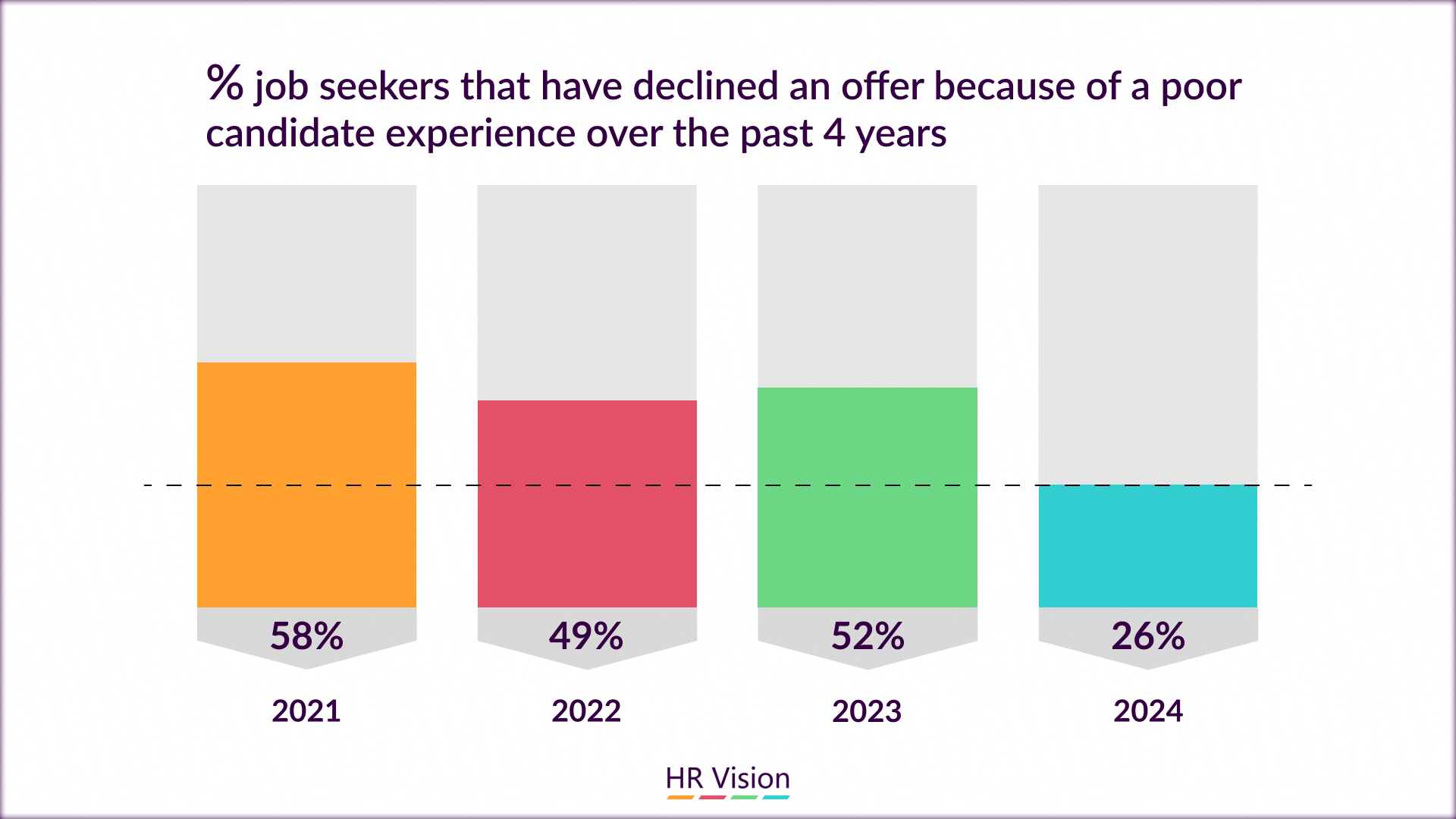
A thoughtful, respectful hiring process builds your employer brand, strengthens your talent pipeline, and ensures great candidates don’t just apply—they stick around.
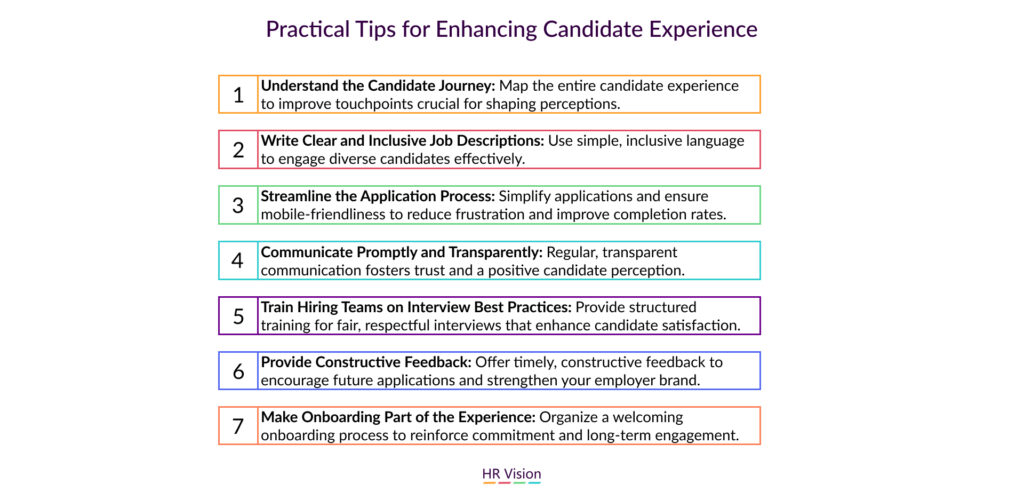
#1 Understand the Candidate Journey
To improve candidate experience, you first need to see it through their eyes. That means mapping out the full journey—from discovering your job ad to signing the offer and getting onboarded.
Every step matters. Key touchpoints like how easy it is to apply, how fast you respond, the quality of interviews, and the clarity of communication all shape a candidate’s impression of your company.
Use short surveys or feedback forms at different stages to find out where candidates feel confused, frustrated, or left out. Even one or two small changes in the process can remove major roadblocks and improve the overall experience.
To improve the candidate experience, you need to understand the entire candidate journey, from the moment they first discover your job posting to their final day of onboarding.
Mapping the Candidate Journey
The journey typically breaks down into several key stages:
- Job Discovery: This is where candidates first hear about your job opening, whether through job boards, your company website, or social media. The clarity of your job descriptions and your employer branding can make or break this first impression.
- Application: How easy is it for candidates to apply? A streamlined, mobile-friendly application process helps avoid frustration. Lengthy or complicated applications can lead to candidate drop-off.
- Initial Communication: This stage involves the first interaction with your hiring team, whether through automated emails or recruiter outreach. Clear, timely communication here sets the tone for the rest of the experience.
- Interview Process: This is often where candidates form their strongest opinions. Was the interview process organized, professional, and respectful? Did the interviewers give a fair opportunity to showcase skills and fit?
- Offer & Decision: Once a candidate receives an offer, the way it’s presented and how quickly you follow up matter. A delayed response or unclear offer terms can leave candidates with a bad impression.
- Onboarding: The experience doesn’t end with the offer letter. Onboarding is a crucial part of the candidate journey, as it helps new hires feel welcome, informed, and ready to succeed. A poor onboarding experience can cause even the most excited candidate to feel overwhelmed or disconnected.
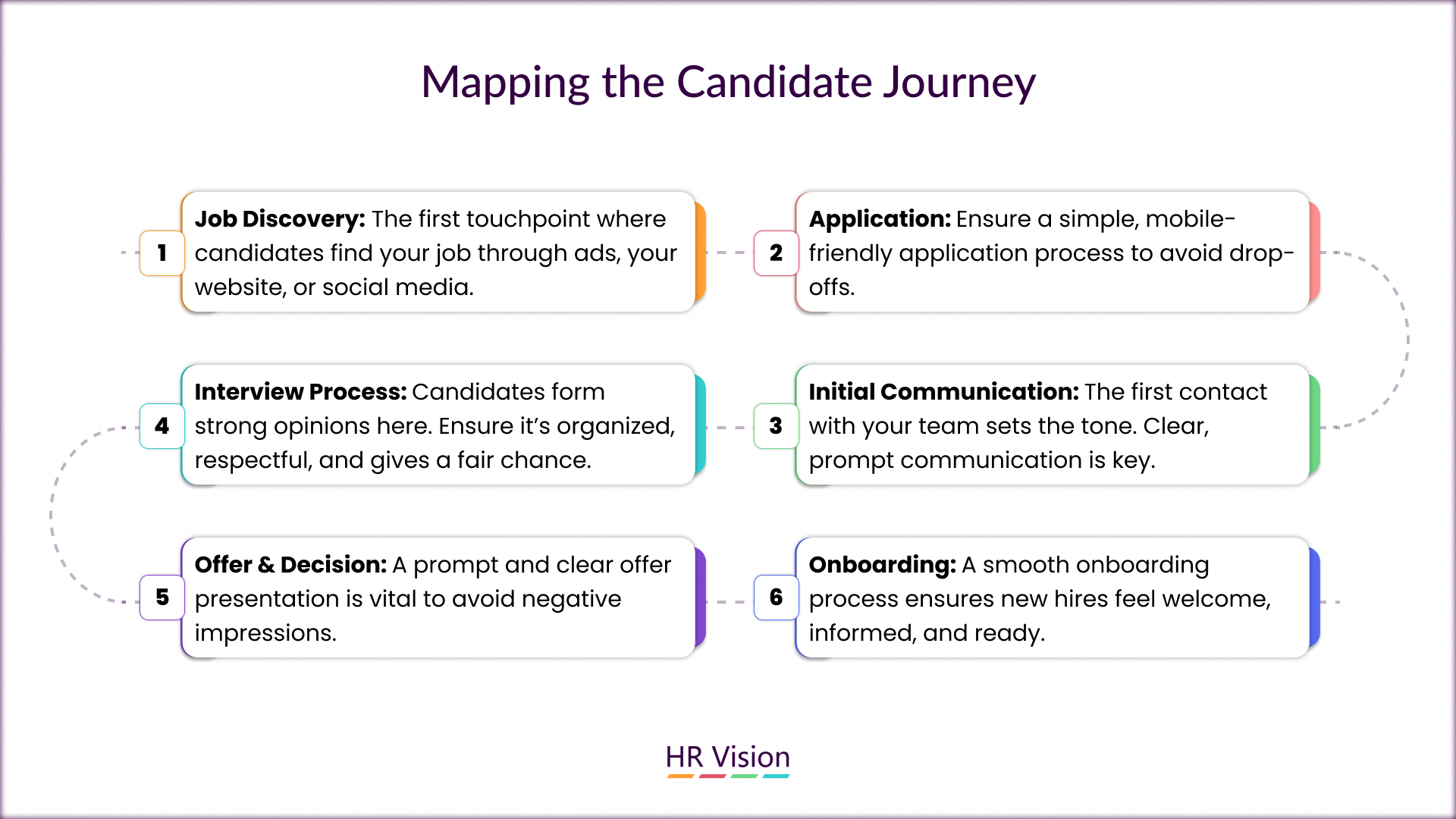
Every one of these stages is a touchpoint that can influence how candidates feel about your company. By identifying and optimizing each part of the journey, you can create a seamless, positive experience that strengthens your employer brand and encourages top talent to join your team.
#2 Write Clear and Inclusive Job Descriptions
A well-written job description is often the first impression a candidate will have of your company. It’s essential to get it right, as it can significantly impact the quality of applicants you attract.
- Use Clear, Straightforward Language
Avoid jargon, buzzwords, and overly technical terms that may confuse or turn off candidates. Use simple, accessible language that gives a clear picture of the role. Remember, your goal is to engage, not overwhelm.
- Include Key Details
Be sure to list the most important aspects of the role. This should include:
- • Responsibilities: What will the candidate be expected to do day-to-day?
- • Qualifications: What skills, experience, or education are required?
- • Benefits: What perks or benefits come with the role (e.g., health insurance, remote work options)?
- • Salary Range: Including this upfront is an excellent way to set expectations and build trust with candidates. It also helps attract candidates who are comfortable with the compensation package.
- Use Inclusive Language
To appeal to a diverse talent pool, make sure your job description is inclusive. Avoid gendered language or unnecessary requirements that might discourage underrepresented groups from applying. For example, instead of saying “he or she,” use “they” as a gender-neutral option. Also, consider the phrasing of your qualifications—ensure you’re not unintentionally filtering out talent based on unrealistic or biased expectations.
#3 Streamline the Application Process
A smooth and simple application process is essential for providing a positive candidate experience. Lengthy or complicated applications can quickly cause frustration, leading to candidates abandoning the process altogether.
- Minimize Unnecessary Steps or Forms
Simplify the process by removing non-essential fields and steps. Only ask for key information—such as contact details, relevant experience, and qualifications—at the initial stage. 60% of job seekers have abandoned a job application due to its length and complexity, so keeping it short can prevent drop-offs and improve completion rates.
- Ensure Mobile-Friendliness and Ease of Use
Many candidates apply to jobs using their phones or tablets, so it’s crucial to ensure that your application process is mobile-friendly. Forms should be easy to fill out, buttons should be appropriately sized, and the layout should allow for smooth navigation without excessive scrolling or zooming.
- Apply to Your Own Jobs
To truly understand how candidates feel, apply to your own job postings as if you were a job seeker. This exercise will help you identify pain points such as confusing forms, broken links, or unnecessary steps. A fresh perspective can highlight areas for improvement and help you streamline the process for candidates.
#4 Communicate Promptly and Transparently
Communication is one of the most important—and most overlooked—parts of the candidate experience. Too often, candidates are left wondering where they stand.
Always send a confirmation when an application is received. It sets a professional tone and lets candidates know their effort didn’t disappear into a black hole. From there, regular updates matter. 65% of candidates say they rarely or never receive an update on their application, which can lead to frustration and a negative perception of your brand.
Be upfront about the steps in your hiring process. Let candidates know how many interviews to expect, what types of assessments may be included, and when they’ll hear back. Setting realistic expectations reduces anxiety and helps candidates stay engaged.
Use automation to send quick status updates, like application confirmations or scheduling reminders. But for rejections, offers, or major updates, a personal note—no matter how brief—shows respect and professionalism. That human touch goes a long way in building goodwill.
#5 Train Hiring Teams on Interview Best Practices
Interviews are often the most personal and impactful part of the candidate experience. They’re also where things can easily go wrong if hiring teams aren’t properly prepared.
Candidates notice when interviewers are late, unprepared, or inconsistent. In fact, 46% of candidates feel their time was disrespected during interviews. Training your team to treat every candidate with professionalism and courtesy can significantly improve their overall impression of your company.
Every interviewer should be clear on the job requirements and what “success” looks like in the role. This ensures candidates are evaluated fairly and consistently, rather than based on gut feeling or personal bias.
Help your team stay structured by using interview scorecards with pre-set criteria. This not only improves fairness but also keeps the process focused. You can also offer short training sessions or guides on how to deliver a respectful, efficient, and welcoming interview experience.
#6 Provide Constructive Feedback
Even when candidates don’t get the job, how you handle the outcome can leave a lasting impression—positive or negative.
- Offer Timely, Thoughtful Feedback
Don’t leave candidates hanging. Let them know the outcome as soon as a decision is made, and whenever possible, provide brief but meaningful feedback. A respectful rejection with helpful insight shows that you value the time and effort they invested.
- Focus on Development, Not Just Rejection
Frame feedback in a way that helps candidates grow. Rather than just saying “you weren’t the right fit,” explain what could strengthen their application next time. This shows empathy and professionalism, and encourages a continued relationship.
- Use Feedback Templates to Save Time
Providing feedback doesn’t have to be time-consuming. Create templates or standard formats for common scenarios (e.g., not enough experience, skill mismatch) and customize as needed. This keeps the process efficient while still feeling personal.
Candidates who are notified of their outcome are 3.5 times more likely to reapply for future roles at the same company. Thoughtful feedback keeps your talent pipeline strong—even when someone isn’t the right fit today.
#7 Make Onboarding Part of the Experience
Candidate experience doesn’t end when the offer is signed—it extends into onboarding. A strong start can reinforce a candidate’s excitement and boost long-term retention.
Keep the momentum going after the offer is accepted. A welcome email, pre-start checklist, or even a quick call from a future teammate helps new hires feel valued and included right away. Give candidates access to useful materials like team bios, a company overview, or a first-week schedule. Early introductions—whether through a virtual meet-and-greet or a simple group message—help break the ice and ease first-day nerves.
Make it easy for new hires to complete paperwork, set up their accounts, and understand HR processes before their first day. The less time they spend on admin, the more time they can spend getting excited about their new role.
Use onboarding platforms that blend compliance tasks with culture-building. The best tools go beyond forms and policies—they help reinforce your company’s values and connect new hires to the bigger picture.
Want to take it a step further?
Check out our next article: [How a Strong Onboarding Process Impacts Employee Retention]—and learn how to turn new hires into long-term team players.
Conclusion
A well-managed candidate experience is essential for attracting top talent and building a strong employer brand. Every step, from the job description to onboarding, plays a crucial role in shaping how candidates perceive your company.
The best part? Small changes—like clearer communication, personalized interviews, and streamlined applications—can have a significant impact on your ability to attract and retain the right people. By making candidate experience a priority, you’re not just improving your hiring process; you’re investing in your company’s future.
Want to dive deeper into the latest HR practices and trends? Join us at HR Vision for two days of insightful discussions on the future of work, talent management, and the impact of HR tech.