Shifting Tides: Skills-Focused Hiring Takes Center Stage in Job Market
In the ever-evolving job market landscape, a dramatic shift is taking place, igniting the rise to a trend known as “skills-focused hiring”. No longer are recruiters scanning CVs primarily for university degrees from elite institutions. Instead, there is a notable and growing emphasis on specific skills, relevant experience, and the ability to perform tasks proficiently.
Emily Field, a partner at global management consulting firm McKinsey & Co., has been closely following this trend. “Skills-based hiring is one of the main topics that I hear CEOs and CHROs asking about,” she remarks. “They continue to face a skills gap and a talent shortage, and at the same time, recruiting technology is screening out more than half of the applicants due to [their not meeting] education and experience requirements.”
Despite this, there still exists a disparity in the market. As reported by Harvard Business School, 50% of employers pay higher compensation to recent college graduates than non-degree holders in the same job. Furthermore, over 40% of HR managers find entry-level positions, where four-year college degrees are traditionally important, among the most difficult to fill.
It is worth noting that the minimum education requirements in job postings can correlate with the unemployment rate. Studies have shown that when job postings heavily emphasize specific degrees or higher education qualifications, it can contribute to higher unemployment rates among individuals without those credentials.
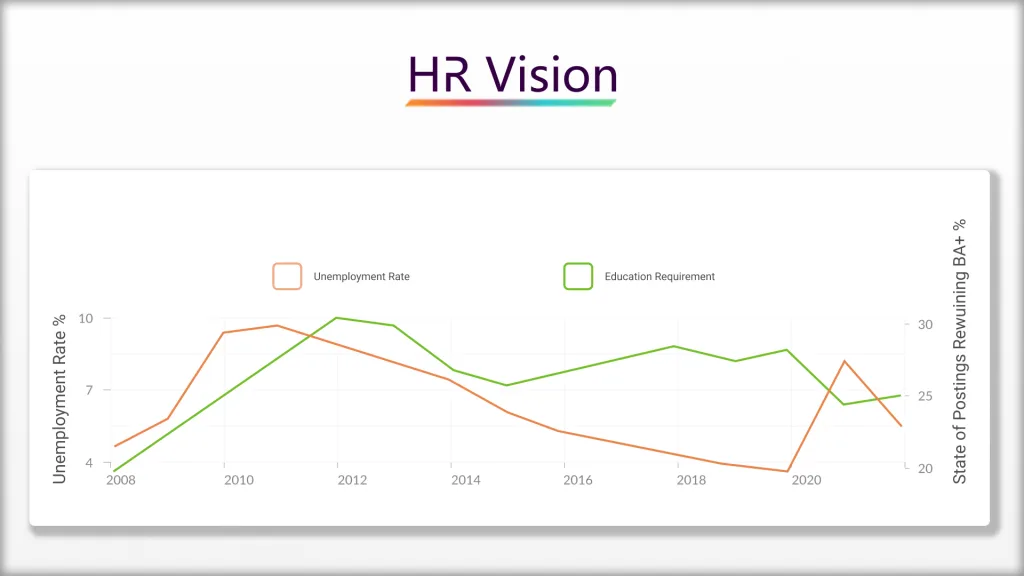
Figure 1: Relationship between minimum education requirements in job postings and the unemployment rate
This paradigm shift underscores a significant realization – skills-focused hiring is not merely an optional alternative. It has become a necessity, an effective means of sourcing talent in an era marked by a rapid pace of technological advancements and constantly changing job roles. However, to reap the full rewards of this approach, businesses need to be willing to commit to change. Such a commitment extends beyond merely altering job descriptions or interview questions. It involves a thorough re-evaluation and often a complete transformation of traditional hiring practices and workplace culture.
As companies navigate towards skills-focused hiring, they invariably face certain challenges. Implementing this change could disrupt existing HR frameworks, necessitate new training methods, and require updated technology. Moreover, biases towards degree holders could be a significant barrier. However, a sincere commitment to change can help overcome these hurdles. It paves the way for companies to challenge existing norms, invest in necessary infrastructure, and foster an environment that values skills and competencies over traditional qualifications. The journey might be complex, but the rewards in the form of a versatile, future-ready workforce make it a worthwhile endeavor.
In the modern business landscape, several industry giants have successfully transitioned to skills-focused hiring, setting examples for others to follow. Esteemed companies like Apple, IBM, Google, Nordstrom, Publix, and Bank of America, have started removing bachelor’s degree requirements from many of their job positions, according to CNBC. This move is a significant stride towards a more skills-focused approach to hiring. Instead, they now prioritize the tangible skills a candidate brings to the table, as well as their fit within the company culture. These changes have enabled these organizations to tap into an expansive pool of untapped talent, further fueling their growth and innovation.
Transforming the Recruitment Process: Key Steps to Implementing Skills-Focused Hiring
Implementing a skills-focused hiring strategy calls for substantial changes in the traditional recruitment process. This overhaul starts from the way job descriptions and advertisements are formulated.
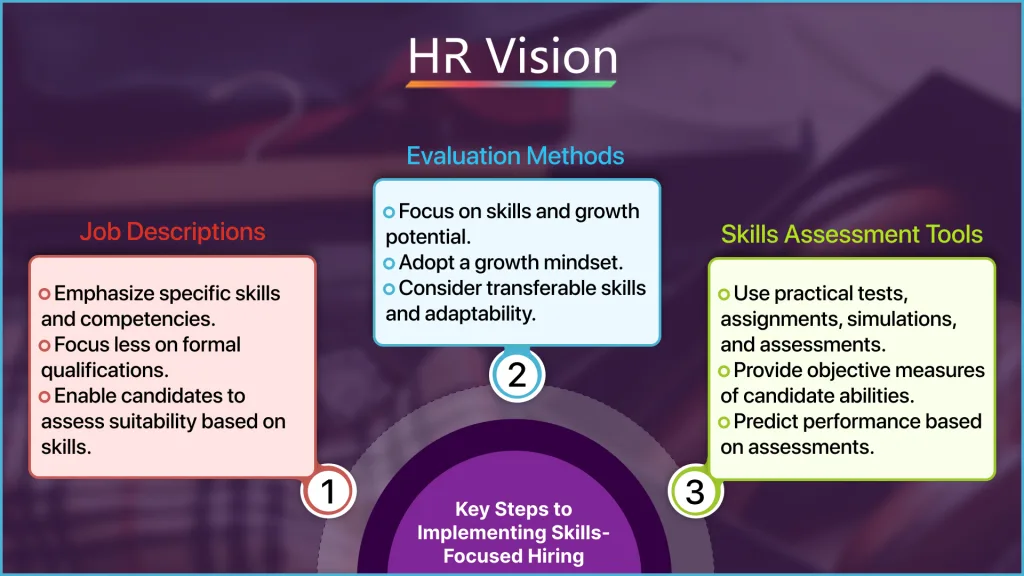
Firstly, job descriptions need to be rewritten to emphasize the specific skills and competencies required for the role, rather than focusing primarily on formal educational qualifications or previous job titles. This shift in perspective allows potential applicants to better understand the job requirements and assess their suitability based on their skills. This practice not only broadens the candidate pool but also makes the selection process more equitable, enabling recruiters to assess candidates based on their ability to perform tasks rather than their formal credentials.
In parallel, the role of hiring managers and recruiters evolves significantly. They must adapt their evaluation methods to focus on an applicant’s skills and potential to grow within the company. This may involve adopting a growth mindset when evaluating candidates, focusing on transferable skills and adaptability. For instance, a candidate with a knack for problem-solving and strong communication skills might be an excellent fit for a customer service role, even if they need to possess direct experience in the field.
Moreover, this shift in recruitment approach necessitates the introduction of robust skills assessment tools. These tools can range from practical tests and assignments to simulation exercises and psychometric assessments. They provide a more objective and accurate measure of a candidate’s abilities, helping to predict their performance in the job role. Using such tools can also help to mitigate biases in the hiring process and contribute to a more diverse and inclusive workforce.
Cultivating a Skills-Valued Company Culture: Strategies for Success
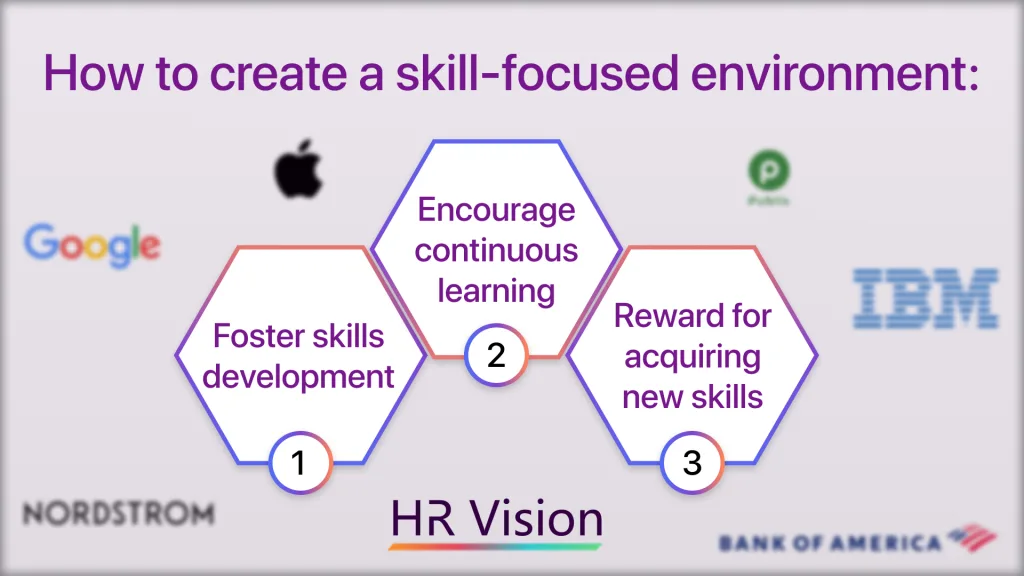
The successful implementation of skills-focused hiring doesn’t stop with the recruitment process. A key part of the equation is cultivating an organizational culture that not only values but also actively fosters skills development. Creating a human-centered workplace is crucial for fostering employee engagement, satisfaction, and productivity. By prioritizing the well-being and development of employees, organizations can cultivate a positive and inclusive environment where individuals can thrive and contribute their best work.
Implementing the following strategies can help businesses create a supportive environment that encourages continual learning and career growth.
Businesses should actively encourage continuous learning. In an era marked by rapid technological advancements, the ability to learn and adapt becomes critical. Companies can facilitate this by offering various learning opportunities, such as in-house training programs, webinars, workshops, or even subsidies for online courses. This creates an environment where employees are motivated to continually enhance their skillset and stay up-to-date with industry advancements.
Promoting from within is another powerful strategy to support skills-focused hiring. Prioritizing internal career advancement demonstrates to employees that career progression does not solely rely on obtaining more formal education. Employees can see first-hand that their skill development and contributions to the company are recognized and rewarded, motivating them to further hone their skills.
Recognition and reward for skills and contributions are vital. Regular acknowledgment of employees’ skills and the value they bring can reinforce the culture of skills over degrees.
By integrating these strategies into their organizational culture, businesses can create an environment where skills-focused hiring becomes the norm rather than the exception. This supportive environment can contribute to a more flexible, innovative, and adaptable workforce, ready to tackle the ever-evolving challenges of the modern business landscape.
In conclusion, the traditional emphasis on formal education in the hiring process is giving way to a more inclusive and practical skills-focused approach. This transformation is apparent in the rewriting of job descriptions, the training of hiring managers and recruiters to evaluate candidates differently, and the use of advanced assessment tools that measure actual skills and competencies.
However, implementing skills-focused hiring effectively necessitates a commitment to significant change. Beyond modifying the hiring process, it involves fostering a company culture that encourages continuous learning, promotes from within, and values skills over formal qualifications.
Some of the world’s leading companies, such as Apple, IBM, Google, Nordstrom, Publix, and Bank of America, are already pioneering this change. Their success showcases the potential of skills-focused hiring to create a more adaptable and innovative workforce.
For companies still reliant on traditional hiring methods, it’s time to consider this skills-focused approach. While it may seem challenging at first, the rewards – in terms of more accurate job matches, greater workforce diversity, and increased adaptability – make it an investment worth considering.
Discover how HR analytics and HR Tech are revolutionizing people management practices, and gain valuable knowledge to shape a people-centered future of work. By joining our HR conference in London, you’ll explore the future of work, the latest HR trends, talent management strategies, and leadership insights.