In the complex world of business leadership, there’s a powerful, often underappreciated asset that sets remarkable leaders apart from the rest: Emotional Intelligence (EI). Research findings have consistently demonstrated that emotional intelligence (EI) is a potent indicator of performance, with approximately 90% of high achievers displaying elevated levels of emotional intelligence. This notable statistic has captured the attention of recruiters who recognize its significance.
However, Emotional Intelligence isn’t just a nice-to-have trait for social interactions. It’s an indispensable part of leadership development, playing a pivotal role in nurturing a leader’s ability to guide, inspire, and motivate others. Whether it’s cultivating positive team dynamics, making informed decisions under pressure, or navigating the intricacies of organizational politics, EI serves as a fundamental tool in a leader’s arsenal.
The Impact of Emotional Intelligence (EI) in the Workplace
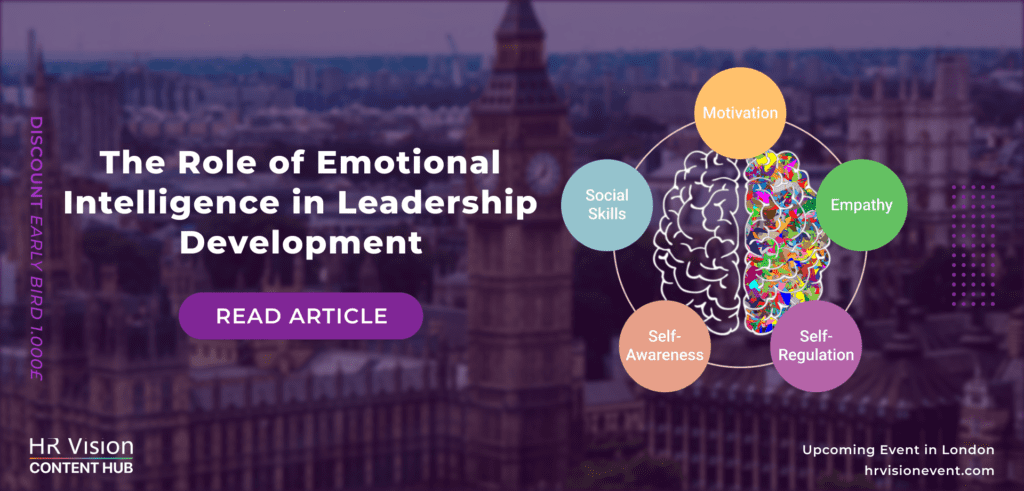
Emotional Intelligence (EI) was coined by psychologists John Mayer and Peter Salovey in the early ’90s and later popularized by Daniel Goleman. EI refers to the ability to identify, use, understand, and manage one’s own emotions and those of others in positive ways. It’s about self-awareness, empathy, and effective emotional regulation, facilitating better communication, conflict resolution, and decision-making.
Emotional intelligence is best exemplified by this scheme.

Emotional Intelligence (EI) has a profound impact on the workplace and is instrumental in fostering an environment conducive to productivity, innovation, and job satisfaction.
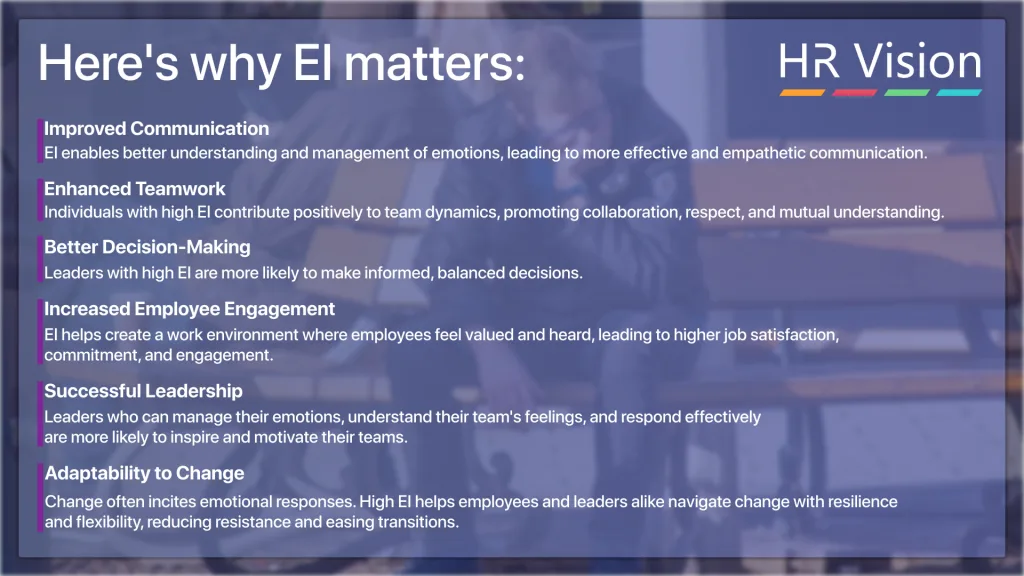
Emotional Intelligence (EI) profoundly impacts leadership development, enhancing decision-making abilities, conflict resolution skills, communication, team dynamics, and work environment. In addition to its impact on individual leadership, emotional intelligence also plays a vital role in fostering corporate-level leaders.
A robust level of EI equips leaders with a unique discernment that allows for better decision-making. Leaders with high EI are adept at understanding their own emotions and those of others, resulting in balanced and informed decisions. They can objectively assess various perspectives, weigh up pros and cons, and take into account the emotional impact of their decisions on their teams, making them more effective decision-makers.
When it comes to conflict resolution, EI plays a pivotal role. Leaders with high EI can empathize with different viewpoints, fostering a sense of fairness and respect even amidst disagreements. They are skilled at navigating the rough waters of conflict, ensuring that resolutions are reached in a manner that maintains team cohesion and mutual respect.
In terms of communication and team dynamics, EI acts as a critical lubricant that eases the friction of interpersonal interactions. Leaders with high EI are effective communicators, capable of expressing their thoughts clearly and understanding the feelings and perspectives of their team members. This ability strengthens team bonds, promotes collaboration, and enhances overall team performance.
Lastly, EI significantly contributes to cultivating a positive work environment. Leaders who can understand and manage emotions—both theirs and others’—create an environment where employees feel valued and understood. This emotional resonance boosts employee engagement, job satisfaction, and productivity, promoting a more harmonious and effective workplace.
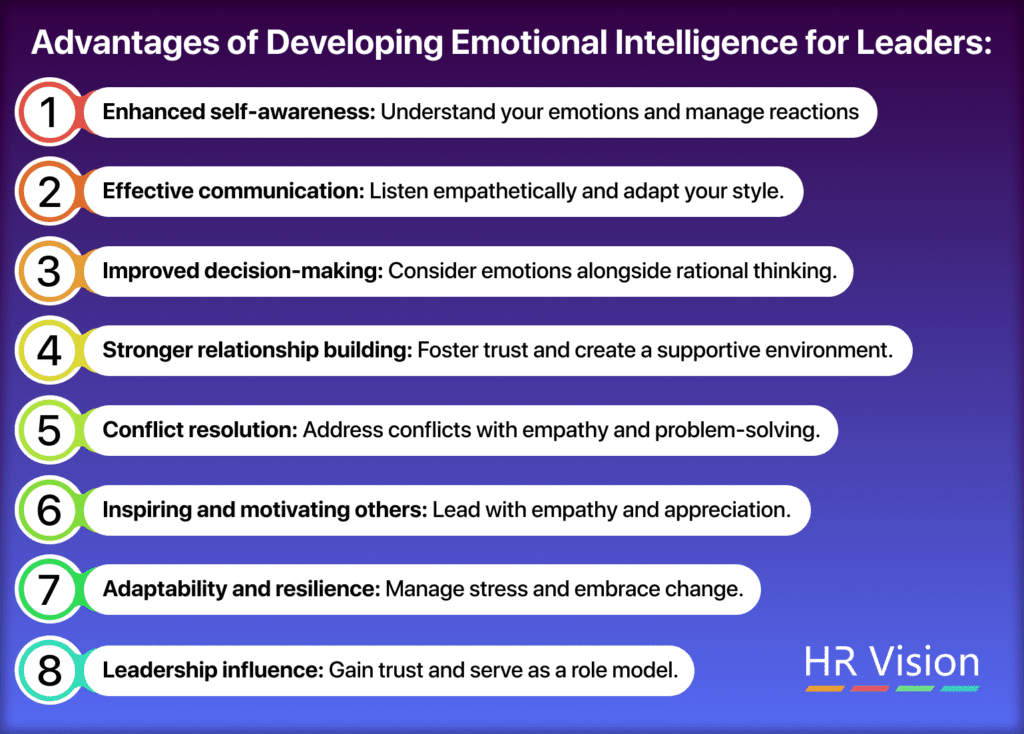
Through these various ways, EI shapes leadership development, making it an indispensable component in creating successful and resonant leaders.
Techniques for Developing Emotional Intelligence in Leaders
Developing Emotional Intelligence in leaders is a journey that requires deliberate practice and commitment.
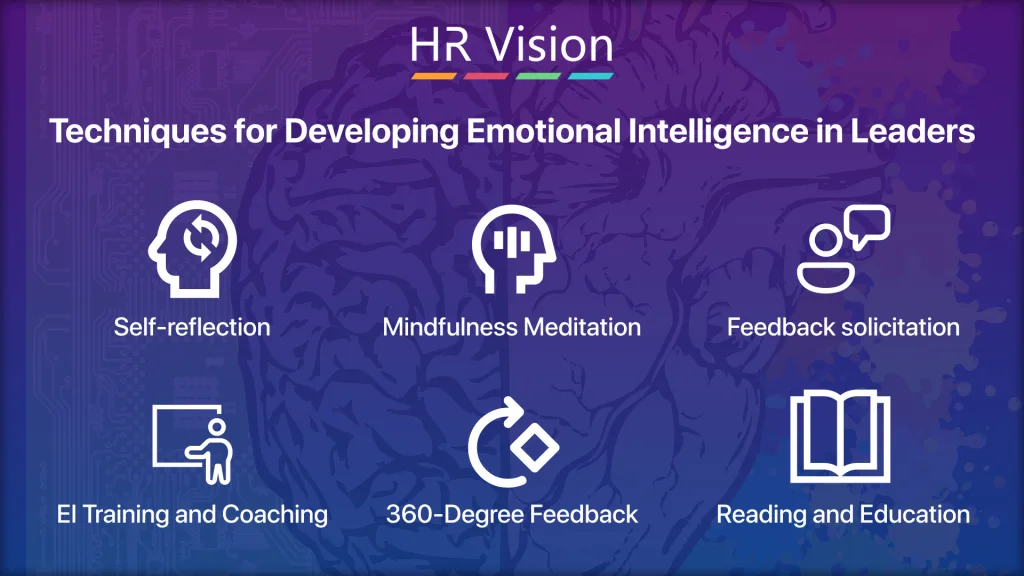
Self-reflection: Regularly examining emotional responses allows leaders to understand their emotional patterns, triggers, and biases. It cultivates emotional control and leads to more balanced and informed decisions.
Mindfulness Meditation: Training the mind to focus on the present moment without judgment enhances emotional control and decision-making. It develops awareness of emotions and thoughts, reducing impulsive reactions and promoting thoughtful decisions.
Feedback solicitation: Seeking input from others provides valuable insights into emotional blind spots. Leaders can identify areas for improvement in emotional intelligence and make targeted efforts to enhance their skills.
EI Training and Coaching: Programs offer practical tools to improve emotional intelligence competencies. Through practice and refinement, leaders enhance decision-making abilities and overall effectiveness.
360-Degree Feedback: Collecting feedback from multiple sources provides a well-rounded understanding of emotional competencies. Leaders can create development plans to address gaps and enhance emotional intelligence.
Reading and Education: Engaging in materials on emotional intelligence offers insights and practical strategies. Leaders can stay updated and apply effective techniques to their leadership practices.
Emotional Intelligence (EI) is not an immutable trait; rather, it is a skill that can be honed and developed over time. The process of cultivating EI in leaders is critical, and it begins with a commitment to self-awareness and improvement.
The importance of ongoing EI development in leadership training programs cannot be overstated. As the business landscape continues to evolve, so too must our leaders. Regular EI training ensures that leaders can adapt to changing circumstances, manage stress effectively, and lead with empathy and understanding.
In conclusion, developing EI in leaders is a continuous and rewarding process, bringing together leaders through personal commitment, strategic training, and consistent practice. This holistic approach ensures that leaders can adapt to changing circumstances, manage stress effectively, and lead with empathy and understanding. The benefits of developing EI in leaders, such as enhanced leadership effectiveness, improved team dynamics, and a more engaged workforce, make it an invaluable investment.
Want to delve deeper into Emotional Intelligence and its impact on leadership? Join us at HR Vision London. Learn from top HR leaders about the future of work and the evolving trends in HR.
Books are powerful resources for individuals seeking to develop their emotional intelligence in leadership. Here are TOP-5 recommendations that provide practical insights, strategies, and real-world examples to help cultivate Emotional Intelligence skills for effective leadership.
- “Emotional Intelligence why it can matter more than IQ” by Daniel Goleman
- “The Emotionally Intelligent Manager: How to Develop and Use the Four Key Emotional Skills of Leadership” by David R. Caruso and Peter Salovey
- “Primal Leadership: Realizing the Power of Emotional Intelligence” by Daniel Goleman, Richard Boyatzis, and Annie McKee
- “Leading with Emotional Intelligence” by Reldan S. Nadler
- “Leading with Emotional Intelligence – In the Age of Automation, Robotics & AI” by Kevin Mann