What is employee turnover, and why is it important?
Employee turnover is a significant concern for organizations of all sizes and industries. It refers to the rate at which employees leave an organization and need to be replaced. While some level of turnover is expected and even healthy for an organization’s growth, excessive turnover can be detrimental.
Turnover can be categorized into two main types:
➤ Voluntary Turnover: This occurs when employees choose to leave the organization of their own accord. Reasons for voluntary turnover can vary widely, from seeking better career opportunities elsewhere to dissatisfaction with their current job or workplace culture.
➤ Involuntary Turnover: In contrast, involuntary turnover happens when employees are terminated or laid off by the organization. This can result from poor performance, disciplinary issues, or restructuring efforts within the company.
Involuntary turnover can be helpful for developing recruiting strategies, but it is more important to focus on voluntary turnover when it comes to retention. This is because voluntary turnover is typically caused by factors that are within the company’s control, such as compensation, benefits, and work-life balance. On average, companies lose 13% of their employees each year due to voluntary turnover.
Importance of Addressing Employee Turnover
- High turnover costs money, knowledge, and morale.
- Frequent turnover can negatively affect morale and engagement.
- High turnover rates can harm an organization’s reputation.
Direct Costs of Employee Turnover
Employee turnover is a costly issue that affects organizations in numerous ways. Beyond the intangible costs related to morale and productivity, there are tangible financial implications that directly impact a company’s bottom line.
Recruitment and Hiring Expenses:
- Job Postings: Covers job listing fees on various platforms.
- Recruitment Agency Fees: Fees for professional candidate sourcing.
- Screening and Interviewing Costs: Includes background checks, travel expenses, and interview technology.
- Onboarding and Training: Encompasses orientation, specialized materials, and trainer compensation.
Understanding these direct costs is essential for organizations seeking to reduce turnover and optimize their talent retention strategies. By identifying and quantifying these expenses, businesses can make informed decisions about investments in employee engagement, development, and retention initiatives that can ultimately lead to cost savings and improved overall performance.
The financial impact of employee turnover can vary significantly based on the type of employee being replaced. The cost of replacing an individual employee can range from 0.5 to 2 times the employee’s annual salary, according to Gallup. When it comes to hourly employees, the cost can be as high as $4,500, as reported by American Progress. In technical positions, the cost can reach 100% to 150% of the employee’s salary, and for C-level positions, it can go up to 213% of their salary, according to SHRM.
Indirect Costs of Employee Turnover
While the direct costs associated with replacing employees are relatively easy to quantify, such as recruitment expenses and salary negotiation, the indirect costs are often overlooked but equally significant. For example, according to SHRM, two-thirds of the costs of turnover are intangible, including lost productivity and knowledge. Lost productivity alone costs U.S. businesses a shocking $1.8 trillion every year.
Decreased Productivity:
– New employees take time to reach the productivity level of departed colleagues.
– Team dynamics suffer, leading to decreased collaboration and potential conflicts.
Impact on Morale and Company Culture:
– High turnover lowers morale, decreases job satisfaction, and increases stress.
– Frequent turnover disrupts company culture and can lead to cultural clashes.
Loss of Institutional Knowledge:
– Departing employees take valuable institutional knowledge with them.
– Rebuilding knowledge is resource-intensive and may lead to long-term inefficiencies.
According to Josh Bersin, it can take new employees 1-2 years to reach the same level of productivity as high-performing employees who have left, leading to a significant productivity gap. Furthermore, even after hiring a replacement, it may take several months for them to become productive. This situation can potentially result in a loss of income and profits, especially if the departed team member made a significant contribution to revenue.
Hidden Costs Beyond the Balance Sheet
While the financial implications of recruitment, training, and lost productivity are well-documented, there are other hidden costs that often go unnoticed but can significantly impact a company’s long-term success.
Customer Relationships and Satisfaction
- Impact on Customer-Facing Positions
One of the most significant hidden costs of employee turnover is its impact on customer-facing positions. Customer service representatives, salespeople, and account managers play a crucial role in building and maintaining customer relationships. When these employees leave, the continuity of these relationships can be disrupted, leading to a decline in customer satisfaction.
Customers often develop a rapport with the employees they interact with regularly. When a trusted employee departs, customers may feel uneasy or dissatisfied with the transition, potentially leading them to consider alternatives or, in some cases, voice their concerns.
- Loss of Client Trust Due to Employee Turnover
Consistency is a key factor in maintaining client trust. Frequent employee turnover can erode this trust, as clients may question the stability and reliability of a company that can’t retain its employees. This loss of trust can result in clients seeking out competitors who offer more stable relationships.
Watermark examined the correlation between a company’s employee turnover rate and its Net Promoter Score (NPS), a widely accepted metric for gauging the quality of customer experiences. A strong, inverse relationship between these two critical measures was discovered.
As illustrated in the graphic, the findings were nothing short of remarkable.
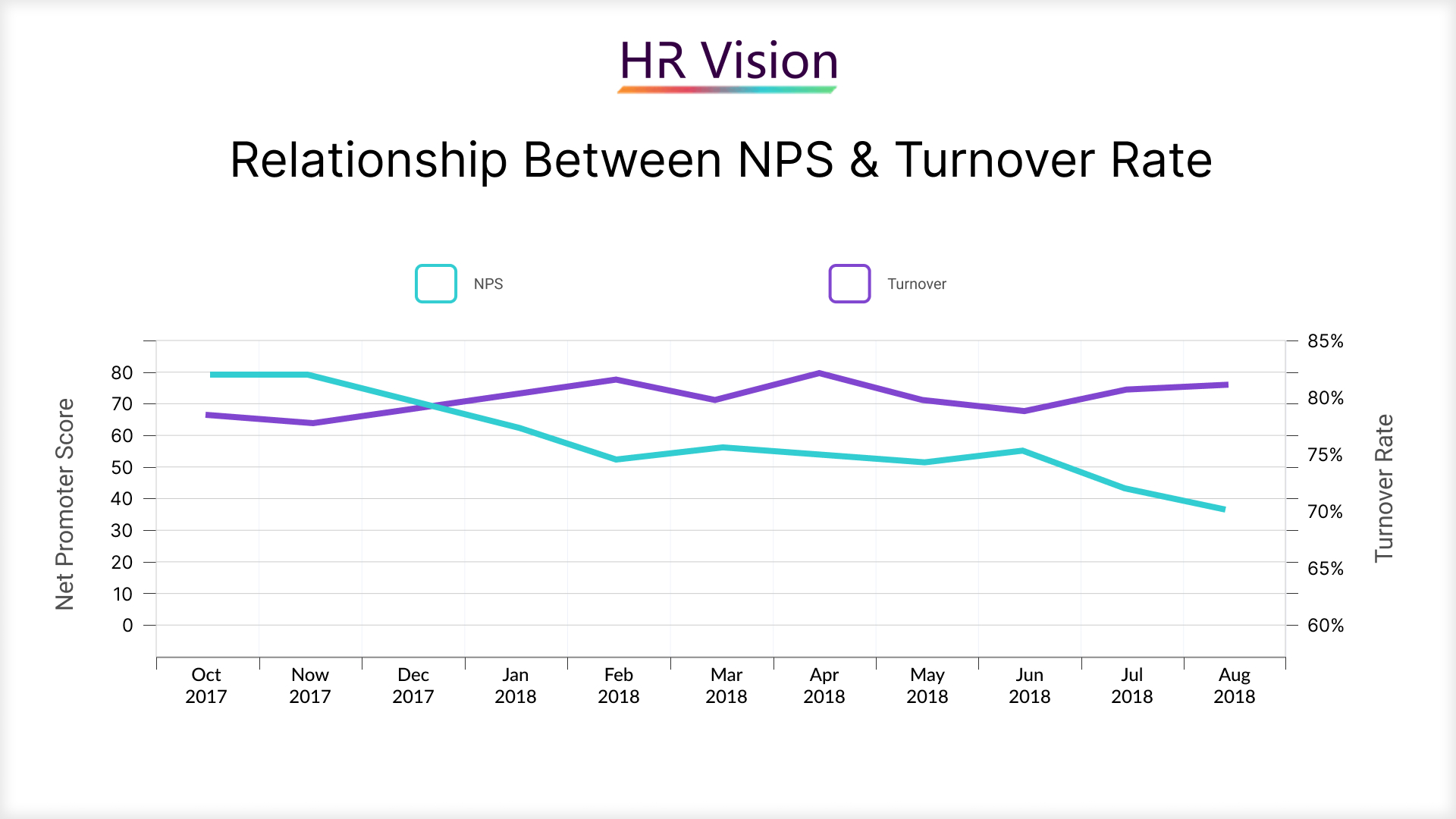
In the specific case highlighted, the NPS and turnover trends exhibited a mirroring effect, where a decrease in employee turnover corresponded to an increase in NPS, and conversely, when turnover rates rose, NPS scores declined.
Brand Reputation
- Negative Reviews and Word-of-Mouth
In today’s interconnected world, a company’s reputation is more vulnerable than ever. When employees leave on less-than-amicable terms or share negative experiences on public platforms, it can lead to negative reviews and word-of-mouth marketing that tarnishes the brand’s image. Potential customers often rely on online reviews and testimonials to make informed decisions, and a string of negative feedback can deter them from doing business with the company.
- Attracting Top Talent Becomes Harder
High turnover rates can also damage a company’s ability to attract top talent. Prospective employees may hesitate to join an organization with a reputation for instability, fearing they might become another statistic in the revolving door of departures. This can limit the company’s access to the best candidates, making it more challenging to build a strong and talented workforce.
Legal and Compliance Issues
- Employment Law Violations
Employee turnover can lead to inadvertent employment law violations. When staff turnover is high, HR departments may struggle to keep up with legal requirements such as proper documentation, employee classification, and compliance with labor laws. Failure to adhere to these regulations can result in costly legal consequences.
- Costly Legal Battles
The departure of employees, especially in contentious situations, can lead to legal battles that drain company resources. Disputes over wrongful termination, discrimination, harassment, or contract violations can result in lengthy and expensive legal proceedings. These battles not only strain finances but also divert management’s attention from core business operations.
Recognizing the hidden costs of employee turnover underscores the importance of proactive management in this area. Companies must go beyond merely crunching numbers and focus on strategies to reduce turnover rates. This entails creating a work environment that values employee retention and growth, offering competitive compensation packages, providing opportunities for skill development, and fostering a culture of open communication and trust. Proactive measures can help mitigate the negative effects of turnover on both financial and non-financial aspects.
Employee turnover is not an inevitability but rather a challenge that can be met with effective strategies and policies. HR teams play a pivotal role in implementing these measures, from designing attractive employee benefits to conducting exit interviews to gain insights into why employees leave.
In conclusion, the hidden costs of employee turnover serve as a stark reminder that a company’s most valuable asset is its people. The investments made in employee retention and satisfaction can yield substantial returns in the form of a stable and thriving organization. Ready to dive deeper into the world of HR and explore solutions for managing the hidden costs of employee turnover? Join us at HR Vision Events, where top HR leaders will unravel the secrets to proactively managing turnover and building a resilient workforce.