The human resources environment is a dynamic and ever-evolving entity, constantly adapting to socioeconomic changes, technological advancements, and shifting workforce expectations. As such, staying updated with HR trends is not simply beneficial—it’s imperative for organizations striving for a competitive edge, operational efficiency, and an engaged, motivated workforce. As we approach 2023, it’s time to turn our attention to the upcoming trends that promise to shape the HR realm.
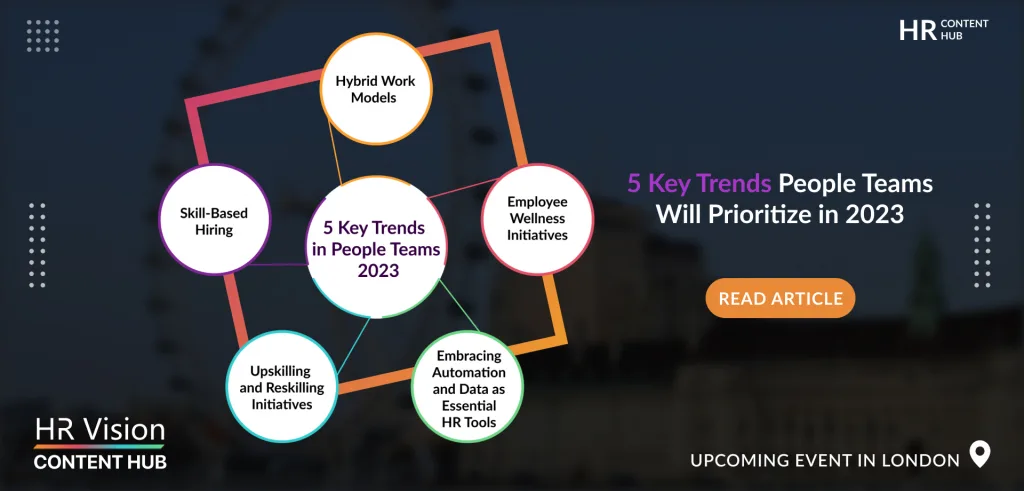
The forthcoming year is set to witness five key trends gaining momentum. Each one represents a meaningful response to the changing world of work and reflects our enhanced understanding of what it takes to attract, nurture, and retain talent in the modern era.
Let’s delve deeper into each of these trends, examining their roots, their potential impact, and why they deserve a spot on every HR team’s priority list for 2023.
Jump to section
• Employee Wellness Initiatives
• Embracing Automation and Data as Essential HR Tools
Hybrid Work Models
The dawn of 2023 beckons a further expansion of Hybrid Work Models—organizational structures where employees split their working hours between a traditional office environment and a remote location, often their homes. The pandemic has played a significant role in accelerating this shift, with organizations recognizing that flexible work arrangements are not only feasible but also remarkably beneficial.
According to IWG’s HR Leaders & Hybrid Working Report, an overwhelming majority (95%) of HR leaders recognize the potential of a hybrid model as a valuable recruitment tool. Furthermore, a significant portion (60%) believes that adopting a hybrid work approach enhances employee retention, while a remarkable 80% acknowledge its positive impact on overall employee satisfaction.
Elon Musk, one of the world’s most influential entrepreneurs, encapsulates this sentiment succinctly: “Hybrid work is the perfect solution for companies looking to create a more productive, flexible, and engaged workforce.“
Hybrid work models are poised to be a priority in 2023 for several reasons. Firstly, the lingering effects and unpredictable nature of the pandemic necessitate adaptable working arrangements. Secondly, businesses have started recognizing the many benefits that these models offer, ranging from improved employee satisfaction to reduced operational costs.
Hybrid work models are revolutionizing work culture. They enhance work-life balance and job satisfaction for employees while allowing organizations to access a wider talent pool and cut costs. More than just a flexible arrangement, hybrid models align with business goals and employee well-being, paving the future of work into 2023 and beyond.
Employee Wellness Initiatives
The focus on employee wellness has been steadily rising, and 2023 will be no different. Companies are increasingly recognizing that employee wellness goes beyond mere physical health – it encompasses mental, emotional, and financial wellness, too. This holistic approach to wellness is not just a trend; it’s a necessity, given the shifts in work patterns, particularly with remote and hybrid working models becoming the norm.

Several factors contribute to the prioritization of wellness initiatives in 2023. The ongoing impact of the pandemic, the rise in mental health concerns, and the realization of the connection between employee wellness and organizational success are chief among these. As organizations strive to maintain productivity and engagement amidst a changing work environment, wellness initiatives emerge as an essential tool.
When employees feel that their employer genuinely cares for their well-being, it results in higher levels of engagement and productivity. Wellness initiatives – be they flexible work arrangements, stress management programs, financial wellness seminars, or fitness challenges – can significantly improve employees’ overall job satisfaction and commitment. By prioritizing employee wellness in 2023, companies not only create a healthier workforce but also a more engaged, productive, and resilient one.
Embracing Automation and Data as Essential HR Tools
Automation and data are no longer optional in HR – they are essential tools shaping the landscape of people management. As we step into 2023, they are set to become even more central to HR operations.
Automation is streamlining administrative tasks, freeing up HR professionals to focus on strategic initiatives. From automating payroll and benefits administration to employing AI-driven tools for recruiting, onboarding, and training processes, automation is making HR operations more efficient and error-free.
Data, on the other hand, is revolutionizing decision-making in HR. It provides a wealth of insights, aiding in strategic decisions ranging from hiring and retention to performance management and employee engagement. The power of data-driven HR is immense – when used effectively, it can lead to more objective and informed decisions, foster a better understanding of workforce dynamics, and drive initiatives that directly impact business outcomes.
In 2023, embracing automation and a data-driven approach is not just about staying competitive. It’s about creating an HR function that is more efficient, strategic, and aligned with business objectives. The benefits are tangible – reduced errors, increased efficiency, and decisions rooted in hard data rather than intuition. As we move forward, companies prioritizing these tools will set themselves apart in their ability to attract, retain, and develop talent.
Skill-Based Hiring
Skill-based hiring, also known as competency-based hiring, is a recruitment approach that prioritizes a candidate’s skills and abilities over their educational background or job history. This model is gaining momentum, with more companies choosing to focus on the actual abilities of candidates that make them well-suited for a role, as opposed to their formal credentials.
Why is this shift happening, and why will it continue to be a significant trend in 2023?
The answer lies in the rapidly evolving business landscape. The acceleration of digital transformation, the emergence of new roles, and the changing nature of work necessitate a more flexible and practical hiring approach.
Skill-based hiring offers numerous benefits. It improves job fit by ensuring that the hired candidates possess the necessary skills for the role, thereby increasing productivity and reducing turnover. It promotes diversity by removing barriers that traditionally hinder certain demographics, providing a more equitable opportunity for all candidates. It enhances the overall capabilities of the workforce by focusing on continuous learning and upskilling.
This approach not only benefits organizations but also presents an advantage for job seekers, who can showcase their abilities, even if they may lack the ‘traditional’ qualifications for a job. In a world where adaptability is key, skill-based hiring is an important trend that shapes the future of recruitment and the makeup of the workforce in 2023.
Upskilling and Reskilling Initiatives
Upskilling and reskilling initiatives are training programs that equip employees with new skills to match the evolving demands of their current roles or prepare them for entirely different positions within the organization. These initiatives are not new, but their significance is reaching new heights in today’s fast-paced, dynamic business environment.
Upskilling and reskilling, while closely related, are distinct concepts in workforce training and development.
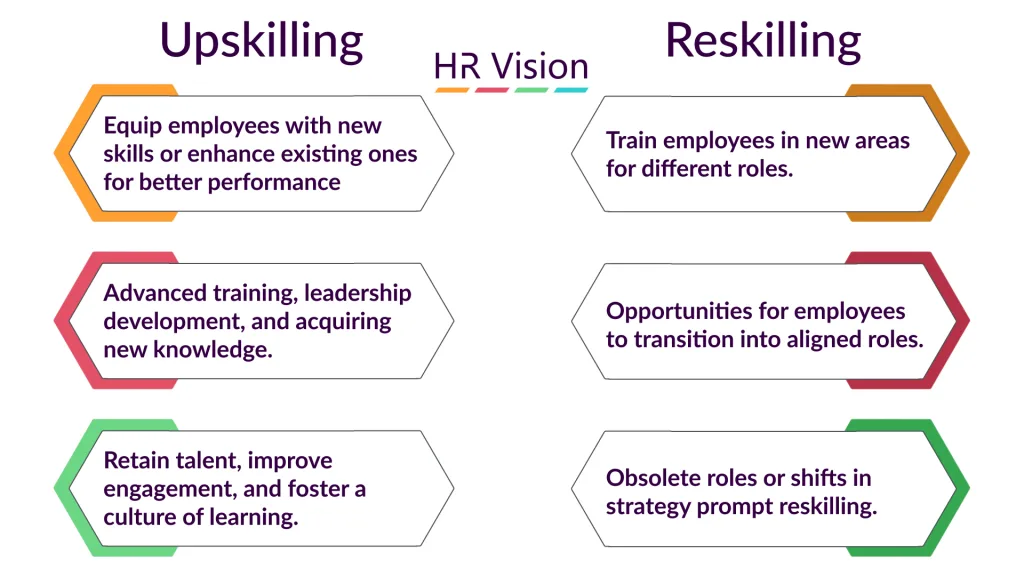
In 2023, upskilling and reskilling will be a top priority for HR teams. As technological advancements continue to redefine job roles and requirements, there’s a growing need for employees to acquire new skills and competencies. Furthermore, these initiatives support the shift towards a learning culture within organizations, encouraging continuous development and adaptability among the workforce.
The benefits of upskilling and reskilling initiatives extend to both the employees and the organizations.
- For employees, it enhances their career progression, job security, and satisfaction.
- For organizations, it leads to a more versatile, competent, and future-ready workforce, fostering innovation and maintaining competitive advantage.
In short, upskilling and reskilling initiatives are critical in building a resilient and agile workforce ready to meet the challenges of tomorrow.
Charting the Course for HR in 2023
As we navigate the HR landscape of 2023, it’s essential to keep a close eye on the five pivotal trends shaping its future: hybrid work models, employee wellness initiatives, automation and data as indispensable HR tools, skill-based hiring, and upskilling and reskilling initiatives.
Hybrid work models are not merely a response to a global crisis; they are transforming the way we work, providing flexibility, and promoting employee well-being. Employee wellness initiatives, once considered ‘nice to have,’ have now emerged as an integral part of organizational strategies, directly influencing productivity and employee engagement.
Automation is streamlining HR processes, while data-driven decision-making is revolutionizing HR strategies. Skill-based hiring is altering the recruitment process, promoting diversity, and optimizing role fit. Lastly, upskilling and reskilling initiatives are creating a robust, adaptable workforce, equipped to handle the rapid changes in the job market.
Implementing these five key HR trends offers numerous benefits:
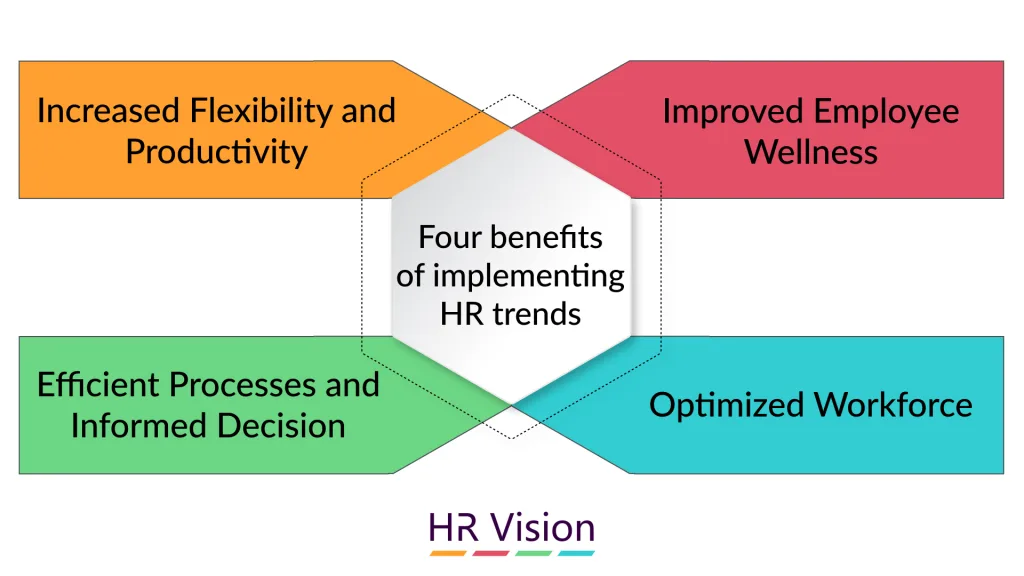
These trends are not independent of each other; they intersect and intertwine, collectively shaping the evolving HR landscape. Staying ahead of these trends is not just a recommendation but a necessity for HR teams aiming for success in 2023 and beyond. Let’s embrace these trends and use them as guiding lights to navigate the path towards a more dynamic and inclusive future of work.
Discover the Latest HR Trends and Join the Conference at HR Vision London 2023! Let’s shape the future of HR together!