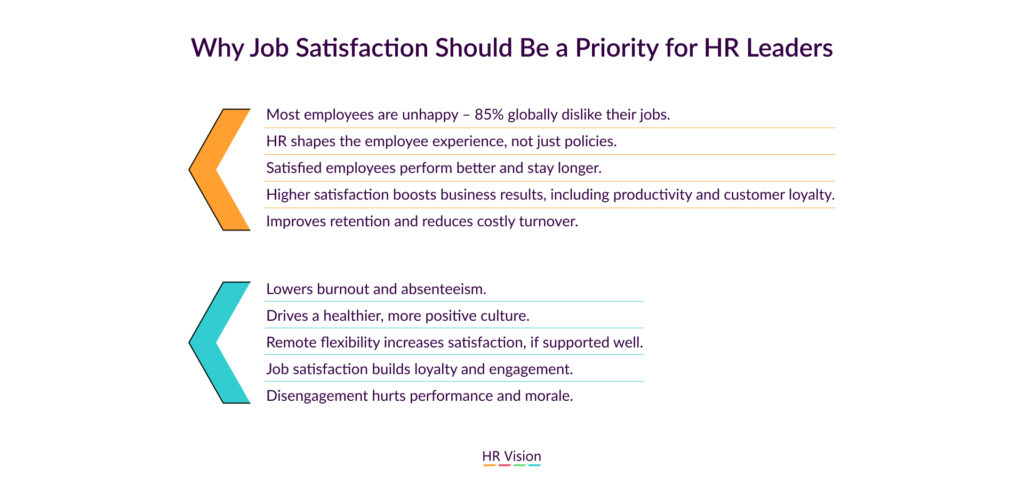
According to a Gallup survey, 85% of people worldwide say they hate their jobs when asked anonymously. That’s a huge number—and a big problem for companies everywhere.
Today, HR isn’t just about managing policies or handling paperwork. HR leaders are now responsible for shaping the overall employee experience. One of the most important parts of that experience is job satisfaction. When employees are satisfied with their jobs, they work harder, stay longer, and contribute more to the success of the company.
Understanding Job Satisfaction
Job satisfaction is more than just liking your job—it’s about how employees feel about their work, their workplace, and their overall experience at the company. In today’s fast-changing work environment, satisfaction goes beyond salary. It includes emotional connection, opportunities for growth, and a sense of purpose.
What drives job satisfaction today?
Several key factors shape how satisfied employees feel:
- • Compensation – Fair and competitive pay still matters.
- • Recognition – Feeling appreciated for hard work goes a long way.
- • Leadership – Trust in managers and leadership makes a big difference.
- • Company culture – A positive, respectful environment improves satisfaction.
- • Purpose – People want to feel their work matters.
- • Growth – Opportunities to learn and move forward in their careers keep employees motivated.
How can HR measure job satisfaction?
Understanding how employees really feel starts with listening. HR teams can use tools like:
- • Employee surveys – Regular feedback on key areas of satisfaction.
- • Stay interviews – Honest conversations with current employees about what’s working and what’s not.
- • Exit interviews – Learning why people leave can highlight what needs to change.
- • Pulse checks – Quick, frequent surveys to catch trends in real time.
The Impact of Job Satisfaction on Organizational Success
When employees are satisfied with their jobs, the benefits ripple throughout the entire organization. It’s not just about how people feel—it directly affects performance, culture, and even business outcomes.
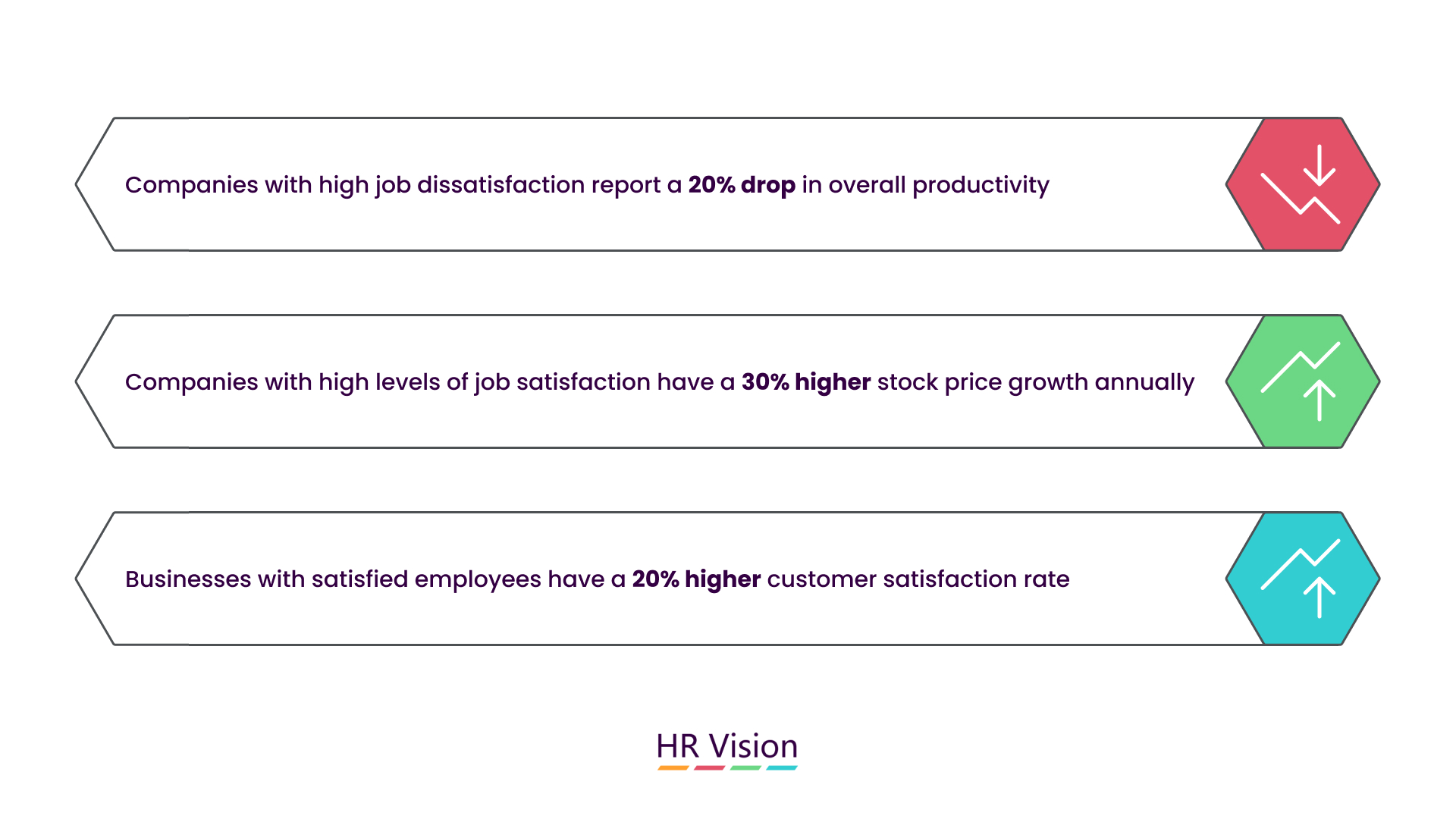
Satisfied employees are more engaged in their work. They show greater commitment, take initiative, and consistently perform at a higher level. In contrast, companies with high job dissatisfaction often experience a noticeable drop in overall productivity—up to 20%. This can lead to missed goals, increased errors, and lower team morale.
From a wellness perspective, job satisfaction plays a key role in reducing absenteeism and burnout. Happy employees are more resilient, less likely to call in sick, and more energized at work. This leads to stronger attendance and more consistent performance across teams.
Perhaps most importantly, companies that prioritize job satisfaction often enjoy a stronger public image and brand reputation. Businesses with satisfied employees see a 20% increase in customer satisfaction, which can translate into long-term loyalty and revenue growth. They also tend to perform better financially, with some reporting 30% higher stock price growth each year.
Simply put, when people are happy at work, the whole business wins.
How Job Satisfaction Affects Employee Retention
Job satisfaction and employee retention go hand in hand. When people feel good about their work and workplace, they’re much more likely to stay. On the other hand, dissatisfaction is one of the leading reasons employees choose to leave—even if the pay is competitive.
When employees are unhappy, they start looking elsewhere. Voluntary turnover can be costly—not just in terms of money but also in lost knowledge, lower morale, and disrupted teams. Replacing an employee can cost anywhere from half to twice their annual salary, depending on the role. That’s a major expense that adds up quickly when turnover is high.

Investing in job satisfaction is a smarter, more sustainable approach. Creating an environment where employees feel appreciated, heard, and supported builds loyalty. It makes people feel like they belong, which is a powerful motivator to stay—especially during tough times or competitive job markets.
The Role of HR Leaders in Improving Job Satisfaction
HR leaders play a critical role in shaping the employee experience, and that starts with job satisfaction. While satisfaction can be influenced by many factors, HR has the tools and influence to create lasting, meaningful change.
One of the most powerful things HR can do is champion the employee voice. This means creating regular, honest feedback loops—through surveys, one-on-one check-ins, town halls, and anonymous channels—so employees feel heard. It’s not just about asking for input; it’s about acting on it.
Another key area is personalized growth and development. Not every employee wants the same career path, so HR should support individualized learning opportunities, clear development plans, and mentorship programs that meet employees where they are.
Recognition and rewards are also essential. When employees are acknowledged for their contributions—both big and small—they feel valued. HR can build systems that make appreciation part of the daily culture, not just an annual review.
Finally, HR must advocate for psychologically safe work environments. This means building a culture where people feel comfortable being themselves, voicing concerns, and making mistakes without fear. Safety, respect, and trust are the foundation of any truly satisfying workplace.
How Remote Work Impacts Job Satisfaction
Remote work has reshaped the way we think about job satisfaction. For many employees, the flexibility and autonomy that come with working remotely have become key drivers of happiness. The ability to create a personalized work environment, manage your own schedule, and eliminate long commutes has significantly improved job satisfaction. In fact, a study found that remote work increased the likelihood of job satisfaction by 67%, despite an increase in workplace stress.
Flexibility and autonomy allow employees to balance personal and professional commitments more easily, contributing to a better work-life balance. This freedom to manage one’s time and workspace has become more important than ever. For many, it’s the ability to take time off or adjust work hours that truly impacts their satisfaction—where the study also found that the freedom to take time off more than doubled the likelihood of job satisfaction.
However, remote work also brings its own set of challenges. Isolation and blurred boundaries between work and personal life can lead to feelings of loneliness and burnout. Without the in-person interactions that come with traditional office settings, employees may struggle to stay connected with colleagues and feel disengaged.
Another significant challenge is communication gaps. With teams spread out across different locations, it can be harder to maintain clear, consistent communication, leading to misunderstandings or delays in decision-making.
To address these challenges, it’s crucial to focus on remote inclusion and virtual engagement. HR leaders need to ensure that remote employees feel just as valued and connected as those working in the office. This includes using technology to foster collaboration, offering regular virtual team-building activities, and making sure remote employees have the same opportunities for growth and recognition as their in-office peers.
As the workforce continues to embrace hybrid and remote models, HR must reimagine the employee experience. This involves creating a culture where employees feel supported, engaged, and part of a unified team, no matter where they are working.
Consequences of Low Job Satisfaction
When job satisfaction is low, the effects can be felt throughout the entire organization. Employees who are unhappy at work don’t just underperform—they may actively disengage, leading to a ripple effect that impacts the company in several ways.
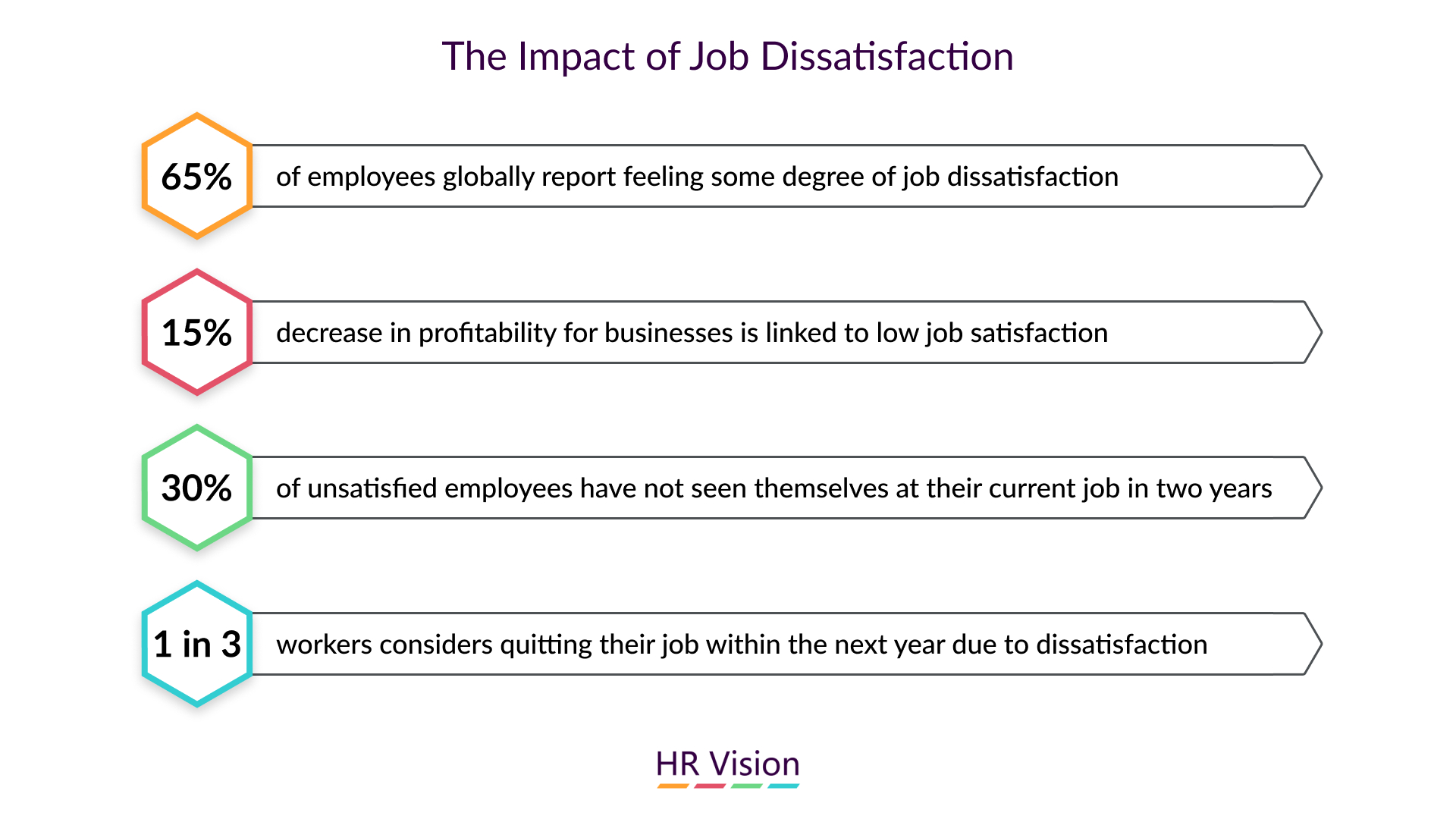
Lower productivity and engagement are some of the most immediate consequences. Disengaged employees are less likely to put in extra effort, leading to missed deadlines, lower-quality work, and decreased overall performance. As productivity dips, so do profits and organizational success.
Another major issue is increased turnover. Employees who are dissatisfied with their jobs are more likely to look for new opportunities. High turnover rates bring significant costs, not just in terms of recruitment and training new employees but also in lost knowledge, skills, and team dynamics. It’s harder to maintain a high-performing team when employees leave frequently.
Poor morale spreads quickly in a workplace with low job satisfaction. When negativity and frustration become the norm, it impacts everyone, even those who may not initially feel dissatisfied. Teams can become disconnected, and collaboration suffers. This leads to a toxic work culture that’s hard to fix and can even affect the organization’s reputation.
Finally, increased absenteeism is another sign of low job satisfaction. Employees who are unhappy are more likely to take sick days or avoid work altogether. This can lead to productivity losses, disrupt team workflow, and put additional pressure on other employees to pick up the slack.
In the long run, these consequences affect day-to-day operations and threaten the company’s ability to attract and retain top talent. Without a strong focus on improving job satisfaction, an organization risks falling into a cycle of disengagement and poor performance.
Conclusion
Job satisfaction isn’t just a feel-good factor—it’s a strategic lever that HR leaders can pull to create lasting positive change. A satisfied workforce drives higher productivity, sparks innovation, and plays a crucial role in improving retention. Over time, these elements work together to deliver a strong return on investment, both financially and culturally.
The benefits of job satisfaction extend far beyond day-to-day performance. They build a resilient, engaged team that supports the company’s vision and strengthens its reputation in the marketplace. When employees feel valued and connected, they become powerful advocates for the organization, attracting top talent and inspiring customer loyalty.
Ready to take job satisfaction to the next level? Join us at HR Vision to hear from top HR leaders about how they’re shaping the future of work with people-first strategies.