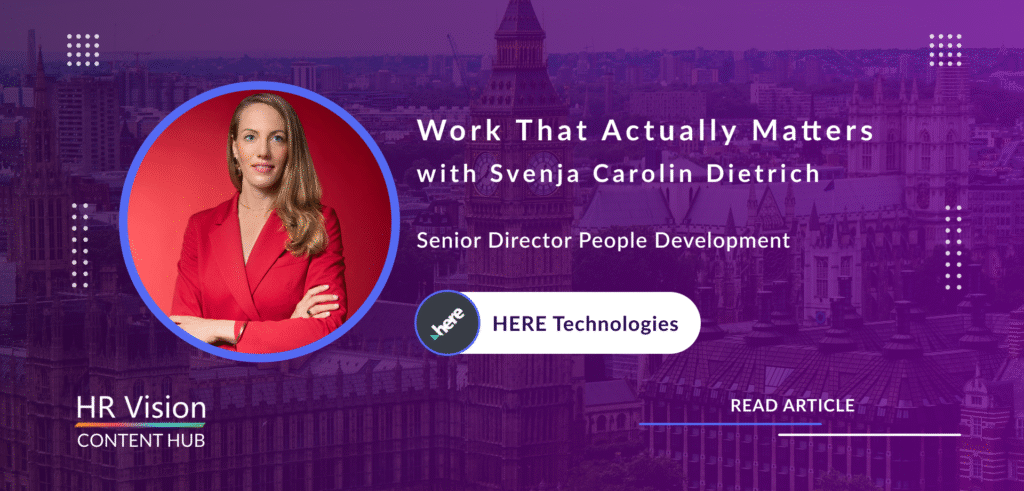
- You’ve worked across consulting, scale-ups, and tech—what’s one pattern you see that leads to unproductive work cultures?
One pattern that shows up everywhere is confusing activity with impact. Companies and their employees fill calendars with meetings, roll out endless initiatives, and layer on new tools without asking if any of it moves the real goal forward. Without ruthless clarity, busyness becomes a badge of honor and real productivity disappears.
- You coined the term pretentious work—how can HR leaders identify and eliminate it within their teams?
I defined pretentious work as the process of making sense of one’s own work to convince oneself and others of its relevance as a substantial part of paid employment. You see it in shiny decks, complicated frameworks, and endless alignment sessions that look important but don’t change outcomes. HR leaders can spot it by asking whether an action genuinely enables better work or just justifies someone’s role. Eliminating it starts with stripping back, rewarding substance over optics, and modeling what real impact looks like at the top.
- How do you define “work that matters” in a fast-paced corporate environment?
Work that matters creates real value for customers, employees and the environment or community the company operates in. It’s not about reacting to every new opportunity. It’s about focusing on the few things that actually move the needle and make a change in the real world.
- As a keynote speaker and trainer, what’s the number one mindset shift you aim to inspire in leaders today?
I aim to inspire leaders and every employees to take full agency over their own work. Instead of waiting for permission, direction, or ideal conditions, it’s about taking action and full accountability for how they spend their time. The shift is from reacting to circumstances to intentionally creating work that is meaningful to them and impactful for others.
- You advocate using time and talent for good—what’s one practical way to start doing that on an individual level?
Audit where your best energy goes. If most of it is spent in meetings that don’t matter, on projects you don’t believe in, or managing internal politics, you’re wasting your real strengths. Start by shifting even ten percent of your time toward work that feels meaningful. Small shifts compound fast.
- How can companies create more space for purpose-driven work without losing sight of business metrics?
Purpose and performance should not be at odds. Companies that build purpose into how they hire, prioritize, and reward—not just what they say—tend to outperform. When purpose is embedded into the operating model rather than tacked on, it becomes a multiplier for results, not a distraction from them.
- What career development advice would you give to someone who feels stuck in a high-performing but unfulfilling role?
High performance in the wrong environment is still misalignment. If you feel stuck, start experimenting. Take on projects, collaborations, or skill-building that point toward the work you actually want to be doing. Waiting for perfect timing or permission will only keep you stuck longer. And remember, you can leave your job and move on.
- Looking ahead, what skills or mindsets do you think will define the next generation of impactful HR leaders?
The next generation of HR leaders will shape the conversation, not just react to it. They will bring a strong human perspective into business decisions, backed by real commercial acumen, positioning people strategy as central to business growth. The most impactful will balance empathy with decisiveness, simplify what others complicate, and build cultures where performance and purpose reinforce each other.
Ready to stay ahead in the ever-changing world of HR? Join us at HR Vision, where top HR leaders gather to explore the future of work, HR trends, and the power of HR analytics and technology.