

The digital age has brought about unprecedented advancements in technology, fundamentally altering the way organizations operate. As a result, HR professionals find themselves at the forefront of this change, tasked with adapting to new tools and strategies to meet the evolving needs of their organizations and employees.
Today’s HR professionals must grapple with various digital technologies such as artificial intelligence (AI), data analytics, and automation tools. These technologies offer exciting opportunities to streamline HR processes, enhance decision-making, and improve employee experiences. However, they also raise critical questions about the balance between automation and the human touch.
Benefits of automation in HR
HR automation refers to the use of technology, particularly software and artificial intelligence (AI), to streamline and optimize HR processes. From recruitment and onboarding to performance management and employee engagement, HR automation has made significant inroads into every aspect of HR management. Some notable trends in HR automation include AI-powered recruitment, chatbots and virtual assistants, employee self-service portals, data analytics, and chatbots for employee support.
Automation in HR can bring numerous benefits to organizations, streamlining processes and improving overall efficiency. Here are some of the key advantages of automation in HR:
- Increased efficiency and accuracy. One of the most significant advantages of HR automation is its ability to streamline repetitive tasks. This not only saves time but also reduces the likelihood of errors in data entry and other manual processes.
- Cost savings. By automating routine HR tasks, organizations can reduce the need for additional staff or free up existing HR professionals to focus on more strategic initiatives. This can lead to substantial cost savings in the long run.
- Data-driven decision-making. Automation allows HR departments to collect and analyze vast amounts of data, helping organizations make more informed decisions about talent management, performance improvement, and employee engagement.
While the benefits of HR automation, such as increased efficiency and data-driven decision-making, are undeniable, organizations must tread carefully to avoid the potential drawbacks. Excessive automation can lead to a lack of personal touch in HR interactions. Employees may feel disconnected when dealing with chatbots or automated systems for sensitive matters like conflict resolution or career development.
Automation relies heavily on algorithms, which can inherit biases present in the data used to train them. This can lead to discriminatory outcomes in areas such as recruitment or performance evaluations if not carefully monitored and adjusted.
As HR processes become more automated, HR professionals may rely less on their interpersonal skills, potentially diminishing their ability to build relationships, mediate conflicts, and understand the unique needs of employees.
Striking the right balance between automation and human touch is key to harnessing the full potential of HR automation while maintaining a positive employee experience.
Finding the Balance: Human Resources Automation with a Human-Centric Approach
Automation can streamline repetitive tasks, reduce human error, and allow HR professionals to focus on more strategic, value-added activities. However, as we embrace the era of HR automation, it is essential to strike a balance that ensures the well-being and satisfaction of employees.
Assessing HR Processes for Automation
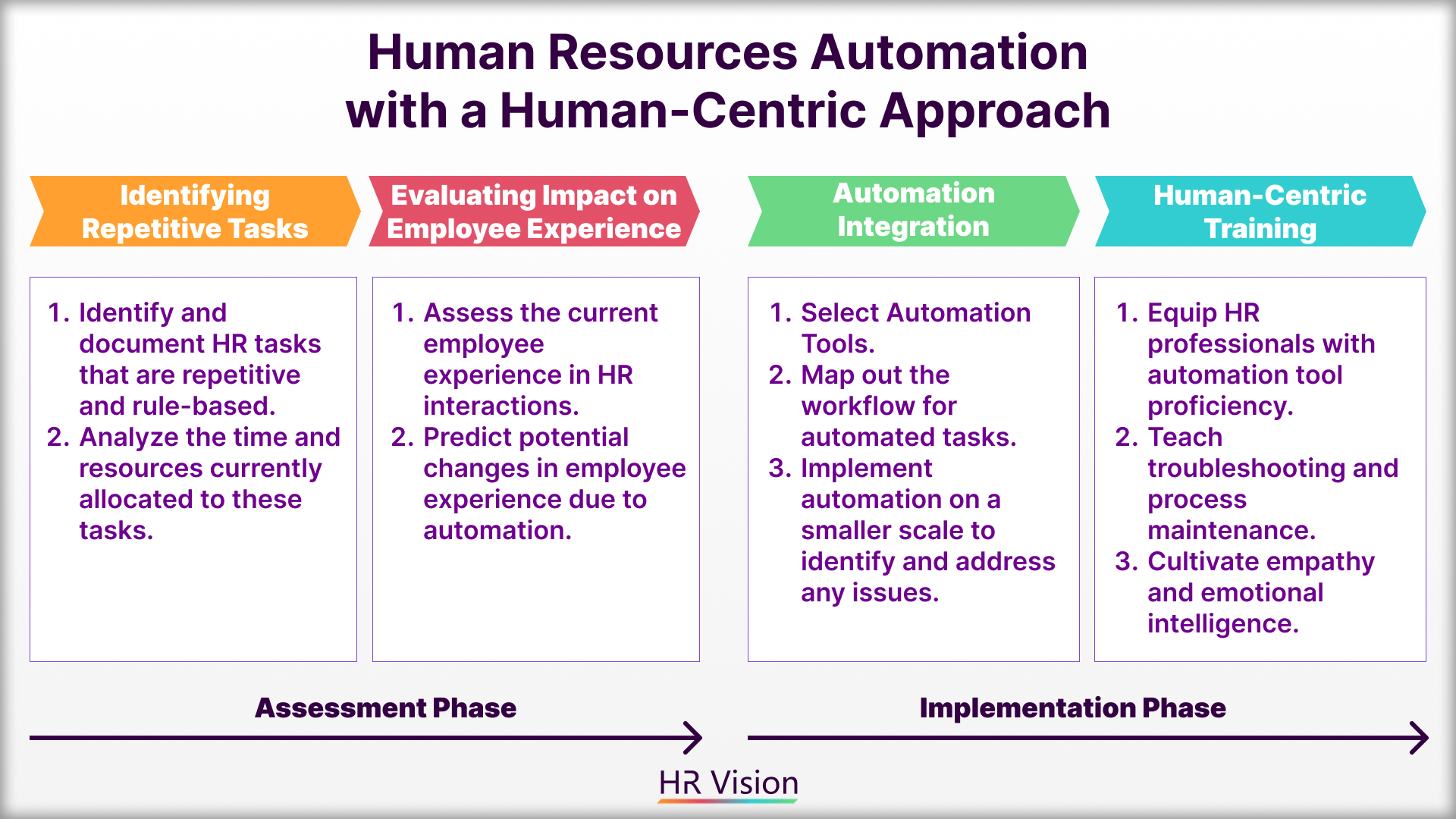
Before diving into automation, HR departments must thoroughly assess their processes. This assessment serves as the foundation for a successful automation strategy. There are two critical steps in this assessment:
1. Identifying Repetitive Tasks. The first step is to identify tasks and processes that are repetitive, rule-based, and time-consuming. These tasks are prime candidates for automation. Examples include data entry, payroll processing, and benefits administration. By automating these repetitive tasks, HR professionals can allocate their time and skills more effectively.
2. Evaluating Impact on Employee Experience. While automation can significantly improve HR efficiency, it should not come at the expense of the employee experience. HR is often the first point of contact for employees with their organization, and maintaining a positive experience is crucial. When considering automation, HR departments should carefully evaluate how it may affect employees’ interactions and satisfaction. For example, automating responses to common HR inquiries might lead to quicker responses but could be perceived as impersonal. Striking a balance between efficiency and human touch is vital.
Implementing Automation with a Human-Centric Approach
Once the assessment is complete, HR departments can proceed with automation, keeping a human-centric approach in mind. Here are two key elements to consider:
1. Training HR Professionals in Technology. To make the most of automation, HR professionals need to acquire new skills and adapt to technological changes. Providing training and upskilling opportunities is essential. HR staff should become proficient in using automation tools, data analytics, and digital platforms. This not only enhances their ability to manage automated processes but also enables them to make informed, data-driven decisions that benefit both the organization and its employees.
2. Encouraging Empathy and Emotional Intelligence. As more routine tasks become automated, HR professionals will have more time to focus on complex, people-oriented tasks. This is where empathy and emotional intelligence come into play. HR professionals should be trained to excel in areas such as conflict resolution, employee engagement, and talent development. These soft skills are irreplaceable in building a positive workplace culture and fostering strong relationships between employees and their organization.
Tools and Technologies for Balanced HR
In the pursuit of a balanced approach to HR, the strategic utilization of tools and technologies plays a pivotal role. These tools not only empower HR professionals to streamline processes but also enhance their ability to foster a human-centric workplace culture. Here’s a breakdown of essential tools and technologies for achieving a balanced HR strategy:
Human Resource Information System (HRIS)
HRIS software like Workday, BambooHR, or SAP SuccessFactors centralize HR data, making it easier to manage employee records, benefits, payroll, and performance evaluations. These systems enhance efficiency by reducing manual data entry and eliminating paperwork.
Applicant Tracking System (ATS)
ATS tools such as Greenhouse, Lever, or Bullhorn simplify the recruitment process. They help HR teams manage job postings, screen candidates, and track their progress through the hiring pipeline. ATS software ensures that hiring remains efficient and organized.
Chatbots for Employee Support
AI-powered chatbots, like those offered by IBM Watson and Zendesk, provide instant responses to common HR inquiries. These chatbots can efficiently handle routine queries while freeing up HR professionals for more complex tasks.
Workforce Planning Software
Tools like Visier and ADP Workforce Now offer advanced analytics for HR workforce planning. These solutions help HR teams align staffing levels with strategic business objectives.
Compensation and Benefits Analysis
Software like PayScale and Mercer can analyze market data to ensure competitive compensation and benefits packages, helping to attract and retain top talent.
Overcoming Common Pitfalls
In the journey toward achieving a balanced and effective HR management strategy that combines automation with a human-centric approach, organizations must navigate various challenges and pitfalls.
- Avoiding Over-automation
While automation can significantly improve HR efficiency, it’s crucial to avoid the trap of over-automation. Over-automation occurs when organizations automate processes to the extent that they lose the human touch and personalization that are essential for HR success.
- Ensuring Data Privacy and Security
With the increasing use of technology in HR, data privacy and security are paramount concerns. Mishandling sensitive employee data can lead to severe consequences.
- Addressing Resistance to Change
Change is often met with resistance, especially when it involves implementing new technologies and processes. Offer comprehensive training and ongoing support to HR staff to help them adapt to the changes.
Looking ahead, the future of HR management is promising. It is a future where technology and the human touch coexist seamlessly. Automation will continue to evolve, taking care of routine tasks, data analysis, and even predictive insights, allowing HR professionals to dedicate more time to personal connections, mentorship, and strategic decision-making. This harmonious blend will not only drive organizational success but also enhance the overall employee experience, fostering a workplace that values both efficiency and humanity.If you’re eager to explore these concepts further, engage with like-minded HR leaders, and stay ahead of the curve in HR management, we invite you to join us at HR Vision Events.


