1. With three decades in global HR, how has the landscape evolved, and what challenges do you foresee in the future?
Three decades ago, it was common to see employees stay with one company for over fifteen years. My parents, for instance, remained with their first and only company for more than thirty years.
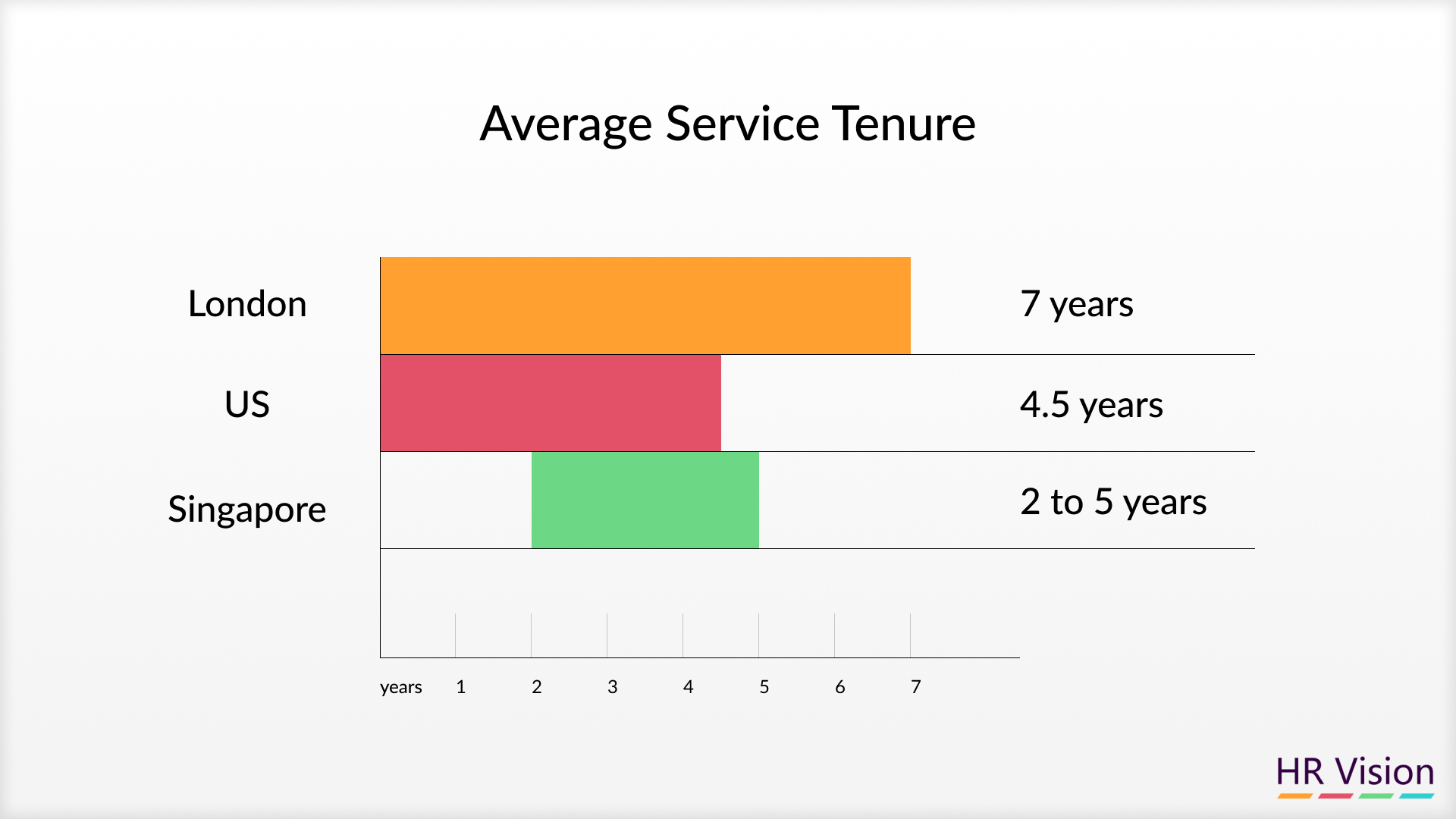
In today’s digitally connected world, job longevity has changed significantly, with the current workforce frequently switching companies. On average, service tenure is now around 7 years in London, 4.5 years in the US, and 2 to 5 years in Singapore.
I once faced questions from my European headquarters regarding the high turnover rate in Singapore. I explained to my European counterpart that within a 40 km radius of our German HQ, there are only three companies; the rest are forested areas. If you are unable to get employed by the other two companies, you need to relocate your entire family to a different location. In contrast, Singapore, which covers the same area and is half the size of London, hosts over 37,000 international companies. Our employees don’t even need to relocate.
People often leave not because they actively seek new jobs, but because technology continuously offers improved career prospects, better pay, and enhanced workplace conditions. It’s essential to acknowledge this evolving workforce reality. For instance, many of you probably receive weekly emails promising an inheritance of a million pounds following someone’s death. In addition, in the past, companies benefited from stable workforces that required less frequent training due to their longer tenure.
The primary challenge for organizations today and in the future is the need to quickly establish a shared vision, values, and alignment with their ever-changing workforce. In our globalized world, customers have numerous options and won’t wait for a company to reorganize itself.
In essence, organizations must recognize that investing in culture, leadership, and business management will strategically advantage them in accelerating the transitioning of their workforce into the company.
2. As OSI Systems’ Senior HR Director, can you share a significant accomplishment that contributed to the organization’s success?
I joined OSI Systems 2.5 years ago and introduced a system thinking approach to workforce management called the “House of HR,” which focuses on five strategic areas: Operational Excellence, Capability Excellence, Performance Excellence, Holistic Excellence, and Business Excellence.
This approach has enabled the team to adopt a more holistic view of workforce management. It has helped each of the country leads manage their respective locations at a strategic level, ensuring that we are improving all areas of the workforce and balancing both business and operational deliverables.
3. With diverse global experience, how can HR professionals navigate a globalized workforce and address cultural diversity and inclusion?
OSI Systems is dedicated to fostering a culture of diversity, equity, and inclusion. We recognize that the work of advancing diversity and inclusion is an ongoing process, never truly complete.
Secondly, it begins with an open mindset, understanding that you will never know everything and that there are many intelligent people within the organization whom you can leverage. OSI Systems is a matrix organization that provides every HR professional with access not only to their immediate scope but also to the entire global HR team. As a global HR team, we strive to stay informed about global events and trends that may impact our workforce.
Thirdly, it is important to seek understanding first. This entails cultivating a deep understanding, respect, cultural sensitivity, and awareness of various customs, values, and communication styles. Diversity and inclusion should never be taken for granted. Asia boasts one of the most diverse workforces, and we continually celebrate and acknowledge this workforce diversity through inclusive policies, benefits, and employee engagement activities.
4. Managing HR across Asia, Australasia, and the UK, how do you ensure a cohesive HR approach across diverse regions?
In our interconnected world, you may not always sense the extent of your responsibilities. When the entire team gathers in a conference call, we find ourselves in the same virtual room. Additionally, we maintain a cohesive HR approach, incorporating practices that most organizations are likely following:
- Collaborative Partnership with the Business: We continually ensure that we are aligned in moving up the HR value chain, enhancing our value-add to the business.
- Strategic HR Framework is known as the “House of HR”: We have a strategic framework that fosters shared alignment in our systemic approach to workforce management.
- Bi-weekly Check-ins: We conduct regular check-ins to keep each other updated, providing the team with opportunities for mutual assistance.
- Global HR Leadership conference calls: Ensuring global alignment and execution.
- HR Webinars: Once a month, we conduct webinars for the entire HR team to help them understand our latest initiatives.
- HR Metrics: We establish broad HR metrics applicable to everyone, granting flexibility and empowerment to each location, as each faces distinct business challenges.
- HR Technology: We leverage an integrated HRIS system, particularly when dealing with international mobility and ensuring alignment with the global compensation structure.
5. How does HR foster innovation?
You can’t tell your neighbor that their backyard is a mess if your own backyard is equally untidy. The most credible way for HR to foster innovation is not by simply telling the workforce about it. It is about the HR organization implementing innovation within our own operations. Innovation and creativity are for everyone. Only when HR “walks the talk and talks the talk” can we effectively encourage the workforce to engage in innovation.
6. How do leaders promote continuous improvement?
Similar to the analogy I used for HR, leaders should visibly embrace continuous improvement. It extends beyond just analyzing financial data and identifying corrective actions behind closed doors. It involves engaging with employees through webinars, and town halls, sharing leadership insights (e.g., storytelling), conducting shop floor walks, and dedicating time to discuss continuous improvement. The phrase “As above, so below” describes the prevailing direction within most organizations. What leaders do shapes the organization’s trajectory. Successful organizations recognize these challenges and allocate resources to align the entire organization in terms of culture, leadership, and business excellence each year.
7. What advice do you have for HR adapting to the changing workforce needs?
HR practitioners must undergo a paradigm shift. Those with over ten years of experience should be ready to adapt, as what worked in the past may no longer apply today. Aim to learn a new digital application every year. In today’s environment, being MEGA-skilled is crucial, and being multi-skilled is the minimum requirement.
There’s no substitute for experimentation. Credibility doesn’t come from extensive reading or internet surfing; it’s earned through hands-on experience. HR is a challenging profession. Deepening your HR expertise and expanding your business understanding requires a commitment to continuous learning. Unfortunately, many HR practitioners spend too much time on operational tasks and evening emailing. Invest your time in learning and research instead.
8. How crucial is employee well-being, and what initiatives do you recommend for a healthy work-life balance?
Employee well-being is crucial for various reasons, impacting individual and organizational success significantly. Here are key reasons why it’s essential: productivity, performance, an engaged workforce, health, safety, talent attraction, reduced absenteeism and voluntary turnover, fostering creativity, and innovation.
At OSI Systems, like most organizations, we relentlessly pursue programs such as recognition and rewards events, e.g., long service awards; training investment; fostering belonging; clear communication; workload management support; health and wellness initiatives; CSR events; stress management programs; and flexible work arrangements for non-factory workers. These constitute half of the equation. The other half involves ensuring we have progressive leaders who embrace diversity, equity, and inclusion.
9. With global responsibilities, how do you build a strong HR team capable of addressing challenges in different regions?
When you have a strategic roadmap, you stay in control throughout all four seasons, be it summer, autumn, winter, or spring. Your strategic direction remains consistent. What you’re doing today was anticipated yesterday, and your current work is in anticipation of tomorrow. The most critical factor is having an HR team willing to join this journey.
10. Finally, how do you stay updated on HR trends?
Within OSI Systems, our HR organization embraces a “one-team” concept. We conduct regular calls to ensure that we stay updated on developments across all our OSI Systems locations. Once a year, our key HR leaders participate in the company’s strategic reviews. These strategic reviews help us translate business opportunities into actionable steps to support our workforce in addressing current and future challenges.
Externally, I have over 30,000 followers on my LinkedIn account, with at least 20,000 working in the HR profession. Every second, I receive global updates on HR challenges and issues. I hope to expand my network by connecting with new contacts at this HR Vision conference!
Join the HR Vision conference to exchange insights, connect with industry professionals, and stay at the forefront of HR trends.