

Organizations today operate in a rapidly evolving landscape, facing constant challenges such as technological advancements, economic fluctuations, and shifting market demands. These changes can disrupt business operations, impact employee morale, and hinder organizational performance. Effective change management is essential to navigate these challenges and ensure that organizations remain competitive and adaptable.
Research indicates that 47% of organizations that integrate change management are more likely to meet their objectives than the other 30% that did not incorporate it. This suggests that a structured approach to managing change can significantly improve organizational outcomes.
What Is Change Management?
Change management is the systematic process of guiding an organization through transitions, whether they are strategic, operational, or technological. It involves planning, executing, and reinforcing changes to help employees, teams, and the entire organization adapt to new conditions. This process is crucial because change, while inevitable, often disrupts established workflows, mindsets, and company culture. Without a structured approach, change can lead to confusion, resistance, and ultimately, failure to achieve the desired outcomes.
Popular Change Management Models and Frameworks
Several models and frameworks have been developed to guide organizations through the change process. Here are a few of the most commonly used:
- ‣ Kotter’s 8-Step Model: This model outlines eight steps for leading successful change, including creating a sense of urgency, forming a powerful coalition, developing a vision and strategy, communicating the vision, empowering employees, removing obstacles, creating short-term wins, consolidating gains, and anchoring the new approaches in the culture.
- ‣ ADKAR Model: This model focuses on the five stages that individuals must go through to successfully adopt change: Awareness, Desire, Knowledge, Ability, and Reinforcement.
- ‣ Lewin’s Change Model: This model proposes a three-stage process of unfreezing, moving, and refreezing to facilitate change.
Each of these frameworks provides a structured approach to managing change, ensuring that transitions are smooth and that the organization remains aligned with its goals throughout the process.
Leadership and Ownership in Change Implementation
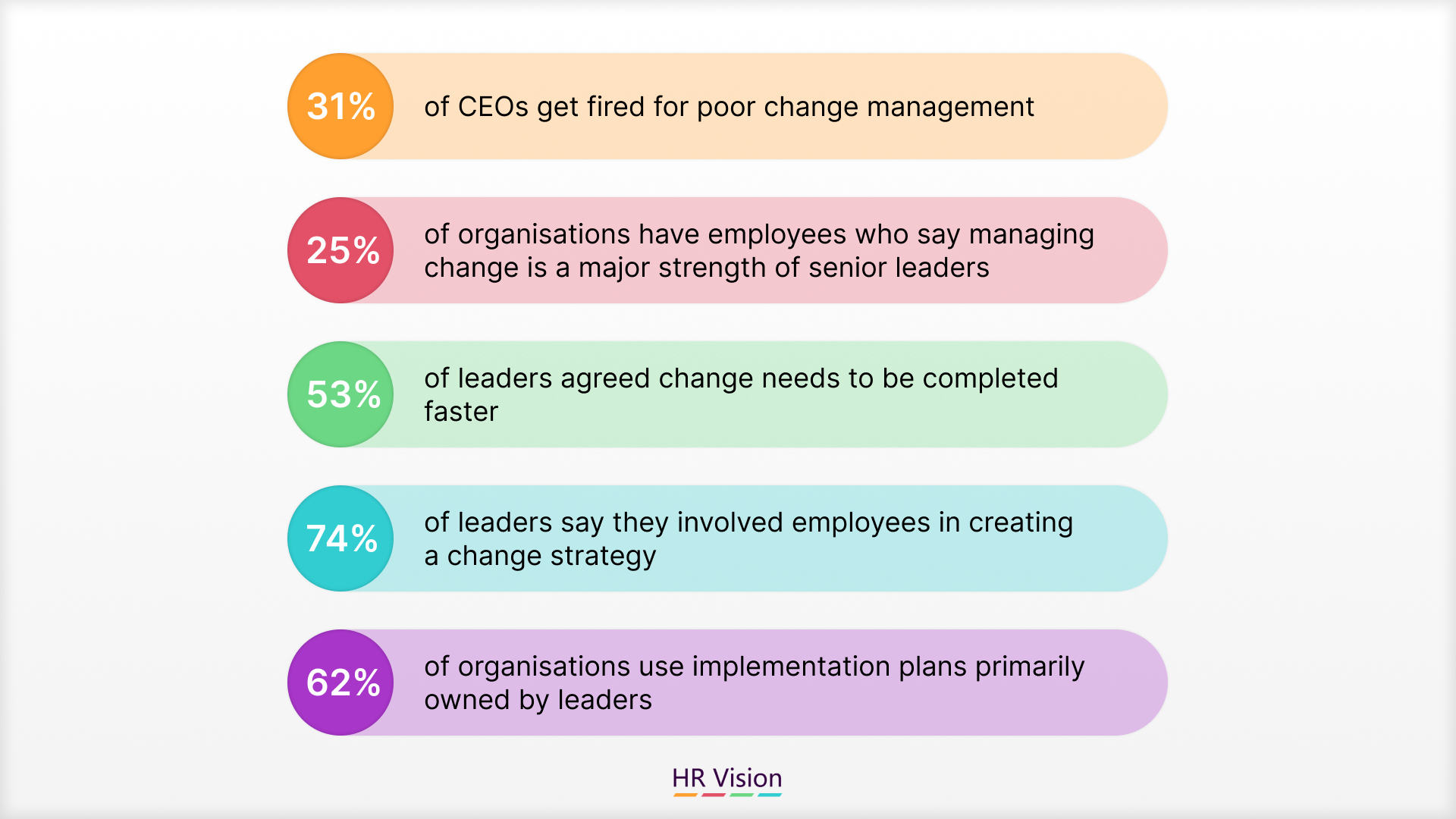
Effective change management relies heavily on strong leadership and clear ownership across all levels of the organization. The role of top management in driving change is paramount in ensuring successful implementation. According to the CEB Corporate Leadership Council, 62% of organizations use implementation plans that are primarily owned by leaders. This means that senior leaders are not just setting the direction for change but are also deeply involved in managing the process. They ensure that resources are allocated effectively, model the desired behaviors, and communicate the vision clearly. This hands-on approach helps align the entire organization and demonstrates the commitment needed for successful change.
Creating a shared vision and sense of purpose is essential for aligning employees and stakeholders around the change. Leaders must articulate this vision in a way that highlights how the change will benefit both the company and its employees. Engaging employees in developing and refining this vision helps make it more compelling and relevant. Regularly reinforcing the vision and celebrating progress helps maintain focus and motivation throughout the change process.
Empowering employees to be involved in change initiatives is crucial for gaining their support. Encouraging them to share ideas, providing necessary training, and recognizing their contributions all help foster a sense of ownership and commitment. When employees feel valued and engaged, they are more likely to contribute positively to the change process.
Notably, 7 in 10 organizations lead change from the top down, with a small group of leaders guiding the workforce through transitions. This top-down approach, combined with effective change champions and a shared vision, ensures that the change process is managed effectively and that the organization can achieve its desired outcomes.
Key Steps to Integrate Change Management into HR
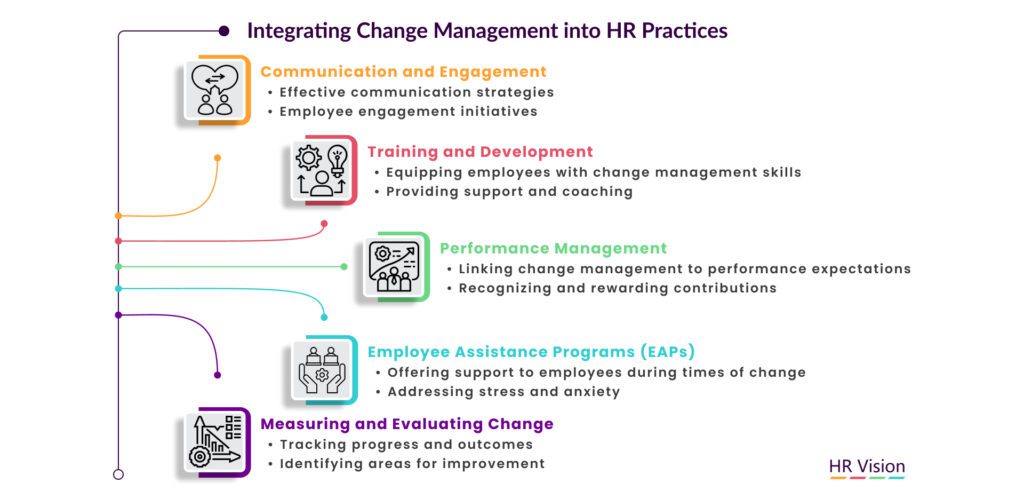
1. Communication and Engagement
Effective communication is the backbone of successful change management. HR needs to ensure that employees are well-informed and feel involved throughout the process.
Clear, consistent, and transparent communication is essential when implementing change. Employees need to understand why the change is happening, how it will impact them, and what steps the organization is taking to support them. This can be done through regular updates via emails, meetings, or town halls, allowing for a two-way dialogue where employees can ask questions and express concerns.
To ensure employees feel part of the change, HR should develop engagement initiatives. These can include workshops, feedback sessions, or focus groups that allow employees to share their ideas and feel more involved in the process. Engaging employees early in the change process also helps in building trust and reducing resistance.
2. Training and Development
An essential part of integrating change management into HR is ensuring employees are prepared to adapt to new ways of working. This is where training and development come in, offering the tools and support needed for a smooth transition.
Employees must be equipped with the skills needed to handle change effectively. HR should provide training sessions focused on change management principles, helping staff understand the change process, how to navigate it, and what their role is in making it successful. This can include workshops on adaptability, problem-solving, and collaboration, which are key skills during transitions.
Beyond formal training, continuous support is vital for employees to feel confident about the changes. HR can offer one-on-one coaching, peer mentoring, or team-based support groups to help employees as they adjust to new roles, technologies, or processes. Having access to ongoing guidance ensures that employees feel supported throughout the transition and are more likely to embrace the change rather than resist it.
3. Performance Management
Change management should be directly linked to performance management, ensuring that employees are held accountable for their role in the change process and rewarded for their contributions.
To ensure the success of any change initiative, it’s important to integrate change management goals into employees’ performance expectations. HR can update performance reviews to include objectives related to adapting to change, such as showing flexibility, contributing to team success, or acquiring new skills. By aligning change efforts with performance management, employees are encouraged to take ownership of their role in the process.
Acknowledging employees who actively contribute to the success of change initiatives is crucial for maintaining momentum. HR can create recognition programs that highlight individuals or teams who demonstrate leadership, adaptability, or creativity during periods of transition. This recognition, whether through formal awards or simple acknowledgment in meetings, boosts morale and reinforces the positive behaviors needed to make the change successful.
4. Employee Assistance Programs (EAPs)
During periods of change, employees may face increased stress and anxiety. Employee Assistance Programs (EAPs) play a vital role in providing the support needed to help employees cope with these challenges.
EAPs offer a range of services, such as counseling, mental health resources, and professional guidance, to assist employees in managing the emotional and practical challenges that come with organizational changes. By providing access to these programs, HR can help employees feel more supported, ensuring they have a safe space to discuss their concerns and seek advice.
Change often triggers uncertainty, leading to heightened stress and anxiety among employees. EAPs are designed to address these emotional responses by offering confidential counseling and stress management resources. This support helps employees maintain their well-being, reducing burnout and keeping morale high during times of transition.
5. Measuring and Evaluating Change
Tracking the effectiveness of change initiatives is critical for long-term success. By measuring progress and identifying areas for improvement, HR can ensure the change is achieving its goals and making necessary adjustments.
To gauge the success of a change initiative, HR should establish key performance indicators (KPIs) and metrics that align with the organization’s objectives. These might include employee engagement levels, productivity rates, or the adoption of new processes. Regularly collecting data through surveys, feedback sessions, and performance evaluations helps track how well the change is being implemented and whether it’s delivering the desired outcomes.
Continuous evaluation allows HR to identify challenges or resistance early in the process. By analyzing data and feedback, HR can pinpoint areas where employees may need additional support or where the change isn’t having the intended impact. This helps refine the approach and make necessary adjustments to ensure the change is fully integrated and sustainable.
Employee Experience and Resistance to Change
Managing employee experience is a key factor in successful change initiatives. However, resistance to change is a common challenge that organizations face, and understanding the causes can help HR address them effectively.
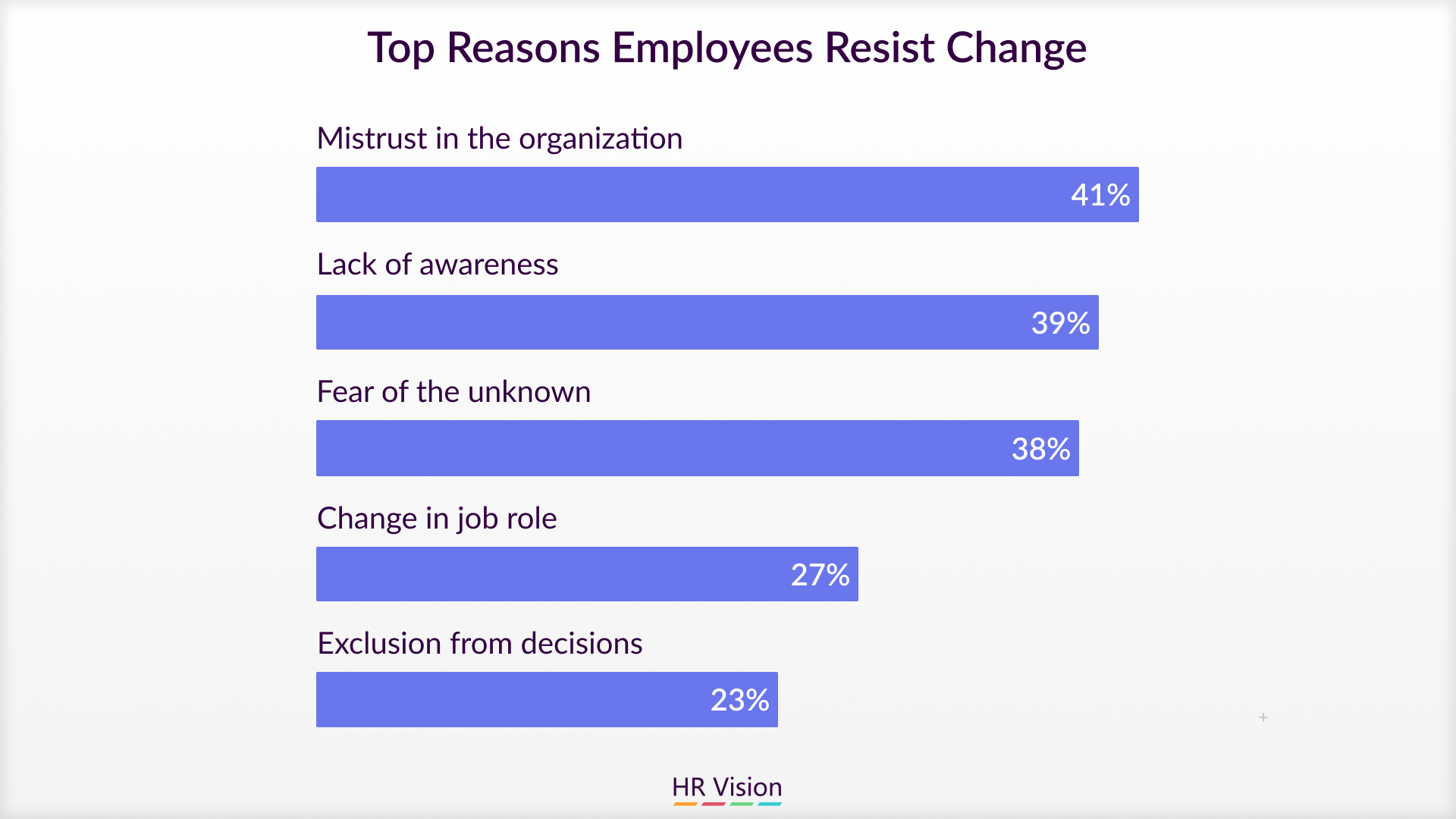
Research shows that 37% of employees are resistant to change. This resistance often stems from various underlying factors. One of the most significant is mistrust in the organization. When employees don’t feel confident in leadership or the direction of the company, they are far more likely to push back against change efforts.
Other common reasons for resistance include a lack of awareness about the reasons for change and fear of the unknown, both of which can leave employees feeling uncertain and anxious about the future.
Resistance to change usually stems from fear of the unknown or concerns about how the change will affect job security or daily responsibilities. To manage resistance, HR should approach employees with empathy, listen to their concerns, and acknowledge their feelings. Open communication, reassurance, and providing clear answers to questions can help ease fears and reduce resistance. Showing employees that their input is valued fosters trust and cooperation.
Barriers to change, such as lack of understanding or fear of failure, can slow down or block the change process. HR can overcome these barriers by offering training, clear guidance, and support throughout the transition. Providing tools and resources to help employees adjust can make the change less daunting and build confidence in the new direction.
Conclusion
Effectively managing change is crucial for any organization looking to evolve and stay competitive. The integration of change management into HR practices is a multifaceted process that requires clear communication, strong leadership, and active employee involvement. By focusing on effective communication, equipping employees with necessary skills, linking change management to performance, and offering robust support through Employee Assistance Programs, HR can significantly ease the transition.
Understanding employee reactions and addressing resistance with empathy helps in creating a supportive environment, while measuring progress ensures that the change is on track and any issues are promptly addressed. Fostering a positive employee experience throughout the change process is essential for maintaining morale and achieving successful outcomes.
In summary, a structured approach to change management, driven by leadership and supported by HR practices, enables organizations to navigate transitions smoothly, build resilience, and ultimately thrive in an ever-changing business landscape.
Want to learn how to effectively manage change in your organization? Join us at HR Vision to discover the latest best practices, strategies, and tools for successful change management.


