

How do you know if your training programs are actually making a difference?
Many organizations invest heavily in employee development, but without the right metrics, it’s hard to tell what’s working and what’s not. According to LinkedIn’s Workplace Learning Report, 89% of L&D professionals agree that proactively measuring the impact of learning programs is key to future success. Yet, fewer than half feel confident in their current measurement strategies.
To know if your development efforts are really working, you need to measure the right things. That’s where KPIs (Key Performance Indicators) come in. The right KPIs help HR teams see what’s working, what’s not, and where to focus next.
Why Measuring Employee Development Matters
Investing in employee development is one of the smartest moves a company can make, but only if it’s done with purpose and direction. Development isn’t just about offering training sessions or access to e-learning platforms. It’s about helping people grow in ways that support both their career goals and the company’s future.
When development is aligned with business needs, it becomes a powerful growth lever. Employees build the skills they need to succeed, teams become more capable and agile, and organizations are better prepared to meet changing demands.
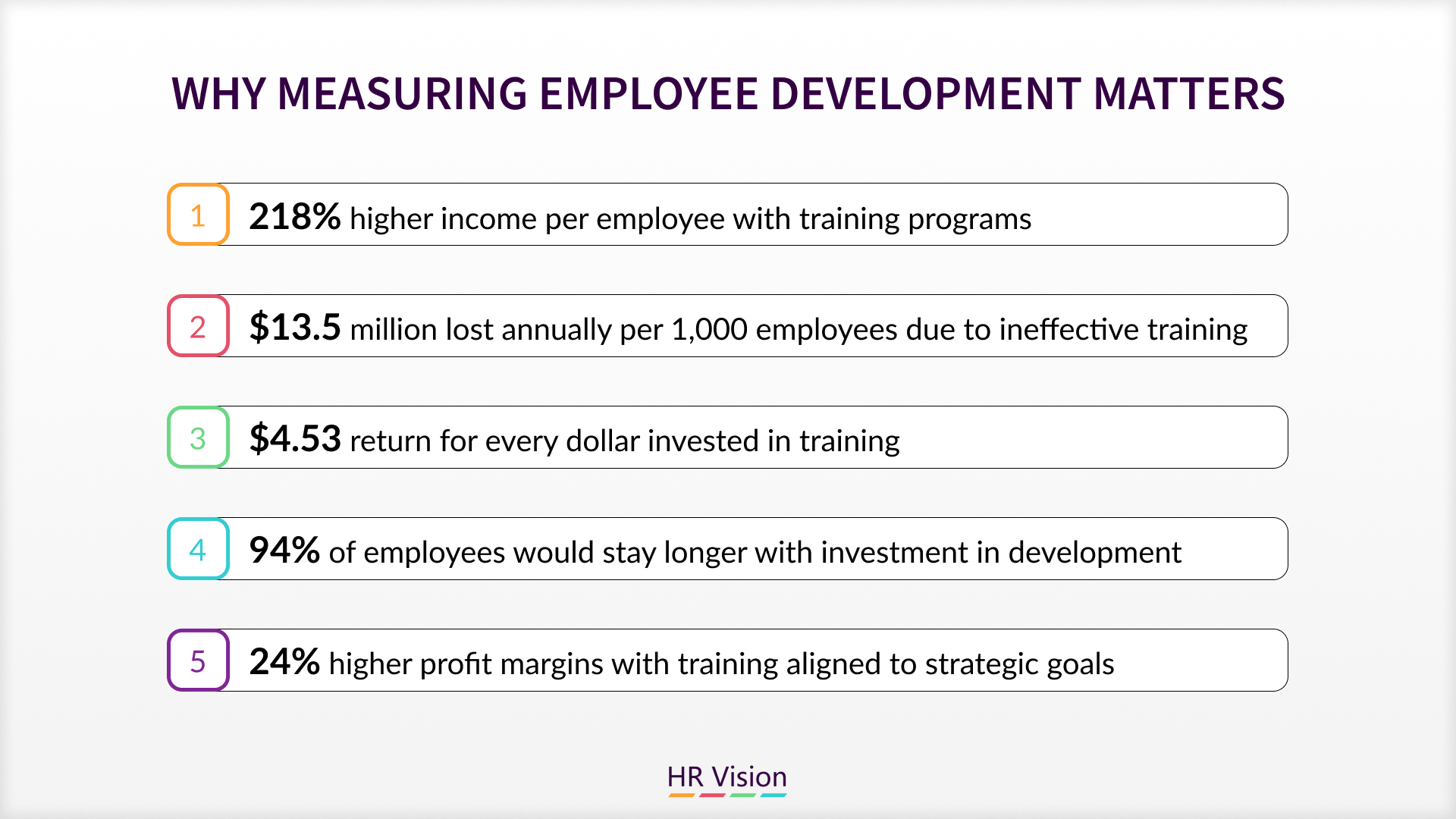
But not all training delivers results. Ineffective programs can be costly—both in terms of money spent and time wasted. Worse, they can leave employees feeling disengaged or stuck. On the other hand, targeted learning that’s tied to real business outcomes delivers a strong return on investment. It helps people perform better, stay longer, and contribute more.
That’s where KPIs come in. KPIs connect employee growth to business results, making it easier to set priorities, secure budgets, and show the impact of HR initiatives. With the right data, learning and development becomes not just an HR function but a strategic driver of success.
Key Categories of KPIs for Employee Development
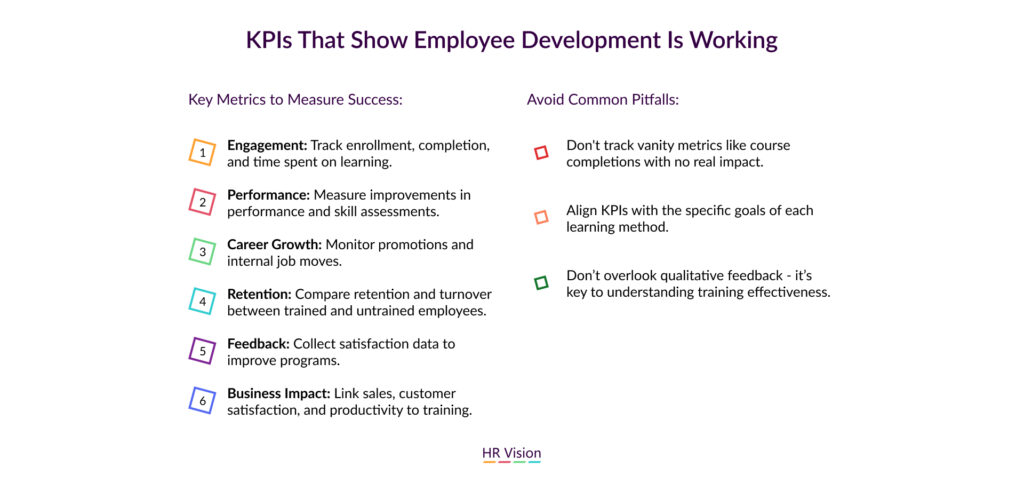
- Engagement & Participation Metrics
Engagement and participation metrics let you see if employees are signing up for and finishing the training they need. For example, tracking the number of people enrolled in each program and how many complete the courses gives a quick look at which programs attract and hold attention. It also highlights areas where adjustments might be needed.
Measuring how much time employees spend on different learning methods and how often they use self-directed platforms adds even more detail. These numbers help HR teams understand which types of training are not only popular but also actively used, ensuring that learning efforts are both interesting and effective.
- Performance & Productivity Metrics
Performance metrics show the direct impact that training has on work quality. By comparing employees’ performance before and after training, you can see clear improvements in skills and work outcomes. When employees finish a program and then perform better, it proves that the training is working.
Other indicators, like the success of projects after specific learning sessions and improved scores on skill assessments, reinforce that training efforts are closing skill gaps. These metrics make it easier to see where further investments in learning will boost overall productivity.
- Career Progression & Internal Mobility
Tracking career progression helps you understand how employee development contributes to promotions and internal growth. When employees move up within the company or switch to roles that better suit their skills, it’s a sign that the learning programs are effective. This also builds a stronger, more motivated workforce.
Measuring the number of employees who apply for new positions internally or are promoted after completing specific training shows how well development programs align with career paths. In this way, learning initiatives can directly support long-term growth and talent retention.
- Retention & Turnover Metrics
Retention and turnover metrics are important because they show whether training helps keep employees around. By comparing the retention rates of those who have taken part in development programs with those who haven’t, HR teams can see the benefits of investing in learning.
If exit surveys point to a lack of development as a reason for leaving, this feedback is a clear sign that more focused training might be needed. A drop in turnover rates among trained employees indicates that effective development programs contribute to a more stable, loyal workforce.
- Employee Feedback & Sentiment
Employee feedback is key for understanding how development programs are perceived. Post-training satisfaction surveys can reveal whether employees feel that the learning is helpful and relevant. A positive Net Promoter Score (NPS) on training programs is a good sign that employees would recommend the training to colleagues.
Collecting detailed feedback through surveys or focus groups also helps uncover specific areas for improvement. When employees share real examples of how training has helped them in their daily jobs, it confirms that the development efforts are meeting real needs.
- Business Impact Metrics
Business impact metrics connect training with the bottom line. For example, improved sales performance after targeted training shows that when employees gain new skills, it can lead directly to better business results. This link between learning and performance boosts confidence that training investments are worthwhile.
Similarly, better customer satisfaction following frontline employee training and overall productivity gains from improved technical skills highlight the long-term value of employee development programs. These metrics help align HR activities with company goals, proving that effective training is a key driver of success.
Types of Learning Methods in Employee Development
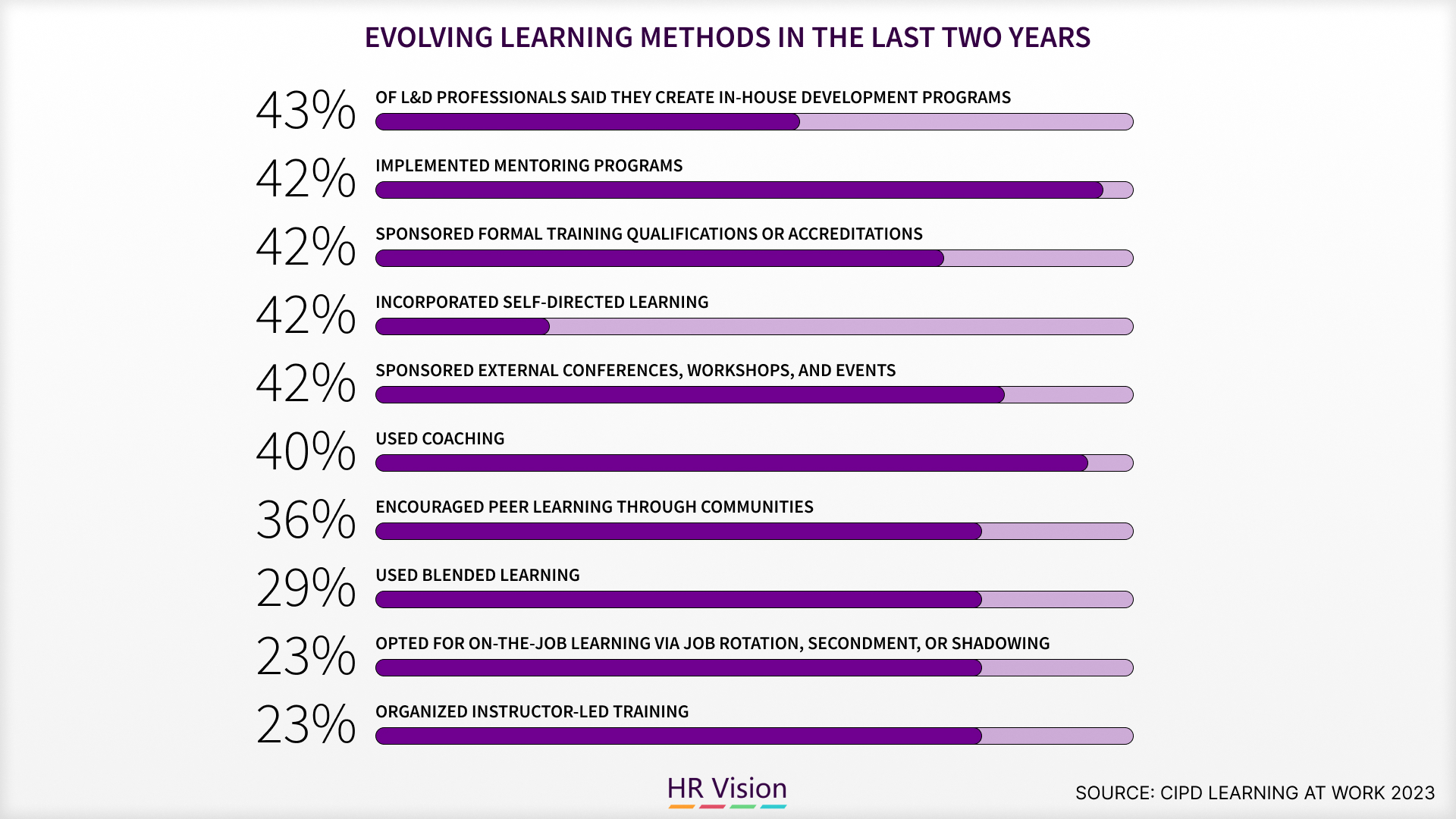
Implementing a diverse range of learning methods is essential for effective employee development, as each approach influences key performance indicators (KPIs) differently. For instance, Laing O’Rourke, a leading construction company, transformed its training programs by adopting “bite-sized” learning modules inspired by platforms like Instagram and TikTok. This shift resulted in a significant increase in engagement, with 10% of the learning budget reaching 700 employees monthly, compared to previous expenditures benefiting fewer staff.
Selecting the right learning methods is crucial, as different approaches impact key performance indicators (KPIs) such as employee engagement, retention, and productivity in varying ways. A diverse array of learning methods can cater to different learning styles and preferences, enhancing the overall effectiveness of Learning and Development (L&D) programs.
Tools and Methods for Tracking KPIs
To track KPIs effectively and measure the success of employee development, HR teams can use a range of tools. Here are some of the most useful options:
- LMS Reporting Dashboards
Learning Management Systems (LMS) offer reporting tools that show how well employees are engaging with training. These dashboards track metrics like course completion rates, time spent on each course, and learner participation. HR teams can use these insights to understand which training programs are working and which may need improvement.
- Performance Management Systems
Performance management systems help HR teams link employee development to job performance. By comparing performance before and after training, HR can see how development programs are improving productivity and work quality. This makes it easy to assess whether the training is helping employees succeed in their roles.
- HR Analytics Tools for ROI and Impact Tracking
HR analytics tools track the return on investment (ROI) of training programs. These tools look at metrics like employee retention, career progression, and overall business performance. By analyzing these data points, HR can see if training programs are having a positive impact on the company and whether the investment is worth it.
Common Pitfalls to Avoid
While tracking KPIs is essential for measuring the effectiveness of employee development programs, there are several common pitfalls to watch out for. Avoiding these mistakes will help HR teams get more accurate and meaningful insights.
- Tracking Vanity Metrics
Vanity metrics, such as course completions or the number of employees who attend a training, might look good on paper but don’t necessarily indicate whether the training had any real impact. For example, if employees complete a course but don’t apply the learned skills to their work, it’s not driving the desired results. Focus on metrics that reflect actual improvements in performance and business outcomes rather than just surface-level numbers.
- Not Aligning KPIs with Learning Method Goals
Each learning method (e.g., self-directed learning, mentoring, or coaching) has different goals. If KPIs aren’t aligned with these goals, it’s hard to measure success effectively. For example, measuring time spent on a self-paced learning platform might not be as useful as assessing knowledge retention or skill application. Ensure KPIs are tailored to each learning method to capture meaningful data.
- Overlooking Qualitative Data
While quantitative data (like test scores and completion rates) is valuable, it’s also important to consider qualitative data, such as employee feedback. Surveys, interviews, and open-ended responses can provide deeper insights into how training programs are perceived and whether employees feel the learning is relevant and helpful. Overlooking this can lead to missing out on valuable information that helps improve future programs.
Conclusion
Aligning KPIs with both the learning methods used and business outcomes is crucial for the success of employee development programs. By tracking the right metrics, HR teams can better understand how training impacts employee growth and the company’s overall goals.
A data-driven, people-first approach to development is essential. When HR teams focus on meaningful KPIs that reflect real employee progress and performance, they can improve their development programs and drive long-term success.
Want to learn how to align your employee development KPIs with business outcomes and HR strategy? Join us at HR Vision, where top HR leaders will share insights on best practices for measuring the success of employee development programs.


