Nearly half (46%) of professionals are considering quitting in the year ahead, a sharp increase from 2021’s Great Resignation, according to a recent Microsoft and LinkedIn survey. This growing trend signals a significant challenge for businesses in 2025.
High turnover comes with financial and operational costs—recruiting, training, and lost productivity. Recognizing the early warning signs of an employee planning to leave is essential for HR professionals. By spotting these signals, companies can intervene proactively and retain valuable talent.
Why Are People Quitting Their Jobs?
Employee turnover has become a critical concern for organizations in recent years, with many professionals choosing to leave their jobs for a variety of reasons.
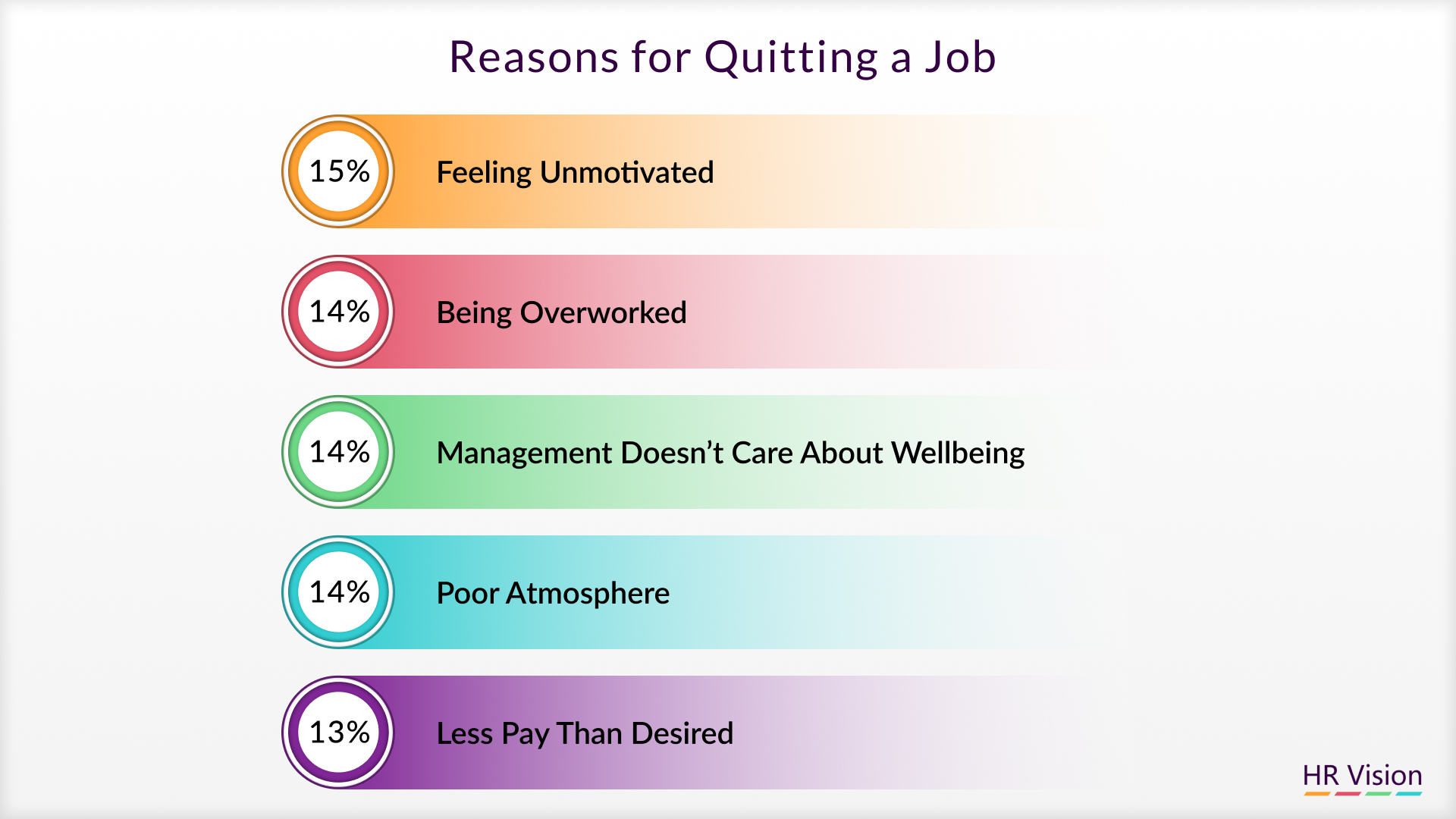
A 2022 study by Edenred uncovered some of the most common reasons people are leaving their jobs, and while these reasons are widespread, it’s important to note that specific roles and sectors may see variations. The reasons can differ depending on the nature of the job, industry demands, and company culture.
The Importance of Spotting Early Warning Signs
Recognizing early warning signs that an employee is about to quit can be a game-changer for organizations. Spotting these signs early not only helps prevent the loss of valuable talent, but it also saves significant time, resources, and energy that would otherwise go into recruiting and training a replacement.
When turnover is caught early, HR can take proactive steps to address underlying issues, whether it’s a matter of improving work-life balance, addressing workplace culture concerns, or offering better career growth opportunities. The sooner these issues are identified, the more time there is to intervene and potentially prevent the departure.
The 10 Early Warning Signs
An analysis of 34,000 responses in the Work Institute’s Retention Report found that 75% of the reasons for employee turnover are preventable. This means that most employees don’t leave on a whim—rather, their departure is often driven by unresolved workplace frustrations, lack of growth opportunities, or disengagement that could have been addressed earlier.
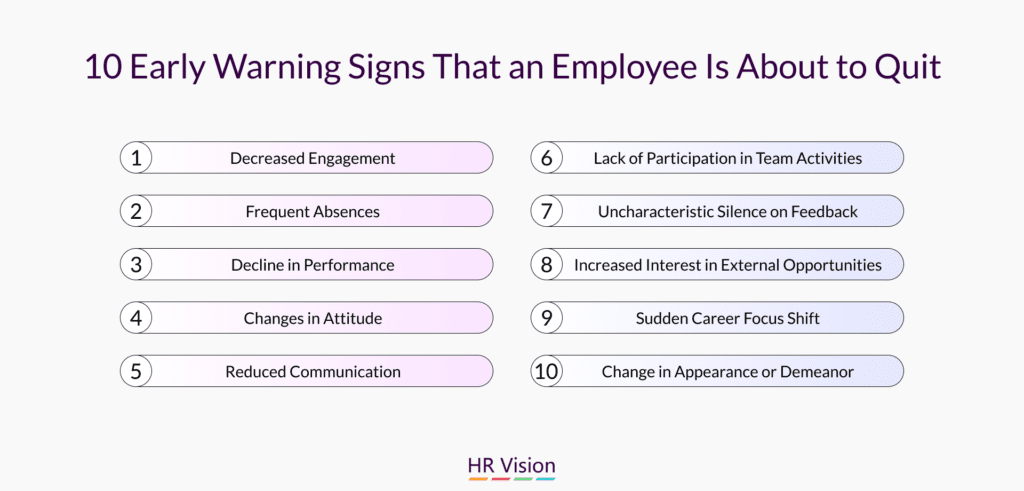
Recognizing the signs that an employee is preparing to leave can help organizations take proactive steps to improve retention. Here are 10 key indicators that someone may be on the verge of quitting:
1. Decreased Engagement
An engaged employee actively participates in meetings, collaborates with colleagues, and shows enthusiasm for their work. When engagement declines, employees may become withdrawn, contribute less, and lose interest in projects—often signaling dissatisfaction or detachment from their role.
2. Frequent Absences
Unexplained or increased absenteeism can indicate burnout, dissatisfaction, or a loss of commitment to the job. Employees who frequently call in sick or take unexpected personal days may be mentally checking out or using the time to explore other job opportunities.
3. Decline in Performance
A noticeable drop in productivity, missed deadlines, or a lack of attention to detail may suggest that an employee is no longer invested in their work. This decline could stem from disengagement, frustration, or shifting priorities as they consider leaving.
4. Changes in Attitude
Sudden shifts in behavior—such as increased negativity, irritability, or disinterest—may indicate frustration with the role, workplace culture, or leadership. Employees who were once positive but become disengaged or cynical may be contemplating a move.
5. Reduced Communication
Employees who start avoiding conversations with colleagues or managers may be distancing themselves from the organization. They may contribute less in meetings, stop sharing ideas, or become unusually quiet, signaling a growing disconnect from their role.
6. Lack of Participation in Team Activities
A previously social or involved employee who suddenly stops attending team lunches, events, or discussions may be disengaging. Avoiding social interactions can be a sign that they no longer feel connected to the company or their colleagues.
7. Uncharacteristic Silence on Feedback
Employees who were once open to constructive feedback but become defensive, dismissive, or indifferent may no longer see value in professional development within the organization. This resistance could suggest they are already mentally prepared to leave.
8. Increased Interest in External Opportunities
If an employee suddenly becomes more active on LinkedIn, attends more networking events, or takes unexplained time off (possibly for interviews), it may indicate they are seeking new job opportunities.
9. Sudden Career Focus Shift
Employees who begin prioritizing personal projects, side businesses, or new skills unrelated to their current role may be preparing for a career change. This shift can be a sign that they are mentally planning their next move outside the company.
10. Change in Appearance or Demeanor
A shift in professional appearance, posture, or overall energy level can sometimes indicate disengagement. An employee who once dressed professionally but suddenly becomes more casual—or vice versa—may be signaling a change in attitude toward their role.
How HR Can Address These Signs
Recognizing early warning signs of employee turnover is just the first step—what HR does next is what truly matters. By intervening early, HR professionals can re-engage employees, address concerns, and improve retention. Here are key strategies to help prevent valuable talent from walking out the door:
1. Conduct Regular One-on-One Check-Ins
Frequent, meaningful conversations between employees and their managers provide insight into job satisfaction and potential concerns. By fostering an open dialogue, HR can identify disengagement early and work toward solutions before it escalates into a resignation.
2. Foster Open Communication
Encouraging transparency and psychological safety allows employees to voice concerns without fear of backlash. An environment where employees feel heard and valued can significantly improve job satisfaction and loyalty.
3. Provide Career Growth and Development Opportunities
Lack of career advancement is one of the top reasons employees leave. Offering mentorship programs, skills training, and internal mobility opportunities can help employees see a future within the organization rather than outside of it.
4. Address Workload and Wellbeing
If employees feel overworked or unsupported, they are more likely to burn out and leave. HR should work with managers to balance workloads, promote mental health resources, and encourage time off when needed.
5. Recognize and Reward Employees
Employees who feel undervalued are more likely to disengage. Implementing formal and informal recognition programs—whether through bonuses, promotions, or simple acknowledgments—can reinforce employees’ contributions and commitment to the company.
6. Keep an Eye on Compensation and Benefits
Competitive salaries and benefits are crucial for retention. HR should conduct regular market assessments to ensure compensation aligns with industry standards and employee expectations.
Conclusion
Employee turnover is often preventable, but only if organizations recognize the warning signs early and take action. From disengagement and absenteeism to changes in attitude and performance, these subtle cues can signal that an employee is preparing to leave. Ignoring them can lead to costly disruptions, loss of talent, and a decline in workplace morale.
Proactive strategies help keep valuable employees and contribute to a positive work environment where people feel supported, motivated, and invested in their roles. Organizations can turn potential turnover into long-term commitment and success by prioritizing employee satisfaction and well-being.
Want to explore cutting-edge strategies for retaining top talent and reducing turnover? Join us at HR Vision, where top HR leaders will discuss the latest trends in talent management, HR analytics, and the future of work.