1. You’ve worked with organisations like Bloomberg, Morgan Stanley, and the NHS. How do different sectors approach inclusivity in leadership, and what common challenges do they share?
When I stepped out of financial services to run my consultancy business 15 years ago, I was struck by how seemingly different other sectors are. Yet, once I peeled back the layers, I discovered that people are inherently good and universally desire to recruit and retain amazing talent. Of course, the “why” behind inclusivity varies: some sectors lean on data-driven insights to reveal hidden diversity gaps, others balance regulatory demands with nurturing high-potential talent, and some focus on reflecting the diverse communities they serve.
Despite these differences, across cultures and industries – whether in the US, Africa, or Europe – found three common obstacles:
- • Cultural Resistance: Deep-seated hierarchies and long-standing habits make change slow, even when the desire is there.
- • Systemic Biases: Existing processes often inadvertently exclude those who don’t fit the traditional mould, stalling inclusive progress.
- • Accountability Fatigue: In the wake of global calls for change, many organisations initially commit to inclusivity, but maintaining momentum over time proves challenging, eroding trust when promises go unfulfilled.
While best practices in inclusivity are simple to learn and share, the true test of leadership lies in transforming the desire for diversity into sustained, impactful action despite these enduring challenges.
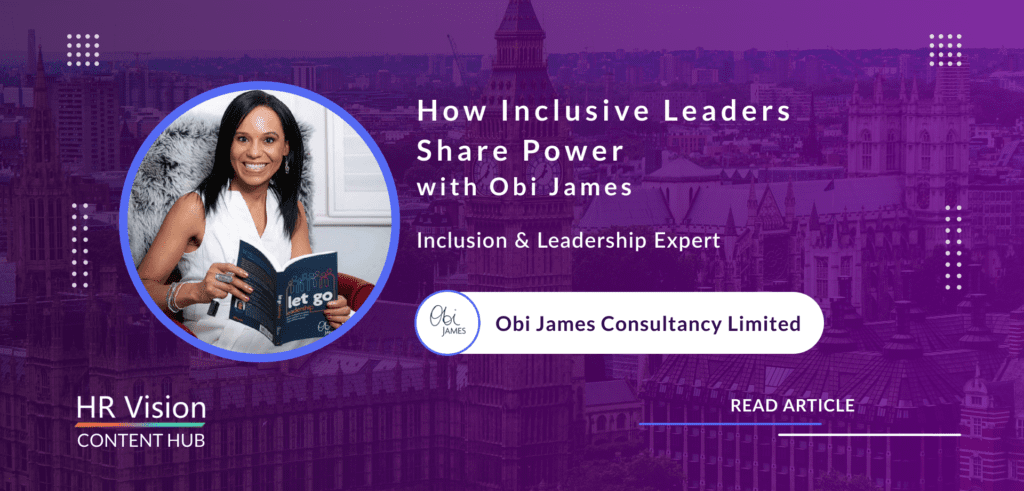
2. In your book, Let Go Leadership, you discuss how inclusive leaders share power to drive high performance. Can you elaborate on what that looks like in practice?
Imagine a classic movie scene where the boss walks in, barking orders, convinced they hold every answer. Now picture the exact opposite: a leader who’s confident enough to admit they don’t know it all. That’s Let Go Leadership:
- • Stepping Back, Not Stepping Away.
It’s about releasing that iron grip on decision-making but not abandoning accountability. You’re still responsible for outcomes – you just share the process and journey with your team. - • Vulnerability & Trust.
Many leaders built their careers on being the “problem-solver.” Letting that go can feel like jumping off a ledge without a safety net. But it’s in that vulnerability – asking more questions, genuinely listening, and inviting diverse opinions – that real creativity and innovation thrive. - • Creating Inclusive Spaces
Inclusive leaders build and nurture environments where no one person (including the leader) hogs the spotlight. All voices (even the dissenting ones) are heard, and respected, diverse perspectives emerge, and the best ideas win.
When leaders “let go,” people feel valued, step into their power, and spark the kind of innovation that drives organisations forward.
3. What are the first steps in cultivating a culture of shared leadership within an organization?
I remember sitting down with a leadership team that was so used to command-and-control. Their biggest question was, “Where do we even begin?” Here’s the roadmap I often share, drawn from the SHARE model in Let Go Leadership:
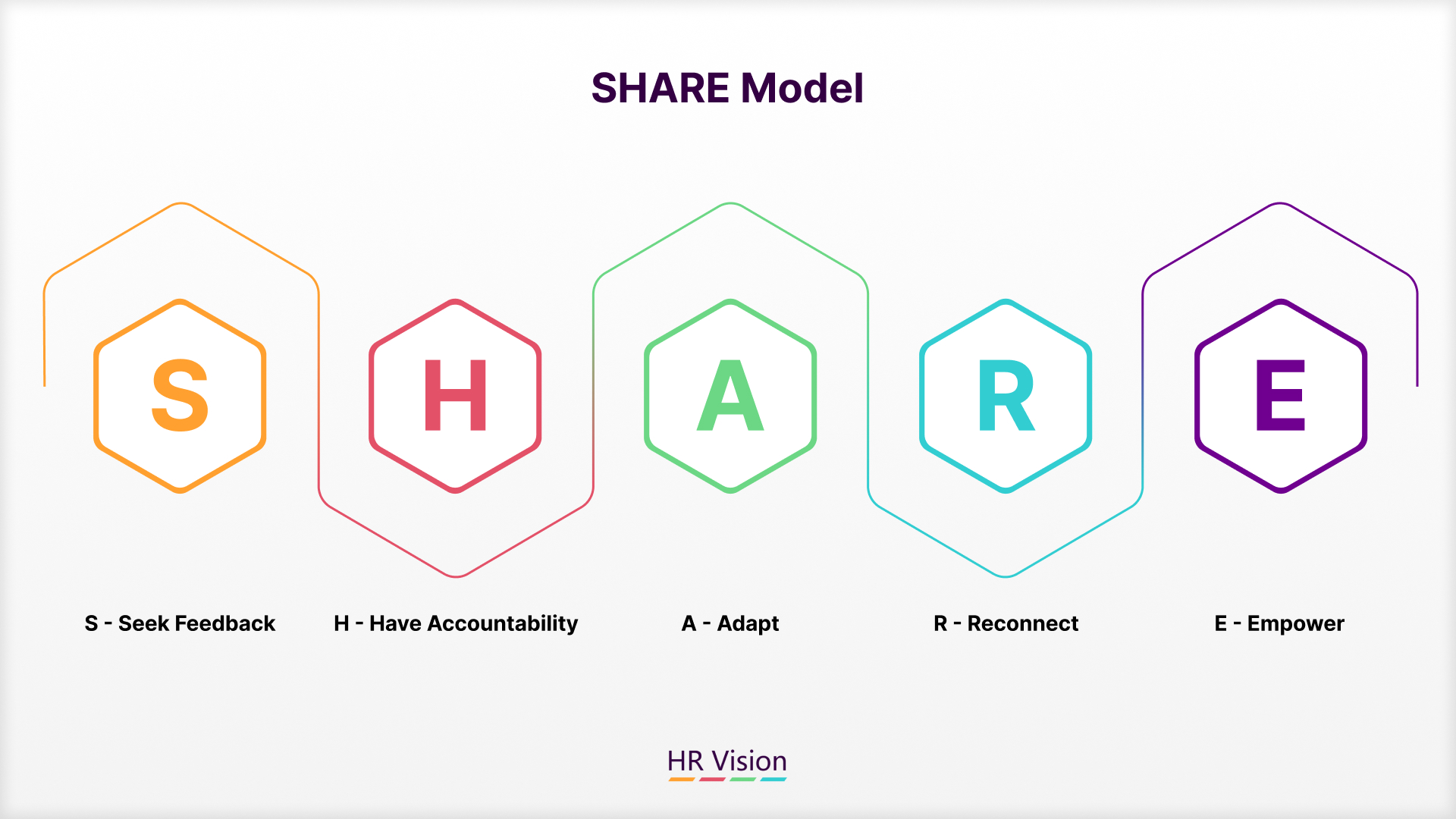
- S – Seek Feedback.
Leaders at the top rarely receive honest input because people are afraid. By actively seeking feedback – really asking and encouraging it – you open the door to better communication and new perspectives. - H – Have Accountability.
This is where lofty promises meet real consequences. When roles and responsibilities are crystal clear, it’s easier to ensure everyone – leaders included – sticks to their commitments. - A – Adapt.
Maybe you’ve hired new talent from different backgrounds or introduced fresh ideas. Perhaps you have pigeonholed your people based on roles instead of taking the time to truly know them and discover what they could offer if given the chance. Now be ready to adapt – one size never fits all in diverse teams. - R – Reconnect.
- After all those changes, take the time to rebuild relationships. Real success hinges on truly knowing and valuing the people around you, as well as maximising the resources you already have. If you often find yourself complaining about limited resources, you might discover that the real challenge lies in maximising what you already possess.
- E – Empower.
This is where the magic happens – when everyone can see themselves as a leader. You’re not just handing off tasks; you’re creating a culture where each team member feels capable of steering the ship when their expertise is needed.
It’s a continual process. You don’t just “finish” sharing leadership; you evolve with each new challenge and opportunity.
4. What are the top three traits of an inclusive leader, and how can HR leaders identify and nurture these traits in their teams?
If I had to pick the big three, it would be:
- Self-Awareness.
Inclusive leaders know they aren’t omniscient. They acknowledge biases, blind spots, and areas of improvement.- • HR Tip: Offer leadership coaching that includes leadership assessments, reflection exercises, and 360° reviews. The goal is to develop leaders to see themselves more clearly.
- Openness to Influence.
It’s one thing to gather new ideas; it’s another to use them. Great leaders embrace input from people whose perspectives differ and are willing to change because of it.- • HR Tip: Provide platforms – forums, cross-departmental projects – where diverse insights naturally surface. Recognise leaders who integrate those ideas.
- Collaborative Spirit.
They don’t dominate meetings or rush to fill silences. They invite participation, value feedback, and share credit.- • HR Tip: Reward team-based milestones and shared ownership. Move beyond individual leadership coaching to leadership team coaching. Celebrate examples of leaders stepping back to let others shine and reward teamwork.
5. You’ve spoken at global forums on Inclusive Leadership. What are some key takeaways you’ve learned from those conversations that HR leaders can apply to their own work?
Based on my own HR experience and having met leaders from all corners of the world, three facts keep popping up:
- • Inclusivity Is Non-Negotiable.
Investors, employees, and customers all want to see real diversity and inclusion, not just talk. - • Continuous Unlearning.
We can’t cling to old leadership models in a world that changes daily. Leaders must evolve just as quickly – be it learning new cultural competencies or rethinking how they make decisions or how they measure success. - • Local Context Matters.
A global solution isn’t always a local solution. What works in New York might not fly in Singapore. Tailoring inclusion efforts by region or culture shows real respect for local norms while keeping the overarching principles intact.
6. What role does feedback play in creating inclusive cultures, and how can organizations develop a feedback-driven environment where all voices are heard?
Feedback can be the lifeblood of an inclusive culture. I’ve seen it transform teams that felt disconnected into hubs of collaboration:
- Surfacing Blind Spots.
The higher up leaders go, the less honest feedback they receive – in the absence of development opportunities such as Executive Coaching. Leaders often don’t realise how their words or actions might be misinterpreted. Honest feedback can open their eyes. - Validating Good Work.
Feedback has been given a bad name and needs to be rebalanced. Inclusion efforts aren’t just about criticism; recognising small successes can fuel momentum. - Building Trust.
When employees see their feedback taken seriously (and acted upon), trust skyrockets.
How to Make It Happen:
- • Set Up Multiple Channels. Surveys, small group chats, facilitated safe spaces – different people speak up in different ways.
- • Act Quickly & Transparently. Nothing discourages honesty more than feedback going into a “black hole.” Leaders need to circle back with next steps or changes. If you will not respond or act on the feedback, don’t ask. Silence is a response.
7. What strategies can HR professionals use to foster empowered, harmonious relationships across diverse teams?
My team and I have been involved in a few post-M&A and cross-cultural team/culture rebuilding interventions. We recently worked with an organisation where different departments felt like rival sports teams. Through a few strategic moves, we saw a remarkable shift:
- • Team-Building & Coaching.
Cross-functional or multicultural coaching creates opportunities for teams to appreciate each other’s backgrounds and strengths and move from ‘them vs us’ to ‘we’. - • Shared Goals.
Define objectives that unite people. Teams need a common purpose. When everyone’s aiming for the same target, collaboration becomes more natural. - • Peer Mentoring, Reverse Mentoring & Sponsorship.
Encourage leaders/seasoned employees to support up-and-coming talent from different backgrounds and vice versa. It accelerates learning and fosters respect.
8. Finally, given your extensive experience in both coaching and leadership development, what do you see as the future of inclusive leadership and its impact on organizational success?
I believe we’re at a critical moment for inclusive leadership. Despite recent headlines indicating that many organizations are pulling back on DEI initiatives – citing economic pressures and shifting priorities – the core principles of inclusive leadership remain essential and increasingly non-negotiable:
- • Driving Innovation.
In a complex world, no single viewpoint can solve every problem. Diverse perspectives spark fresh, unexpected ideas. - • Talent Attraction & Retention
People today want to work where they feel valued and heard. Inclusive cultures don’t just attract top candidates; they also keep them around.
- • Cultivating Resilience.
Teams that share power and listen intently to one another recover faster from setbacks. They’re more adaptable – ready for whatever the future throws at them.
Simply put, the future belongs to leaders who can let go of the old ways, share power wisely, and invest deeply in the diverse voices around them. In doing so, they create organisations that not only survive – but thrive – in an ever-evolving marketplace.
Ready to stay ahead in the ever-changing world of HR? Join us at HR Vision, where top HR leaders gather to explore the future of work, HR trends, and the power of HR analytics and technology.