Employee referral programs have emerged as a cornerstone of modern talent acquisition strategies. In today’s job market, securing top talent is paramount for organizational success. With a wealth of potential candidates vying for limited positions, businesses must explore innovative approaches to identify and attract the best individuals.
Employee referral programs offer a powerful solution. Leveraging the networks of existing employees, these programs provide a direct pipeline to qualified candidates who are more likely to be a good cultural fit. The research underscores the effectiveness of this strategy: referred candidates are hired at a rate nearly four times higher than those from other sources, according to a study by Jobvite. This compelling statistic highlights the potential impact of employee referrals in accelerating the hiring process and bolstering team performance.
What is an Employee Referral Program?
An employee referral program is a structured initiative designed to encourage current employees to recommend qualified candidates for open positions within the organization. By leveraging the personal and professional networks of employees, companies can tap into a valuable pool of potential hires who are more likely to be a good cultural fit.
These programs typically involve a formal process for submitting referrals, clear guidelines for eligibility, and incentives to reward employees for successful hires.
How Do Employee Referral Programs Work?
Employee referral programs operate on a straightforward principle: they harness the power of employee networks to identify and attract qualified candidates.
Here’s a typical process:
• Identify Open Positions: The company determines which roles need to be filled and clearly outlines the job requirements.
• Employee Outreach: Employees are informed about open positions and encouraged to refer suitable candidates from their professional and personal networks.
• Referral Submission: Employees submit referrals through a designated process, often using a company-specific platform or form.
• Candidate Screening: The HR or recruiting team screens referred candidates to assess their qualifications and fit for the position.
• Interview Process: Qualified candidates proceed through the standard interview process.
• Hiring Decision: If the candidate is hired, the referring employee receives a predetermined reward or incentive.
Successful referral programs often include features like referral bonuses, gamification elements, and public recognition to boost employee engagement and participation.
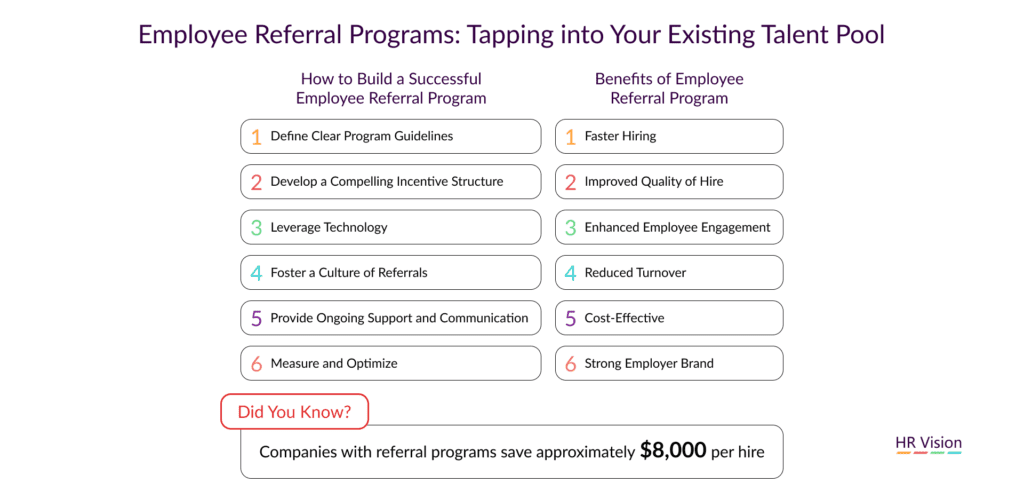
What are the Benefits of Employee Referral Programs?
Employee referral programs offer a multitude of advantages for organizations seeking to build high-performing teams. Let’s explore some key benefits:
Faster Hiring
One of the most significant advantages of employee referral programs is accelerated hiring times. Referred candidates often progress through the recruitment process more quickly due to internal endorsements. Research shows that employee referrals can reduce time-to-hire by up to 40%. This efficiency translates into cost savings and faster time-to-productivity for new hires.
Improved Quality of Hire
Employees tend to refer candidates who they believe will be a good fit for the company culture and the specific role. This inherent alignment often leads to higher-quality hires who are more likely to succeed and stay with the organization long-term.
Enhanced Employee Engagement
When employees feel invested in the company’s success, they are more likely to be engaged and motivated. Referral programs empower employees to contribute to the hiring process, boosting their sense of ownership and pride in the organization.
Reduced Turnover
Referred candidates often demonstrate a higher level of commitment and loyalty from the outset. This can lead to lower turnover rates, reducing recruitment costs and ensuring business continuity.
Cost-Effective
While offering incentives to referring employees, referral programs can ultimately be cost-effective. By reducing time-to-fill, onboarding costs, and turnover, organizations can realize significant savings. Additionally, the cost of acquiring a referred candidate is typically lower than that of other recruitment channels.
Strong Employer Brand
Successful referral programs contribute to a positive employer brand. When employees are enthusiastic about recommending their company to others, it reflects a positive work environment and culture. This can attract top talent and increase the organization’s appeal to potential candidates.
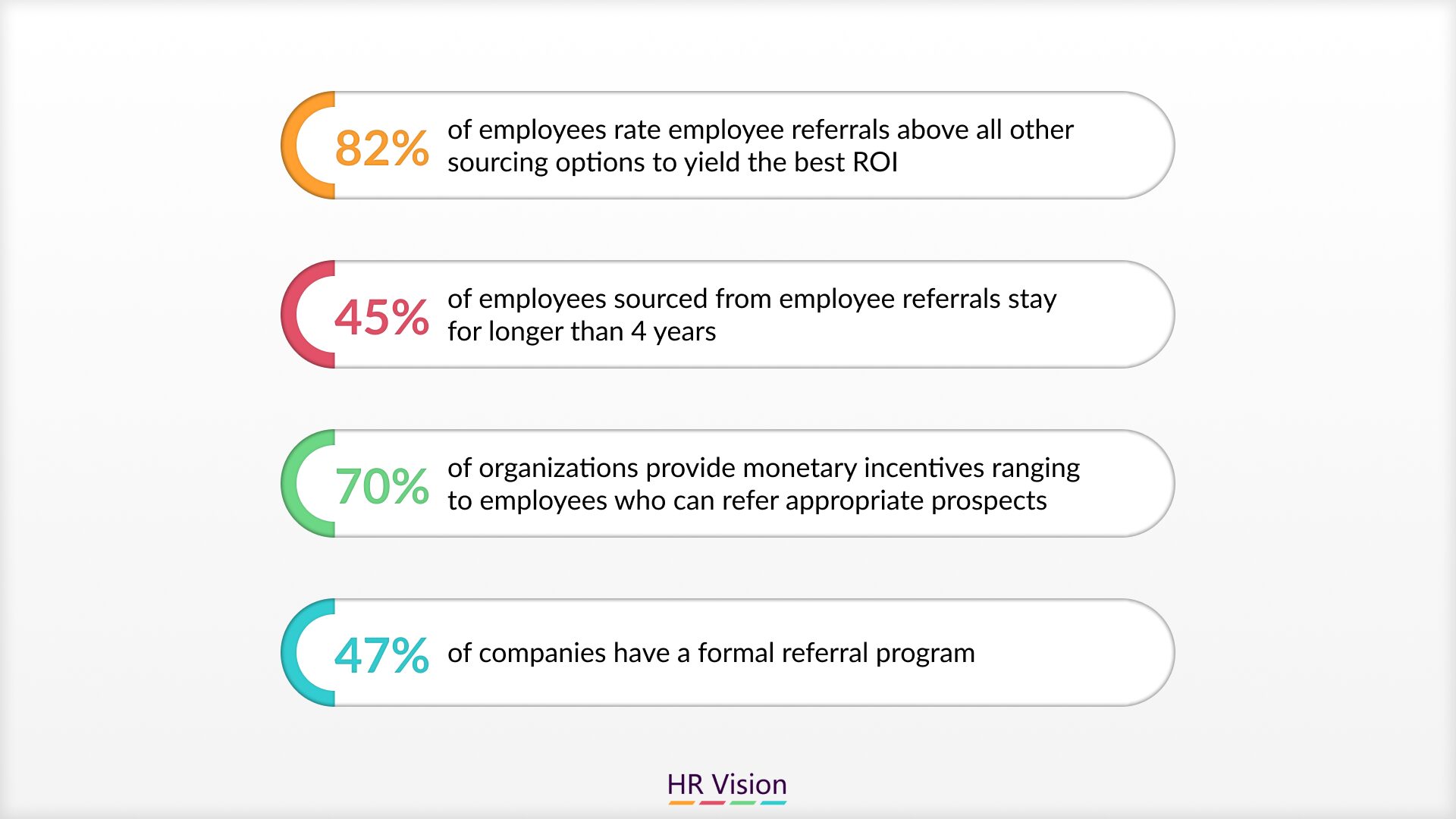
To incentivize employee participation, many organizations offer monetary rewards. 70% of companies provide financial incentives ranging from $1,000 to $5,000 for successful referrals. These rewards not only motivate employees but also demonstrate the company’s commitment to the program.
How to Build a Successful Employee Referral Program
- Define Clear Program Guidelines
Begin by establishing a comprehensive framework for your referral program. Clearly outline the types of positions eligible for referrals, the referral process, and the criteria for candidate qualification. Communicate these guidelines effectively to all employees to ensure transparency and avoid misunderstandings.
- Develop a Compelling Incentive Structure
A robust incentive program is crucial for motivating employees to participate actively. Consider offering a mix of rewards, such as monetary bonuses, gift cards, additional paid time off, or exclusive company merchandise. Tailor the incentives to appeal to a broad range of employee preferences.
- Leverage Technology
Implement a user-friendly referral platform that simplifies the referral process for both employees and candidates. The platform should allow employees to easily submit referrals, track the status of their referrals, and access program information. Consider integrating the platform with your applicant tracking system (ATS) to streamline the overall process.
- Foster a Culture of Referrals
Create a company culture that values employee referrals. Regularly communicate the importance of referrals and the positive impact they have on the organization. Recognize and reward top referrers publicly to inspire others. Encourage employees to share their referral experiences with colleagues to generate excitement and enthusiasm.
- Provide Ongoing Support and Communication
Maintain open communication with employees throughout the referral process. Keep them informed about open positions, referral guidelines, and the status of their referrals. Offer support and guidance to employees who are unsure about how to refer candidates.
- Measure and Optimize
Track key metrics to assess the performance of your referral program. Monitor metrics such as referral rate, time-to-fill, hire rate, and quality of hire. Analyze the data to identify areas for improvement and make data-driven adjustments to your program. Continuously evaluate and optimize your referral strategy to maximize its effectiveness.
Key Metrics for Evaluating Program Success
To gauge the effectiveness of your employee referral program, focus on a combination of quantitative and qualitative metrics.
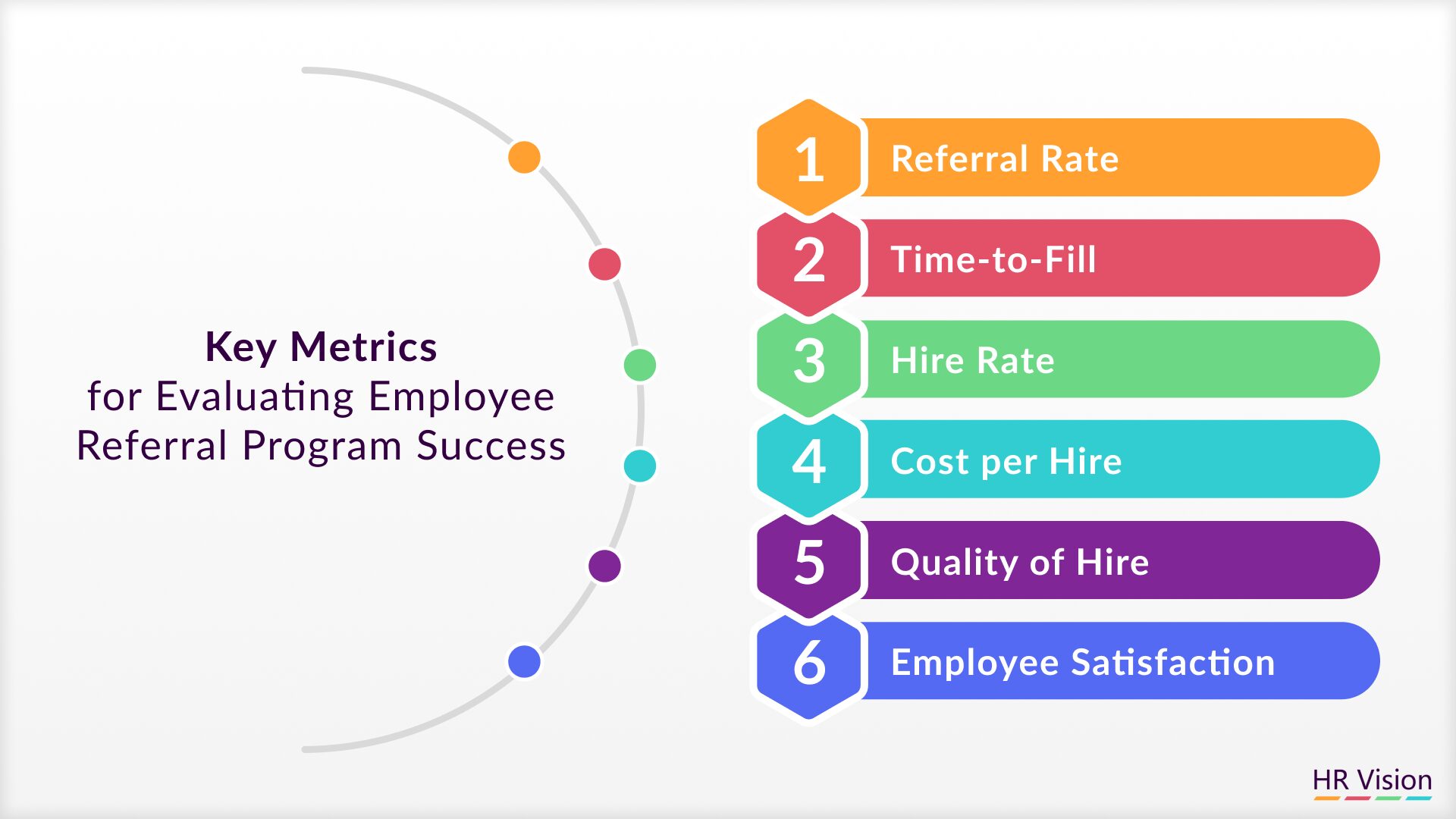
• Referral Rate: Measure the number of referrals generated per employee to assess overall program engagement.
• Time-to-Fill: Compare the hiring timeline for referred candidates to those from other sources. A shorter time-to-fill indicates program efficiency.
• Hire Rate: Calculate the percentage of referred candidates who are ultimately hired. This metric reflects the program’s ability to deliver qualified candidates.
• Quality of Hire: Evaluate the performance and retention of referred employees to assess the program’s impact on long-term organizational success.
• Employee Satisfaction: Conduct surveys or gather feedback to understand employee perceptions of the referral program. High satisfaction levels indicate a positive program experience.
• Cost per Hire: Compare the cost of hiring referred candidates to other recruitment channels. Referral programs often yield a lower cost per hire.
Conclusion
Employee referral programs offer a potent strategy for organizations seeking to build high-performing teams. By tapping into the networks of your existing workforce, you can accelerate hiring, improve the quality of hires, and enhance employee engagement. Successful programs yield a faster time-to-fill, reduced turnover rates, and a stronger employer brand.
Employee referral programs contribute to organizational success by building high-performing teams, fostering a positive work culture, and strengthening the company’s reputation as an employer of choice.
Want to learn more about maximizing the potential of employee referral programs and other cutting-edge HR strategies? Join us at HR Vision. Discover how top HR leaders are navigating the evolving world of work and shaping the future of people management.