Nearly 99% of Fortune 500 companies rely on Applicant Tracking Systems (ATS) to manage their hiring processes. The traditional methods of manual resume sorting, paper-based applications, and endless email chains are no longer sustainable. In an era where talent acquisition is a competitive advantage, businesses must adopt innovative solutions to attract, hire, and retain top talent. An ATS is essential for modern businesses to streamline recruitment, enhance candidate experience, and improve overall hiring efficiency.
What Is an Applicant Tracking System?
An Applicant Tracking System (ATS) is a software application designed to streamline the entire recruitment and hiring process. It serves as a centralized database for storing and managing job applications, candidate information, and hiring workflows. An ATS automates many time-consuming tasks, such as resume parsing, candidate screening, and interview scheduling, allowing HR teams to focus on building relationships with top talent.
Who Uses Applicant Tracking Systems?
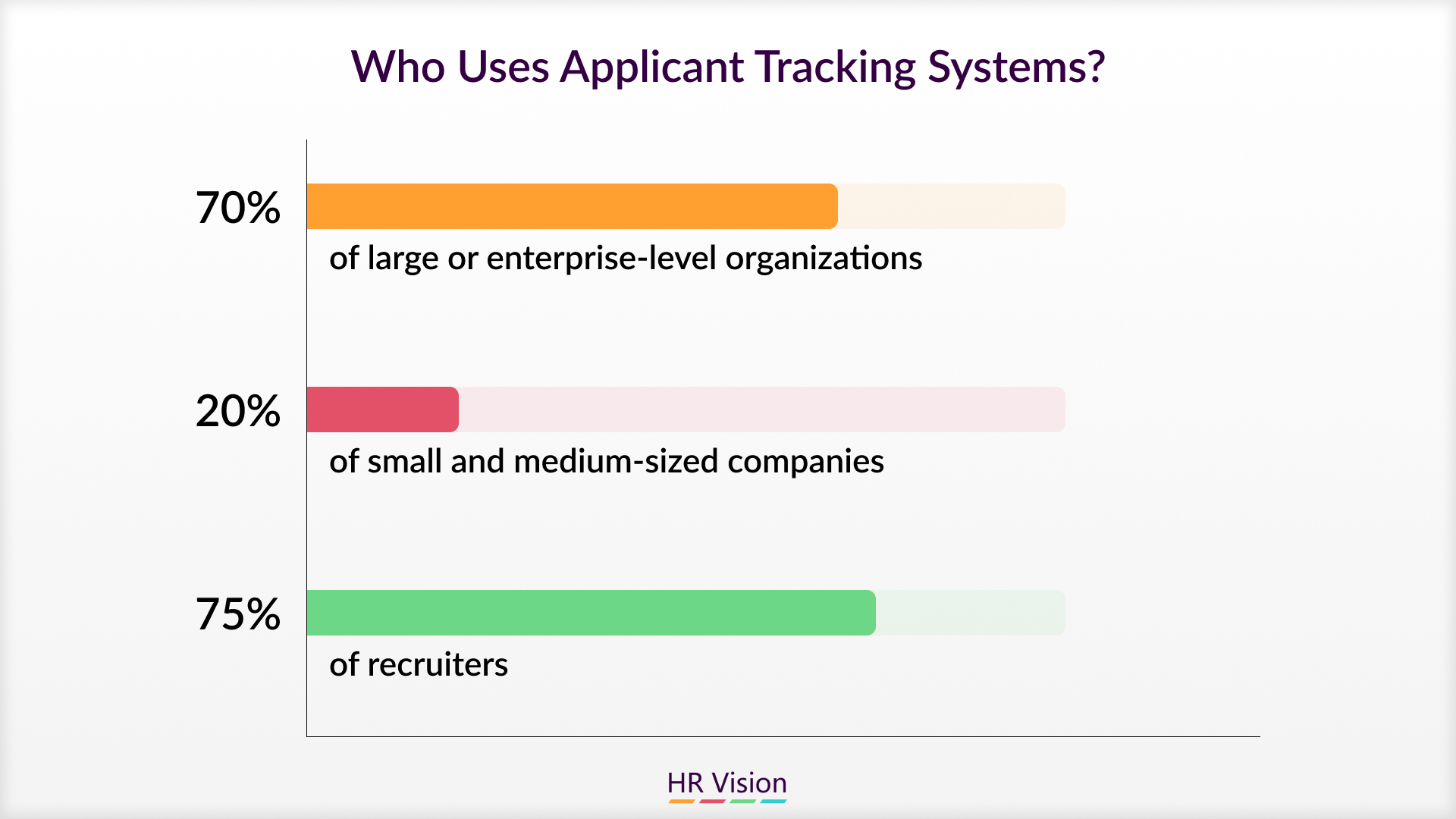
Applicant Tracking Systems (ATS) are employed by a wide range of organizations across various industries and sizes. From small businesses to multinational corporations, ATS has become an indispensable tool for efficient talent acquisition.
- • HR Departments: The core users of ATS are HR professionals responsible for recruitment, hiring, and onboarding.
- • Recruiters: ATS empowers recruiters to streamline their workflow, manage a high volume of applications, and identify top talent quickly.
- • Hiring Managers: Hiring managers utilize ATS to review candidate profiles, schedule interviews, and collaborate with HR on hiring decisions.
- • Job Seekers: While not direct users, job seekers interact with ATS when applying for positions online.
The widespread adoption of ATS reflects its ability to address the challenges of modern recruiting and improve overall hiring efficiency.
The Challenges of Traditional Hiring Methods
Traditional hiring methods often present significant hurdles for organizations seeking to build top-tier teams. Manual processes, such as sorting through stacks of resumes, scheduling interviews, and tracking candidate progress, are time-consuming and prone to errors. Without a centralized system, monitoring applicant movement through the hiring pipeline becomes a daunting task, potentially leading to lost opportunities. Inefficient communication and collaboration among hiring teams can further hinder the process, resulting in delays and frustration. Moreover, the reliance on human judgment throughout the hiring process can introduce biases, compromising fairness and diversity efforts.
The Benefits of an Applicant Tracking System
Enhanced Candidate Experience
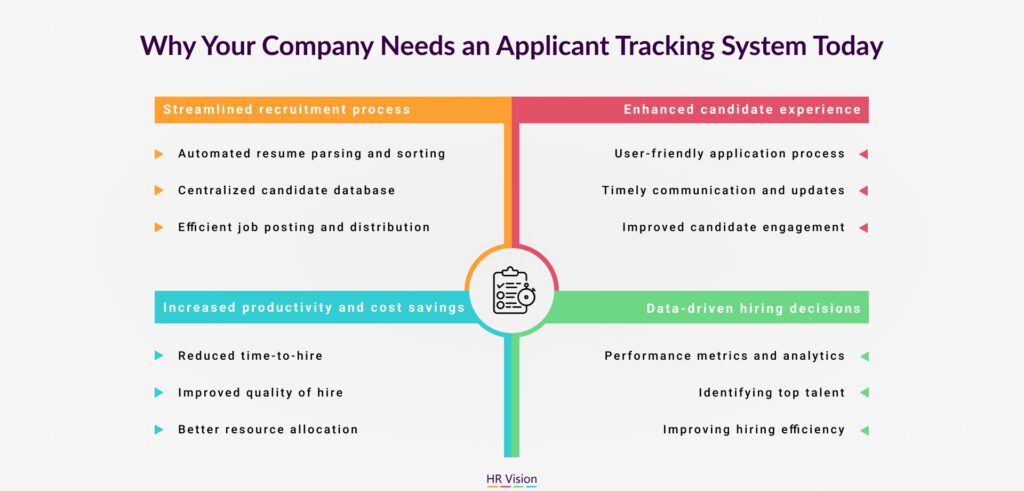
A positive candidate experience is crucial for attracting top talent. An ATS can significantly improve this experience in several ways. It eliminates lengthy forms and repetitive questions, streamlining the journey for job seekers through automation. A staggering 30% of online job seekers won’t spend longer than 15 minutes filling out their applications, highlighting the demand for a swift and user-friendly process.
An ATS also enables timely communication and updates, keeping candidates informed about their application status and next steps. This transparency builds trust and demonstrates respect for applicants’ time. Ultimately, a well-executed ATS can foster a positive candidate experience, increasing the likelihood of attracting and retaining top talent.
Streamlined Recruitment Process
An ATS significantly enhances recruitment efficiency through automation and centralization. Automated resume parsing and sorting eliminate the tedious task of manually reviewing each application. The system extracts key information from resumes, ranks candidates based on job requirements, and prioritizes the most promising applicants. This automation saves time and reduces the risk of overlooking qualified candidates.
A centralized candidate database serves as a single repository for all applicant information, ensuring data consistency and accessibility. Recruiters and hiring managers can easily access candidate profiles, track their progress, and collaborate seamlessly. This centralized approach eliminates the need for multiple spreadsheets or email chains, streamlining communication and reducing errors.
Data-Driven Hiring Decisions
An ATS empowers organizations to make data-driven hiring decisions by providing valuable insights into the recruitment process. Through key performance metrics and analysis of hiring trends, HR teams can identify areas for improvement and optimize their strategies. An ATS helps identify top talent by matching candidate qualifications with job requirements and prioritizing the most promising applicants. This data-driven approach increases hiring efficiency by reducing time-to-fill and improving the quality of hires.
However, 88% of employers believe they are missing out on highly qualified candidates due to ATS limitations. These systems often rely on keyword matching, which can inadvertently exclude candidates whose resumes don’t perfectly align with specific terms. This issue underscores the need for a human element in the recruitment process to complement the data provided by ATS. Balancing data-driven insights with human judgment allows organizations to maximize the benefits of an ATS while mitigating its potential drawbacks.
88% percent of employers think they are missing highly qualified candidates who are filtered out by ATSs because these candidates aren’t submitting ‘ATS-friendly’ resumes. This means their resumes lack the specific criteria or keywords the ATS is designed to detect.
Increased Productivity and Cost Savings
An ATS delivers a significant return on investment by boosting productivity and reducing costs. Automating time-consuming tasks and accelerating the hiring process, an ATS drastically reduces time-to-hire. This faster hiring cycle allows organizations to fill critical positions more rapidly, minimizing operational disruptions and maximizing productivity.
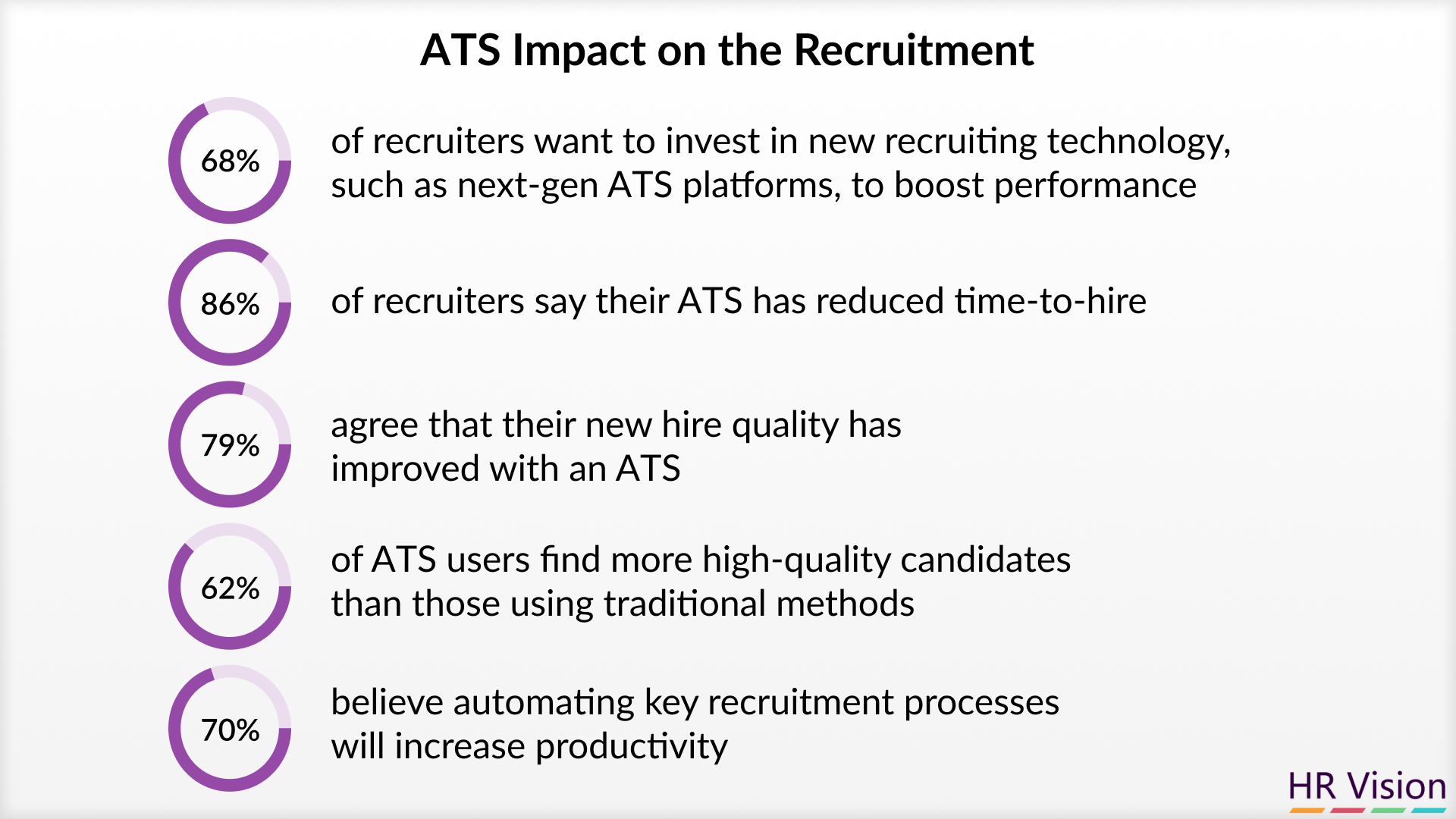
Additionally, an ATS contributes to improved quality of hire. Providing data-driven insights and facilitating efficient candidate evaluation, it helps identify the best-qualified candidates for each role. Notably, 79% of organizations report improved new hire quality after implementing an ATS.
Optimizing the recruitment process with an ATS allows better resource allocation. HR teams can focus on strategic initiatives, such as employer branding and talent development, rather than administrative tasks. Furthermore, the reduction in hiring time translates into cost savings for the organization.
With 70% of organizations believing that automating key recruitment processes has significantly boosted productivity, it’s evident that an ATS is a powerful tool for driving efficiency and cost-effectiveness.
Choosing the Right ATS for Your Company
Selecting the appropriate Applicant Tracking System (ATS) is crucial for optimizing your hiring process. Several factors must be considered to make an informed decision.
Factors to Consider:
- • Company size: Small businesses may require a basic ATS with essential features, while larger enterprises may need a more robust solution with advanced functionalities.
- • Industry: Different industries have specific hiring needs. For example, a tech company might prioritize candidate sourcing and skills matching, while a retail company may focus on high-volume recruitment.
- • Budget: ATS solutions vary in pricing, so it’s essential to determine your budget and find a system that offers good value for money.
When evaluating ATS solutions, essential features should not be overlooked. Look for a system with user-friendly interfaces that facilitate both candidate and recruiter experiences. An effective ATS should offer robust resume parsing, automated job posting, and customizable workflows to streamline the hiring process. Additionally, integration capabilities with other HR software and tools are crucial for maintaining a cohesive HR ecosystem. Reporting and analytics features are also important, as they provide insights into recruitment metrics and help optimize hiring strategies.
The implementation and training process is another critical aspect to consider. Choosing an ATS involves not just the selection of software but also ensuring its successful deployment within your organization. Implementation should be straightforward, with minimal disruption to your existing processes. Many vendors offer dedicated support during the transition period to assist with data migration and system integration. Training is equally vital; the ATS should come with comprehensive training resources or support to ensure that your team can effectively use the system from day one. Investing in thorough training will help your staff maximize the system’s capabilities and ensure a smooth transition to the new tool.
Conclusion
The key benefits of using an ATS are substantial. Firstly, it significantly reduces the time spent on manual tasks, such as sorting through resumes and scheduling interviews. This efficiency not only accelerates the hiring process but also improves the candidate experience by providing timely responses and streamlined communication. Additionally, an ATS enhances the quality of hires through advanced filtering and assessment tools, helping to match candidates more accurately with job requirements. The data-driven insights provided by an ATS also enable organizations to refine their recruitment strategies, leading to more informed decision-making and better overall outcomes. Investing in an ATS is a proactive step towards improving your hiring process and staying competitive in the talent market.
Ready to explore how cutting-edge HR technologies can transform your hiring strategy? Join us at the HR Vision! Discover the latest trends in HR technology, talent management, and analytics as we delve into the future of work.