Job security means knowing you can keep your job without worrying about sudden layoffs or contract changes. It’s important because when employees feel secure, they’re more engaged, productive, and committed to their work. A stable workforce also helps companies grow and succeed.
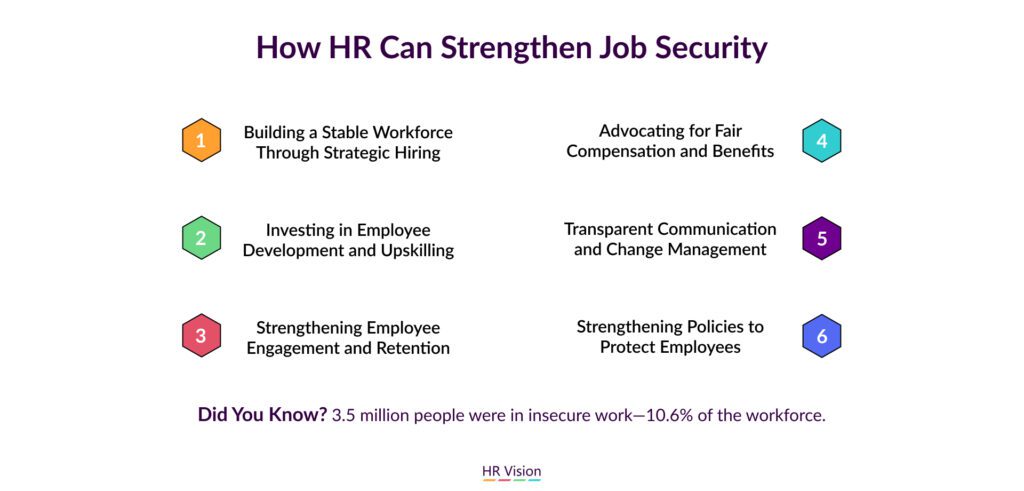
But job security isn’t guaranteed. In 2023, 3.5 million people were in insecure work—10.6% of the workforce. Many factors contribute to this, including economic downturns, company downsizing, and the rise of temporary or gig work. Technology is also changing jobs, with automation and artificial intelligence replacing some roles, making workers uncertain about the future
1. Building a Stable Workforce Through Strategic Hiring
One of the best ways HR can strengthen job security is by hiring employees with long-term potential rather than just filling immediate needs. When companies focus on strategic hiring, they create a more stable workforce that can grow and adapt over time.
- • Hiring for Long-Term Potential
Instead of hiring based solely on current job openings, HR should look for candidates who have the potential to grow within the company. This means prioritizing problem-solving skills, adaptability, and a willingness to learn—qualities that help employees succeed even as job roles evolve. - • Focusing on Cultural Fit and Skills Adaptability
A strong cultural fit ensures employees align with the company’s values, making them more likely to stay long-term. At the same time, hiring people who can adapt their skills to changing business needs helps the company remain resilient in uncertain times. - • Implementing Structured Onboarding for Better Retention
A well-planned onboarding process helps new employees feel supported from day one. This includes clear job expectations, mentorship programs, and ongoing check-ins to ensure they’re adjusting well.
2. Investing in Employee Development and Upskilling
A key way HR can strengthen job security is by helping employees grow within the company. When employees have access to learning and development opportunities, they are better equipped to adapt to changes, making them more valuable to the organization.
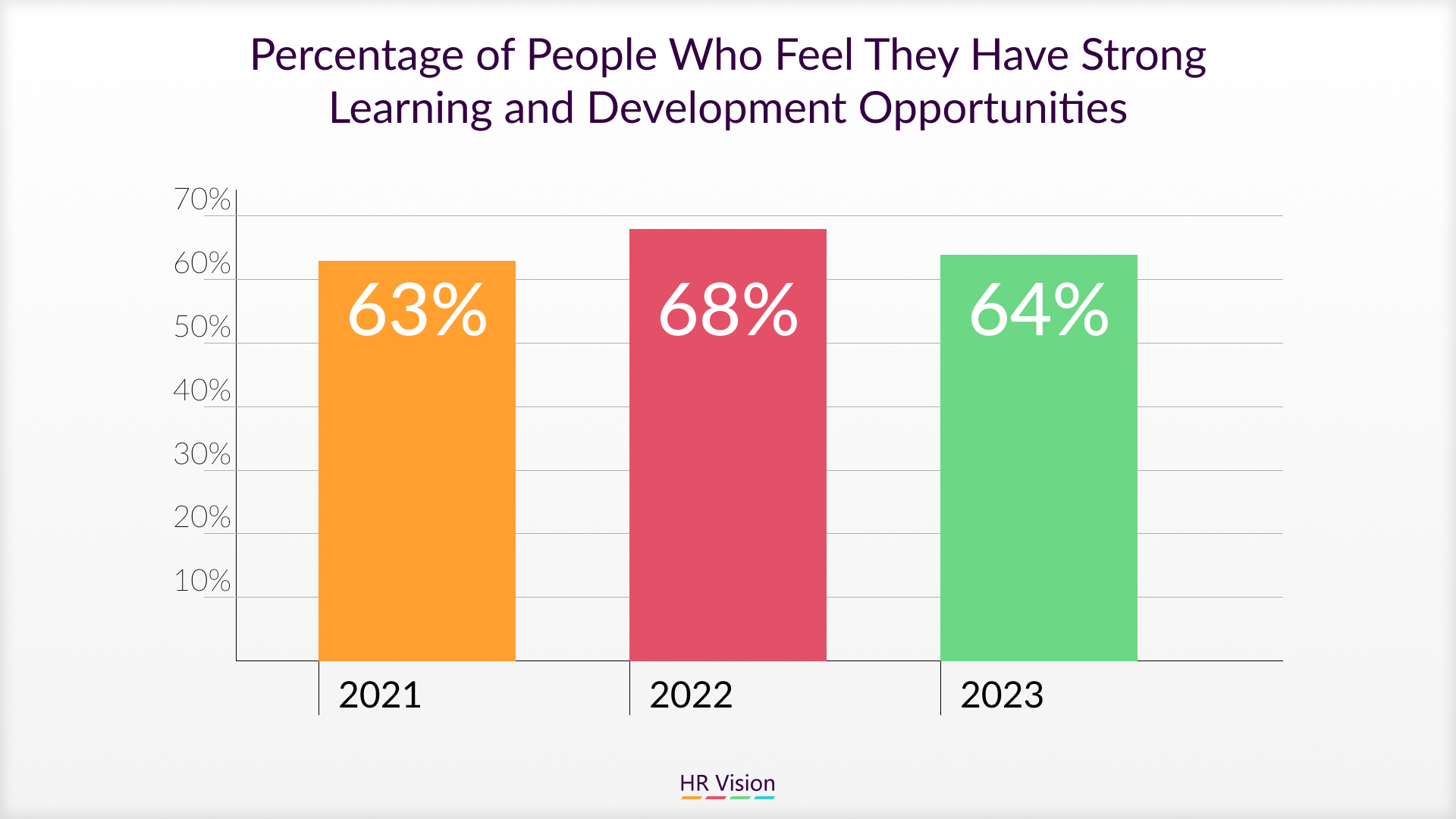
Industries are evolving quickly, and employees need to keep up with new trends and technologies. Offering training programs, workshops, and certifications helps employees stay relevant in their roles. In recent years, the percentage of people who believe they have good opportunities to learn and develop at work has fluctuated: 63% in 2021, 68% in 2022, and 64% in 2023. This shows that while development opportunities exist, there is still room for improvement. HR can bridge this gap by making learning a core part of the company culture.
As automation and AI continue to reshape the workforce, some jobs are disappearing while new ones emerge. Instead of letting employees go, HR can help them transition into new roles by offering reskilling programs. Teaching employees new skills ensures they remain employable within the organization rather than being replaced.
Employees are more likely to stay with a company if they see a clear path for growth. HR can support internal mobility by promoting from within, offering mentorship programs, and encouraging lateral moves to different departments. When employees know they can advance their careers within the company, they feel more secure in their jobs.
3. Strengthening Employee Engagement and Retention
A workforce that feels engaged and valued is more likely to stay long-term. When employees feel supported, they are more committed to their jobs, which strengthens job security for both individuals and the organization.
Good leadership is the foundation of job security. Managers who communicate openly, provide feedback, and support their teams create a workplace where employees feel valued and confident in their roles. HR can train leaders to build trust, encourage collaboration, and ensure employees know their contributions matter.
Employees thrive when they have guidance and opportunities to learn from experienced colleagues. Mentorship programs connect employees with leaders or peers who can help them navigate their careers, while coaching programs offer structured support to develop skills and confidence.
4. Advocating for Fair Compensation and Benefits
Fair compensation and benefits are crucial in ensuring job security. When employees feel they are fairly compensated and supported with valuable benefits, they are more likely to stay with the organization.
One of the most effective ways to promote job security is to offer competitive salaries that reflect industry standards and employees’ experience. HR should regularly benchmark salaries against competitors to ensure the organization remains attractive to top talent.
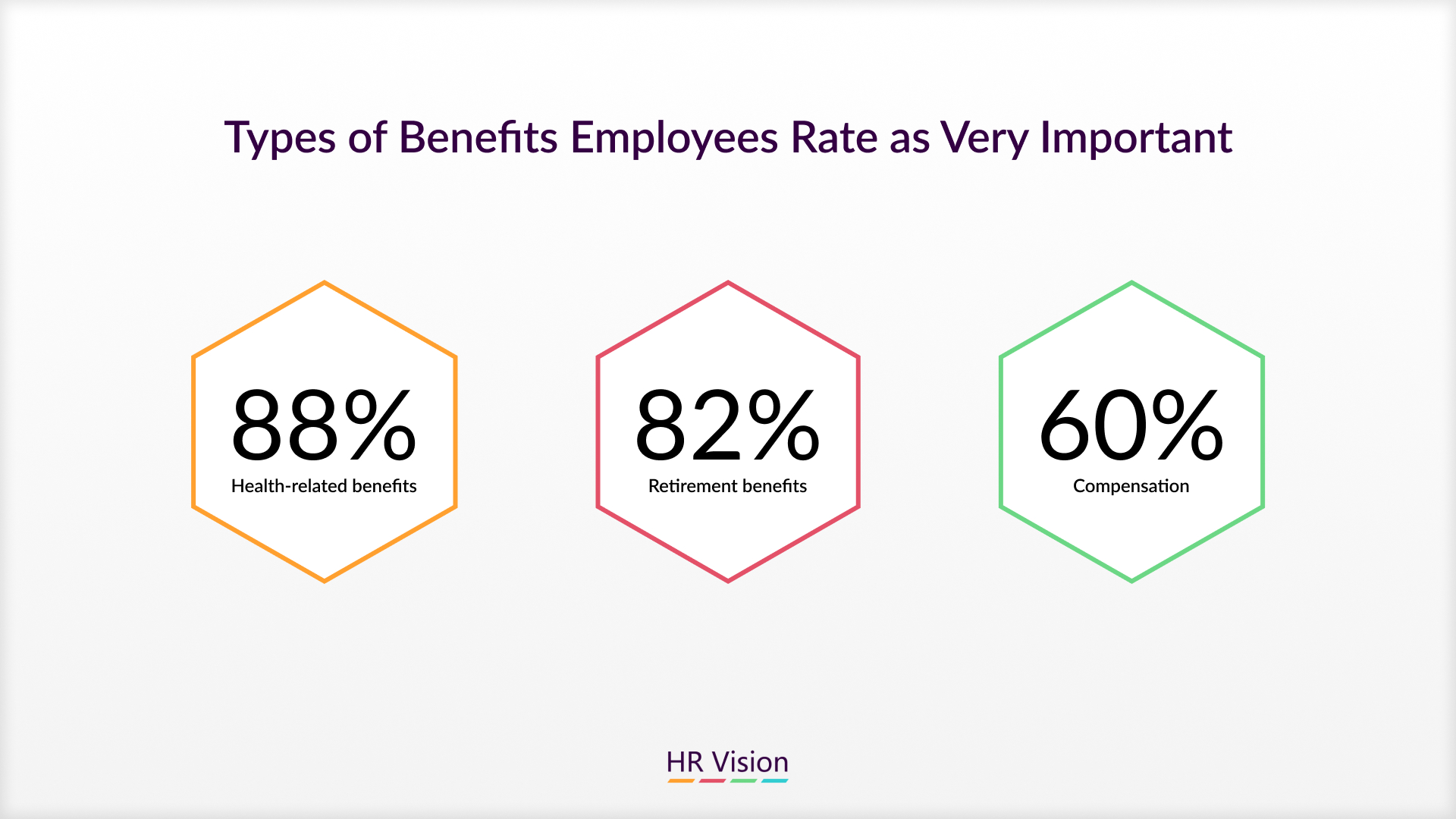
A well-rounded benefits package goes beyond salary and provides employees with additional security. Offering comprehensive healthcare, retirement plans, and wellness programs can help employees feel protected, both physically and financially. These benefits contribute to long-term job satisfaction and reduce the likelihood of turnover, as employees are more likely to stay with an organization that supports their well-being.
5. Transparent Communication and Change Management
Effective communication is essential for maintaining job security, especially during periods of change. Clear and consistent communication about organizational changes and job expectations helps employees understand their roles and the company’s direction. HR should ensure that all employees receive timely updates and have access to the information they need to perform their jobs effectively. This approach reduces uncertainty and builds trust within the organization.
During periods of change, employees may feel anxious about their job security. HR can provide reassurance by addressing concerns, offering support, and clarifying how changes will impact individuals and teams. Open dialogue helps alleviate fears and fosters a sense of stability.
Promoting open communication channels between HR, leadership, and employees encourages feedback, questions, and suggestions. This collaborative approach ensures that all voices are heard and that decisions are made with a comprehensive understanding of employee perspectives. It also empowers employees to take ownership of their roles and the changes occurring within the organization.
6. Strengthening Policies to Protect Employees
Establishing robust policies is essential for safeguarding employees’ job security. HR can implement measures that promote fairness, clarity, and support during organizational changes.
- • Establishing Fair Labor Policies That Safeguard Job Security
Developing comprehensive HR policies ensures that employees are treated consistently and fairly. These policies should cover areas such as non-discrimination, anti-harassment, and diversity, equity, and inclusion (DEI). - • Implementing Structured Performance Management Processes
A well-defined performance management system provides employees with clear expectations and regular feedback. This structure helps employees understand their roles, identify areas for improvement, and recognize opportunities for growth, thereby enhancing job security. - • Supporting Employees During Organizational Restructuring or Downturns
During periods of change, such as restructuring or economic downturns, HR should offer support to affected employees. This support can include transparent communication about changes, providing resources for job transitions, and offering training programs to help employees adapt to new roles.
Conclusion
Job security is crucial for creating a stable and engaged workforce. HR plays a vital role in strengthening job security by using strategies like strategic hiring, offering development opportunities, promoting employee engagement, ensuring clear communication, and advocating for fair compensation and policies. When employees feel secure in their jobs, they are more satisfied, motivated, and committed to their work. This leads to lower turnover and a more positive company culture.Want to learn more about strengthening job security and building a resilient workforce? Join us at HR Vision, where top HR leaders will share the best strategies for navigating today’s evolving workplace. Don’t miss this opportunity to gain valuable insights and connect with industry experts.