Why is Time Management Important?
The responsibilities of HR professionals are diverse and encompass various aspects of employee management, from recruitment and training to performance evaluations and conflict resolution. One fundamental skill that is often overlooked but immensely important for HR professionals is effective time management.
Effective time management is not just a matter of personal efficiency; it has a profound impact on HR tasks and outcomes, influencing both the HR department’s effectiveness and the organization’s overall success.
1. Reduced Productivity
Missed deadlines and incomplete tasks slow HR processes, affecting the organization’s overall efficiency.
2. Lower Employee Engagement
Neglecting morale-boosting activities due to poor time management can lead to decreased employee satisfaction, higher turnover, and recruitment challenges.
3. Compliance Risks
Insufficient time for staying updated on labor laws and regulations can expose the organization to legal risks.
4. Missed Talent Opportunities
Delayed recruitment processes due to poor time management can result in losing top talent to competitors.
6. Strained Employee Relations
Inadequate time for addressing employee issues can erode trust, leading to a toxic workplace culture and reduced productivity.
Methods for Prioritizing HR Tasks
Setting clear priorities is not just a matter of productivity; it’s a strategic imperative that ensures HR departments can effectively support the organization’s goals and foster a positive workplace culture. Let’s explore three effective methods for prioritizing HR tasks.
The Eisenhower Matrix
Named after former U.S. President Dwight D. Eisenhower, this method categorizes tasks into four quadrants based on their urgency and importance:
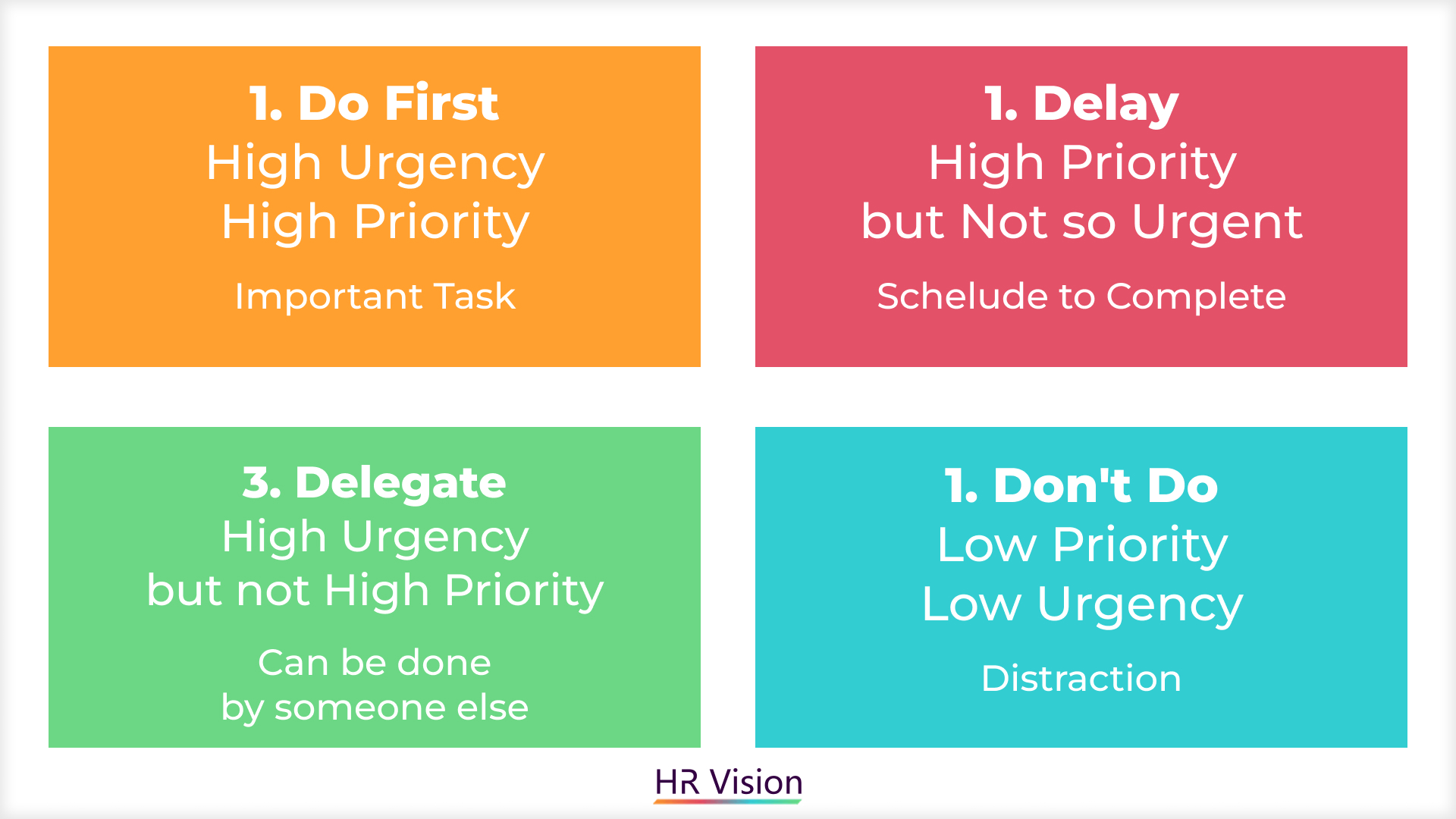
High Urgency and High Priority (Quadrant 1) – Tasks that require immediate attention, such as addressing critical employee issues or resolving legal compliance matters.
High Priority but not so Urgent (Quadrant 2) – Strategic tasks that contribute to long-term HR goals, like talent development programs and succession planning.
High Urgency but not High Priority (Quadrant 3) – Tasks that demand immediate action but have little long-term significance, such as routine paperwork or some email requests.
Low Priority and Low Urgency (Quadrant 4) – Tasks that should be minimized or eliminated, as they don’t contribute to HR or organizational objectives.
Tips for Maximizing the Eisenhower Matrix:
➤ Prioritize Quadrant II
It’s the key to effective time management. These tasks, though not urgent, are highly important. Dedicate time each day or week to long-term goals, personal growth, and relationships to reduce crises in Quadrant I.
➤ Delegate and Eliminate
Quadrants III and IV can hinder productivity. Delegate tasks in Quadrant III to those better suited and minimize Quadrant IV tasks to free up time for Quadrants I and II.
➤ Time Blocking
Implement the Eisenhower Matrix through time blocking. Schedule dedicated blocks on your calendar for Quadrant II tasks, treating them like important meetings. Use these times for high-impact work, personal growth, and relationship-building.
➤ Regularly Review and Adjust
Your priorities and task placements may change. Regularly review and adapt your Eisenhower Matrix to align with current goals and objectives. Stay flexible and open to modifications in your task categorization.
ABCD Method
The ABCD Method is a time management technique that helps you prioritize tasks and focus on what truly matters. It was popularized by Alan Lakein in his book “How to Get Control of Your Time and Your Life.” The method categorizes tasks into four main categories: A, B, C, and D, based on their importance.

A-tasks – These are high-priority tasks that are both important and urgent. They require immediate attention and should be completed promptly.
B-tasks – These tasks are important but not necessarily urgent. HR professionals should schedule time to work on them.
C-tasks – These tasks are less important but may have some value. They can be delegated to others or tackled when time allows.
D-tasks – These tasks are neither important nor urgent and can often be eliminated from the to-do list.
Managing time effectively
Two popular methods for mastering time management are the Pomodoro Technique and Time-Blocking Strategies. These techniques offer valuable tools and approaches to help you take control of your time, enhance productivity, and achieve your goals.
The Pomodoro Technique
The Pomodoro Technique, developed by Francesco Cirillo in the late 1980s, is a time management method designed to help you tackle tasks efficiently and maintain your focus. Named after the Italian word for “tomato,” this technique utilizes short, structured work intervals followed by brief breaks.
The Principles of the Pomodoro Technique
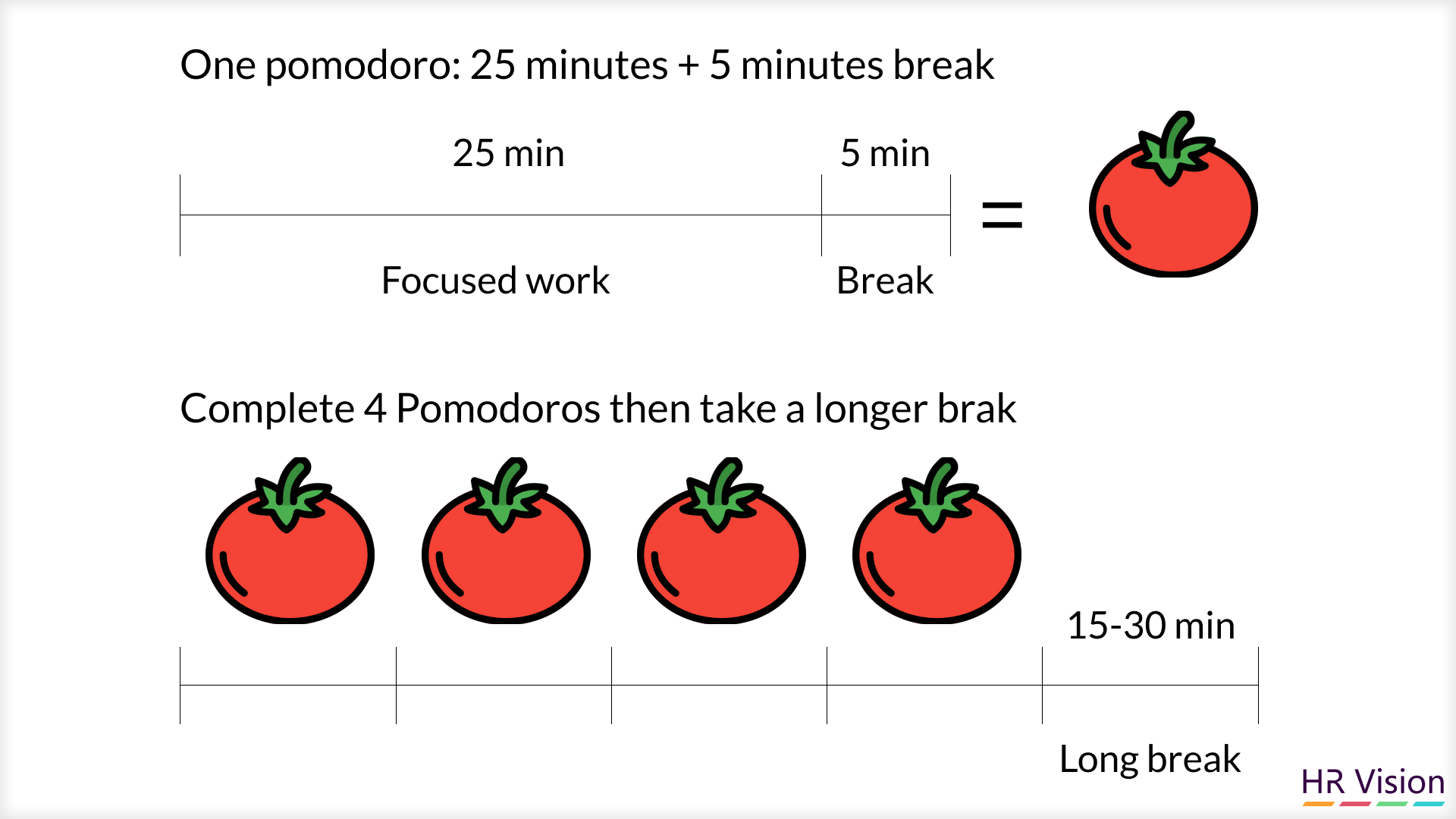
At its core, the Pomodoro Technique is a simple, yet highly effective time management method. It is built on the following principles:
Work in Short, Focused Intervals – The technique involves breaking your work into short, focused time intervals, typically 25 minutes each, known as “Pomodoros.” These intervals are designed to maintain your concentration and prevent burnout.
Take Short Breaks – After completing a Pomodoro, take a short break of around 5 minutes. Use this time to stretch, relax, or grab a quick snack. These breaks help rejuvenate your mind and prevent fatigue.
Repeat and Rest – After completing four Pomodoros, take a longer break of 15-30 minutes. This extended break allows you to recharge and reflect on your progress.
Track Your Work – Keep a record of completed Pomodoros and tasks. This tracking not only helps you measure your productivity but also provides a sense of accomplishment.
If you’re struggling to stay on top of your to-do list, here are seven tips on how to use the Pomodoro Technique effectively.
➤ Set Clear Goals: Define tasks and goals for focused Pomodoro sessions. Clear objectives boost motivation and productivity.
➤ Choose Pomodoro Interval: Adjust the 25-minute work and 5-minute break intervals to your preference for a balanced approach.
➤ Eliminate Distractions: Create a distraction-free environment by silencing notifications, closing unnecessary tabs/apps, and notifying others of your focused work time.
➤ Embrace Breaks: Regular short breaks are crucial; use them to relax, stretch, and recharge for better productivity.
➤ Track Your Progress: Use Pomodoro timer apps to monitor work and break intervals, gaining insights into your work patterns.
➤ Prioritize Tasks: List and schedule important tasks to maximize efficiency during your Pomodoro sessions.
➤ Adapt and Adjust: Customize the Pomodoro Technique to fit your needs for improved productivity.
Time-Blocking Strategies
Time-blocking is a time management technique that has gained popularity for its ability to enhance productivity and efficiency. The core principle behind time-blocking is simple: allocate specific time slots in your day to focus on particular tasks, projects, or responsibilities. This method helps you structure your day and ensures that you make progress on essential activities while avoiding distractions and multitasking.
To make the most of time-blocking, HR professionals can follow these steps:
1. Identifying High-Value Tasks:
Begin by identifying your most critical tasks or projects. These are the activities that directly contribute to HR goals and objectives.
Consider what tasks require your expertise and decision-making skills, such as employee performance reviews, strategic planning, or conflict resolution.
2. Allocating Time for Routine Tasks:
Recognize routine and administrative tasks that are essential but can be repetitive, such as email management, data entry, or scheduling.
Allocate specific blocks of time for these tasks to prevent them from consuming your entire day.
3. Creating a Daily/Weekly Time-Blocking Schedule:
- Develop a daily or weekly schedule that outlines when you will work on each task or project.
- Be realistic about the time needed for each activity, and include buffer periods for unexpected interruptions.
- Use digital tools, such as calendar apps or specialized time-blocking software, to create and manage your schedule effectively.
Remember that flexibility is key in implementing time-blocking. While it’s essential to stick to your schedule, be open to adjustments as priorities shift.
Technology and Tools
Fortunately, HR professionals have a vast array of technology and tools at their disposal to streamline their workflows and boost productivity. In this article, we will explore the key components of technology and tools that can help HR professionals excel in their roles.
Overview of Time Management Tools for HR Professionals
Task Management Software: Task management tools like Trello, Asana, or Monday.com are invaluable for HR professionals. These platforms allow you to create and manage tasks, set deadlines, and collaborate with team members seamlessly. You can categorize tasks by priority, ensuring that high-value activities receive the attention they deserve.
Project Management Software: For larger HR projects, consider utilizing project management software such as Basecamp or Microsoft Project. These tools enable you to plan, track progress, and allocate resources efficiently.
Time Tracking Software: Time tracking software like Toggl or Clockify helps HR professionals monitor the time spent on different tasks and projects. This data can be used for performance evaluation and optimizing time allocation.
Note-Taking Apps: Apps like Evernote or Notion are excellent for organizing meeting notes, important documents, and HR-related information. They provide easy access to critical data and help you stay organized.
Utilizing HR Software and Technology
Human Resource Information Systems (HRIS): HR professionals can benefit greatly from HRIS software like Workday, SAP SuccessFactors, or BambooHR. These systems streamline HR operations by centralizing employee data, automating administrative tasks, and facilitating compliance with HR regulations.
Recruitment Software: HR departments often rely on applicant tracking systems (ATS) like Greenhouse, iCIMS, or JazzHR to manage the recruitment process efficiently. These tools help with candidate sourcing, resume screening, and interview scheduling.
Employee Engagement Platforms: Boosting employee engagement and satisfaction is crucial for HR professionals. Tools like Culture Amp and Glint provide surveys, analytics, and feedback mechanisms to gauge and enhance employee satisfaction.
Productivity Apps and Digital Calendars
Digital Calendars: Tools like Google Calendar, Microsoft Outlook, or Apple Calendar are essential for HR professionals to schedule meetings, interviews, and training sessions. Syncing these calendars with mobile devices ensures you stay organized on the go.
Email Management: Email overload can be a significant time drain. Email management apps like Microsoft Outlook and Gmail offer features like filters, labels, and snooze options to keep your inbox organized and your communication efficient.
Task-Specific Apps: HR professionals can explore task-specific productivity apps like Slack for team communication, Zoom for virtual meetings, and LinkedIn for professional networking.
Time-Blocking Apps: To implement effective time-blocking strategies, consider apps like Focus Booster or Be Focused. These apps help you allocate specific time blocks to tasks and track your progress throughout the day.
Effective time management can transform an HR professional into a strategic partner for their organization, capable of driving positive outcomes and fostering a thriving workplace culture.
Remember that time management is an ongoing process. It requires self-awareness, adaptability, and a commitment to continuous improvement. By consistently applying these time management strategies and harnessing the power of technology and tools, HR professionals can navigate their roles with greater ease and deliver exceptional results.
As you continue your journey towards HR excellence through effective time management, consider joining us at HR Vision Events—an event designed for forward-thinking HR professionals.